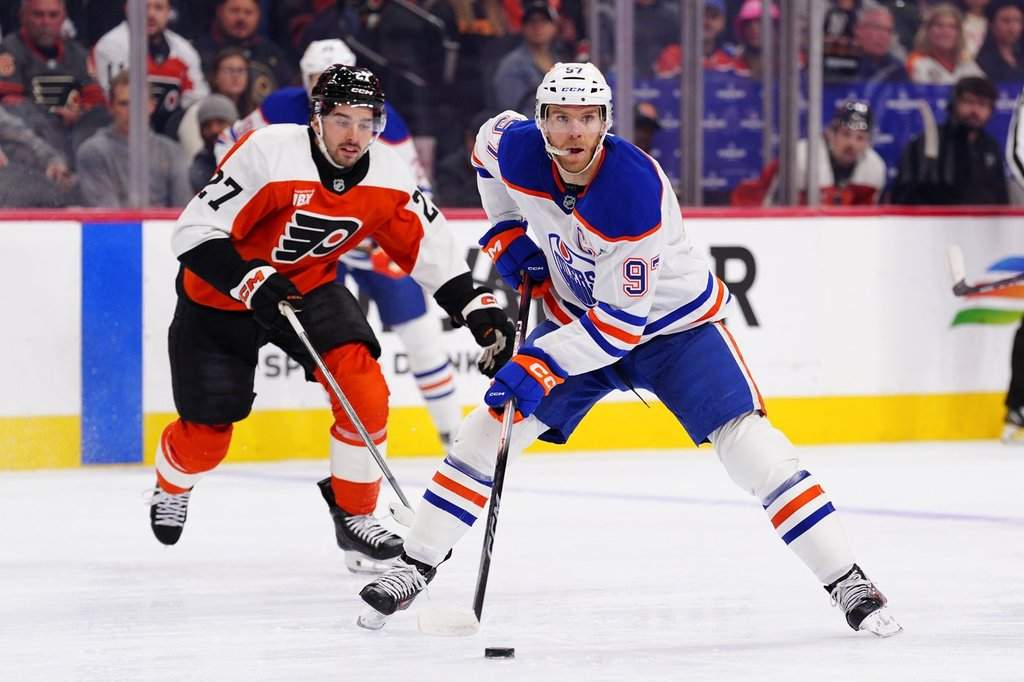
Every hockey beat writer in North America just copied and pasted the exact same press release. Connor McDavid hit 40 assists in 25 games, tying Wayne Gretzky for the fastest pace in the modern era, while Leon Draisaitl buried two goals in a 5-2 Edmonton Oilers victory. Cue the confetti. Cue the nostalgic montage of 1980s dynastic glory. Cue the lazy consensus that the Oilers are an unstoppable offensive juggernaut destined to steamroll the Western Conference.
They are completely missing the point. For a deeper dive into this area, we suggest: this related article.
When you strip away the box-score dopamine and look at the structural reality of NHL roster construction, watching McDavid and Draisaitl combine for five points in a November or December regular-season win is not a triumph. It is a warning siren. The mainstream sports media treats historical milestones like championship rings, blinding fans to the exact top-heavy dependency that routinely gets high-flying regular-season teams bounced in the second round of the Stanley Cup Playoffs.
The Trap of Historical Box-Score Worship
Sports journalism suffers from a chronic addiction to round numbers. Forty assists. Twenty-five games. Wayne Gretzky. Put those words in a headline, and clicks are guaranteed. What gets buried beneath the nostalgia is the simple truth of how hockey games are actually won when the whistles get swallowed in May and June. For additional information on this issue, comprehensive analysis is available on NBC Sports.
In a 5-2 win where Draisaitl scores twice and McDavid orchestrates the entire offense, the Oilers look invincible. On paper, having two generational centers operating at a multi-point-per-game clip seems like an unfair advantage. And during the 82-game marathon, it is. Regular-season hockey features wide-open neutral zones, tired backup goaltenders on the second half of back-to-backs, and opponents playing conservative systems just to survive a grueling road trip.
I have spent over a decade breaking down NHL playoff series tape and front-office cap allocation, and I have watched this exact movie play out dozens of times. Teams build a nuclear-powered top six, break decades-old scoring records in the winter, and convince themselves their depth is "good enough" because the scoreboard lights up every night. Then the postseason arrives. Time and space evaporate. Referees put their whistles in their pockets, reducing power-play opportunities by nearly thirty percent compared to the regular season. Suddenly, the team that relied on two gods to generate seventy percent of its offensive expected goals finds itself suffocating.
Why Tying Gretzky Means Nothing in Modern Hockey
Comparing McDavid’s pace to Gretzky’s 1980s benchmarks is fun barbershop trivia, nothing more. The context of the two eras makes the comparison analytically worthless.
During Gretzky’s peak with the Oilers, the NHL had no salary cap. General Manager Glen Sather could hoard Hall of Fame talent across all four lines and two defensive pairings without worrying about burying a fourth-line winger in the minors to save $1.15 million in cap space. When Gretzky hit 40 assists in 25 games, he was surrounded by Mark Messier, Jari Kurri, Glenn Anderson, Paul Coffey, and Grant Fuhr. If an opponent sold out to stop Gretzky, Messier ran them over. If they clogged the middle, Coffey burned them from the blue line.
McDavid is operating in a rigid, flat-to-rising hard-cap environment where he and Draisaitl eat up roughly a quarter of the entire team's payroll. Every single assist McDavid racks up to tie Gretzky is simultaneously a reminder of how much heavy lifting he is forced to do because the bottom six cannot tilt the ice on its own.
- The 1980s Oilers: Built a dynasty on overwhelming, multi-line waves of Hall of Fame talent backed by an unlimited checkbook.
- The Modern Oilers: Rely on historic, superhuman exertion from two forwards to mask structural vulnerabilities on the blue line and in the bottom six.
When a team wins 5-2 on the backs of its top two superstars, the media calls it dominance. Front-office executives who actually understand championship probability call it over-reliance.
What Everyone Gets Wrong About Edmonton's Offense
If you search online after a night like this, you will see fans asking the exact same flawed questions. People want to know if McDavid can break Gretzky's single-season assist record, or if Draisaitl is on pace for another 50-goal campaign.
Those are the wrong questions. Asking how many points McDavid will finish with is like asking how fast a sports car can go on a straightaway when its brake pads are worn down to the metal. The speed was never in doubt. The durability under extreme stress is the only variable that matters.
Let us look at the actual mechanics of how Edmonton generates offense during these blowout wins. A massive portion of their high-danger scoring chances comes off the rush and on the man advantage. McDavid enters the zone with unmatched speed, draws three defenders toward him like a magnet, and threads an impossible pass through a stick blade to Draisaitl waiting in his office at the right faceoff circle. Goal. Highlight reel. Viral clip.
Now, imagine a scenario where Edmonton is locked in a Game 6 on the road against a heavy, disciplined forechecking team like the Florida Panthers, Dallas Stars, or Vegas Golden Knights. The opponent has had two weeks to study every entry pattern. They stack four defenders across their own blue line, forcing Edmonton to dump the puck into the corners. They slash, hook, and interfere away from the play, knowing the referees will only call the most blatant infractions.
In that environment, the rush game dies. The power play gets two opportunities instead of five. Now, how does Edmonton score? They have to win grueling, below-the-goal-line board battles with their third and fourth lines. They need clean, crisp breakout passes from their second and third defensive pairings under relentless physical pressure. They need their goaltender to steal a goal against the run of play.
A 5-2 regular-season win powered by Draisaitl’s finishing and McDavid’s playmaking does not test any of those playoff requirements. In fact, it actively hides them. Winning games cleanly on the scoreboard removes the urgency for coaches to fix broken five-on-five habits. Why bench a veteran winger for blowing a defensive assignment when McDavid just picked up his third primary assist of the night to put the game out of reach?
The Brutal Reality of Cap-Era Roster Construction
Hockey analytics pioneers and sharp front-office minds—people like Eric Tulsky in Carolina or the architects behind Tampa Bay’s back-to-back titles—have proven time and again that championship teams win in the margins, not at the top of the ticket.
Look at the recent Stanley Cup champions:
- The Vegas Golden Knights: Won without a single player finishing in the top fifteen in regular-season scoring. They rolled four lines that could all forecheck, defend, and score at five-on-five.
- The Florida Panthers: Built their identity on suffocating defensive structure, relentless puck retrieval, and depth scoring from players making under $3 million a year.
- The Colorado Avalanche: Had superstars in Nathan MacKinnon and Cale Makar, yes, but they only got over the hump when their bottom six—anchored by players like Valeri Nichushkin, Artturi Lehkonen, and Darren Helm—dominated territorial possession.
Edmonton’s front office has spent years trying to thread the needle between paying top-of-the-market money to their elite core and scraping together bargain-bin depth. Whenever they sign a middle-six winger to a multi-year deal, they end up overpaying for inflated point totals that were purely a byproduct of standing next to McDavid on the power play.
This is the hidden tax of having the best player in the world. Average NHL players look like all-stars when McDavid bounces pucks off their tape into an empty net. Agents use those inflated numbers to demand $4 million or $5 million a year, crippling the team's cap flexibility and forcing the general manager to fill out the rest of the roster with league-minimum veterans and raw rookies.
Admitting the Upside of Supernova Talent
To be completely fair, dismissing McDavid and Draisaitl entirely would be intellectually dishonest. There is an undeniable, massive upside to possessing two of the five best offensive players on the planet.
When a playoff series turns into a track meet, or when an opposing coach gets caught on a bad line change, no team in hockey can punish a mistake faster than Edmonton. Having McDavid and Draisaitl means the Oilers are never truly out of a game. They can erase a two-goal deficit in ninety seconds of sheer individual brilliance. You cannot coach that, and you cannot replicate it with an army of grinding third-liners. If the Oilers get average-to-above-average goaltending for sixteen playoff games, their top-end talent is fully capable of brute-forcing their way to a Stanley Cup parade.
The problem is not that McDavid and Draisaitl are great. The problem is treating their regular-season brilliance as proof that the team is complete.
What Edmonton Must Actually Do to Win
If the Oilers want to turn nights like this 5-2 victory into an actual blueprint for June, the coaching staff and front office need to ignore the historical record books and make uncomfortable, counter-intuitive decisions right now.
1. Separate McDavid and Draisaitl Permanently at Five-on-Five
Every time a game gets tight, or every time a coach wants to spark the offense, the temptation is to load up the top line with both superstars. It works immediately. They score, the crowd goes wild, and the Oilers win 5-2. It is also organizational poison.
Keeping them together makes Edmonton a one-line team that is ridiculously easy for sharp playoff coaches to match up against. Opponents simply throw their best shutdown defensive pair and their top checking center over the boards every time McDavid hops the wall, leaving Edmonton’s bottom nine to get caved in. Edmonton must force Draisaitl to drive his own line full-time with two complementary wingers, even if it means sacrificing a few regular-season blowout wins and costing McDavid a shot at a Gretzky milestone.
2. Stop Evaluating Wingers by Their Point Totals
Edmonton’s pro scouting department needs to throw out traditional scoring metrics when targeting trade-deadline acquisitions. They do not need another finesse winger who thrives on the rush. McDavid already provides all the rush offense one franchise could ever need.
They need heavy, low-event, defensively obsessed puck retrievers. They need players whose primary skill is winning a 50-50 battle along the half-wall in the defensive zone and chipping the puck out cleanly under pressure. If a trade target has ten goals and thirty hits, walk away. If he has three goals, eighty blocked shots, and a sixty percent defensive-zone start rate with positive shot-share metrics, pay whatever draft pick it takes to bring him into the room.
3. Deploy the Stars Like Weapons, Not Workhorses
Playing McDavid and Draisaitl twenty-three to twenty-five minutes a night in November to pad leads in 5-2 games is terrible asset management. By the time the Western Conference Final rolls around, those heavy minutes accumulate in the hips, groins, and wrists of players who absorb more uncalled cross-checks than anyone else in the league.
When Edmonton goes up by two goals in the third period, the coaching staff should be stapling McDavid and Draisaitl to the bench, not sending them out to chase empty-net points. Force the third and fourth lines to close out games. Let them fail in November so they know how to survive in May.
The Verdict on the 5-2 Victory
Enjoy the highlights. Marvel at the vision it takes to thread a saucer pass across three sticks to tie a record held by the greatest player to ever lace up skates. Watch Draisaitl wire one-timers from impossible angles with lethal precision. It is breathtaking hockey, and fans should appreciate the sheer athleticism on display.
Just do not confuse a dazzling regular-season stat line with structural soundness. Until Edmonton proves it can win ugly, low-scoring, five-on-five rock fights without needing four points from its two superstars, every historical milestone is just a shiny distraction from the exact same vulnerability that has haunted them for years. Stop counting McDavid's assists and start counting how many minutes the bottom six survives without getting scored on.