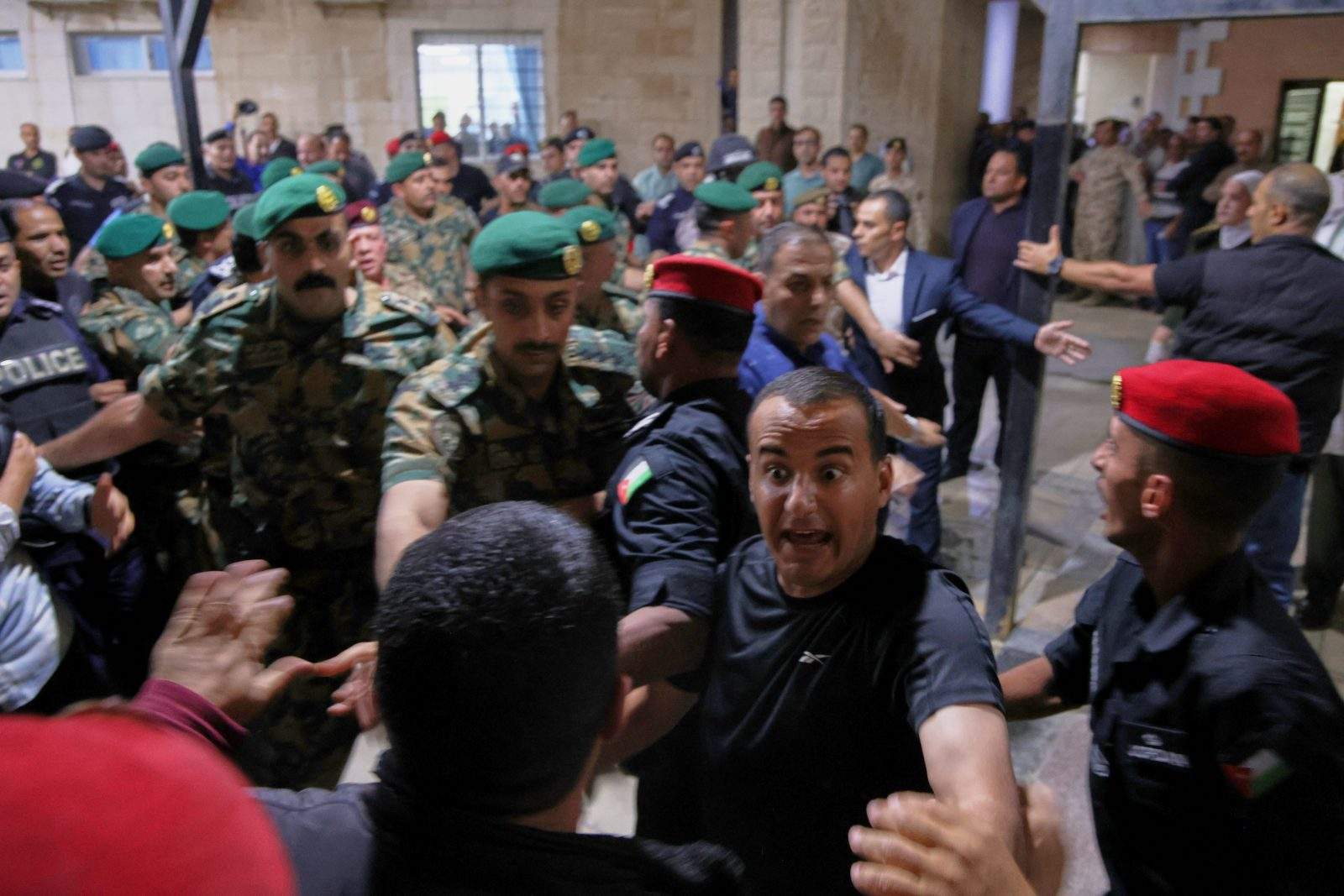
"Israel begins demolitions in West Bank."
That headline is a lie. Not because bulldozers aren't running—they are, across Hebron, Salfit, Tubas, and the Jordan Valley. It is a lie because of the word begins. For a closer look into similar topics, we recommend: this related article.
You cannot "begin" a policy that has been running on autopilot for over half a century. Every time a wire service publishes that exact six-word headline, it manufactures amnesia. It frames a permanent, automated bureaucratic machine as a sudden, isolated flare-up. A breaking news alert. A temporary spike in friction.
It isn't. For additional details on the matter, detailed analysis can also be found at The New York Times.
If you want to understand what is actually happening on the ground between the Jordan River and the Green Line, stop reading breaking news alerts about bulldozers. Look at zoning maps. Look at municipal master plans. Look at the paperwork. Because the real weapon reshaping the West Bank isn't a Caterpillar D9—it is an unapproved building permit.
The Wire-Service Illusion
Mainstream coverage of West Bank demolitions follows a predictable, lazy script. A convoy rolls into a village at dawn. A two-story house, a sheep pen, or a solar array gets flattened. A spokesperson cites "illegal construction without permits." An NGO issues a press release counting the displaced. Everybody moves on until the next dawn raid.
Both sides of the standard media framing miss the actual mechanics of the system.
One side treats the demolitions as routine municipal code enforcement—no different than a city inspector tearing down an unpermitted garage in Chicago or Tel Aviv. The other side treats them purely as sporadic military raids driven by whichever hardline minister happens to hold the Defense Ministry portfolio that week.
Both takes are dead wrong.
I have spent years dissecting land-use regimes, military orders, and diplomatic frameworks across the Levant. When analysts treat these demolitions as random acts of localized violence or simple zoning violations, they miss the architecture underneath. The bulldozers are just the final, loud step of a quiet legal stranglehold designed under the 1995 Oslo II Accords—a framework originally sold to the world as a temporary five-year bridge to peace.
The Area C Trap
To understand why structures get torn down, you have to understand the geographic straitjacket created in 1995. Oslo II carved the West Bank into three administrative zones:
- Area A: Roughly 18% of the territory, encompassing major Palestinian cities, under Palestinian Authority (PA) civil and security control.
- Area B: Roughly 22%, covering rural towns and villages, under PA civil control and joint Israeli-Palestinian security control.
- Area C: Roughly 60% of the entire West Bank—the contiguous land mass containing the Jordan Valley, major aquifers, agricultural plains, and the corridors connecting every Palestinian city to every other Palestinian city.
Under Oslo II, Area C was supposed to be gradually transferred to Palestinian jurisdiction by 1999. That transfer never happened. Instead, temporary military administration hardened into permanent governance.
In Area C, the Israeli Civil Administration (ICA)—a arm of the Defense Ministry's Coordinator of Government Activities in the Territories (COGAT)—controls 100% of spatial planning, zoning, and construction permits.
Here is the catch that wire reports bury in paragraph nine, if they mention it at all: Palestinians cannot legally build in Area C because the zoning plans required to issue permits simply do not exist.
Let that sink in.
To get a building permit anywhere on Earth, your plot of land must be covered by an approved local outline plan designating it for residential, agricultural, or commercial use. In Area C, the ICA relies heavily on British Mandate-era regional plans drawn up in the 1940s—plans that zoned almost the entire rural West Bank as "agricultural" or "nature reserve," freezing Palestinian village boundaries at their mid-20th-century footprints.
Over the past decade, Palestinian communities and international urban planners submitted roughly 100 technically sound local outline plans to the ICA to accommodate basic population growth. Only three were approved.
When UN-Habitat convened an International Advisory Board of senior urban planners from the UK, Germany, South Africa, and Canada to audit the system, their verdict was blunt. The bottleneck wasn't technical incompetence on the ground. Planning itself had been militarized. Fewer than 1% of Area C is zoned for Palestinian development, and even within that microscopic sliver, the land is already built out.
So when a family in Yatta or the Jordan Valley needs a room for a newborn, a cistern for rainwater, or a shed for livestock, they face a binary choice:
- Apply for a permit that carries a near-zero statistical probability of approval, wait years, and pay thousands of dollars in fees for an inevitable rejection.
- Build without a permit, knowing the structure is instantly classified as "illegal" and slated for demolition.
Calling that "code enforcement" is like banning a city from issuing driver's licenses and then impounding every car on the road for unlicensed driving. The illegality isn't a bug in the system. The illegality is the product.
The Real Question Nobody Asks
When readers search for news on West Bank demolitions, they usually ask two questions: Why is Israel demolishing homes? and Is it legal under international law?
Both questions trap you in an endless loop of talking points.
If you ask why, you get dueling press releases: security buffer zones and zoning compliance versus demographic engineering and creeping annexation. If you ask is it legal, you get a clash between the Fourth Geneva Convention—specifically Article 49 and Article 53, which prohibit an occupying power from destroying private property unless rendered "absolutely necessary by military operations"—and Israeli High Court jurisprudence that upholds British Mandate emergency regulations and military planning orders.
Ask a better question: Why are international donors still paying to build infrastructure they know will be bulldozed?
This is the dirty secret of the West Bank aid economy—and the place where conventional humanitarian consensus completely falls apart.
Over the last two decades, the European Union, individual European member states, and UN agencies have poured tens of millions of euros into Area C humanitarian projects. Solar grids. Water pipelines. Prefabricated classrooms. Animal shelters.
Because the ICA refuses to grant permits for these projects, European diplomats made a strategic calculation years ago: Build them anyway under the banner of urgent humanitarian necessity, slap a donor flag on the wall, and dare the bulldozers to touch them.
The bulldozers touched them anyway.
According to data compiled by the UN Office for the Coordination of Humanitarian Affairs (OCHA), more than 1,500 donor-funded structures—roughly one in every five structures demolished in Area C since 2009—have been flattened or confiscated by Israeli forces. In a single six-month stretch during the first half of 2026 alone, authorities executed 341 demolition operations across the West Bank, wiping out 740 structures.
European governments respond to the destruction of their own taxpayer-funded infrastructure with a ritualized diplomatic shrug. They issue strongly worded statements. They demand financial compensation that never gets paid. Then they allocate fresh budget lines to rebuild the exact same cisterns and classrooms in the exact same unpermitted zones, waiting for the next demolition cycle to reset the clock.
It is a closed loop of performative diplomacy. Donors subsidize the survival of communities that Israel's planning regime is actively trying to push into Areas A and B, while refusing to impose actual diplomatic or trade consequences when their own funded infrastructure is reduced to rubble.
Three Distinct Machines, One Headline
Another reason standard reporting fails is that it lumps completely different legal mechanisms into a single bucket labeled "demolitions." If you don't separate them, you can't see how the gears turn.
| Demolition Type | Stated Legal Basis | Target Profile | Actual Strategic Function |
|---|---|---|---|
| Administrative | Lack of ICA-issued building permit in Area C or East Jerusalem | Homes, wells, solar panels, greenhouses, schools | Territorial consolidation; restricting Palestinian footprint to urban enclaves |
| Firing Zone / Military | British Mandate-era closed military zone designations | Entire herding communities (e.g., Masafer Yatta) | Clearing strategic ridges and corridors for training and buffer zones |
| Punitive | Regulation 119 of the 1945 British Defence (Emergency) Regulations | Family homes of Palestinians accused or convicted of attacks | Collective deterrence aimed at families of attackers |
Look closely at that table.
Punitive demolitions get the loudest headlines because they follow violent attacks and involve explosive charges or sealed concrete pours. Yet statistically, they represent a tiny fraction of total structures destroyed. Even the Israeli military's own internal commissions—most notably the 2005 Shani Committee—questioned whether punitive home demolitions actually deter attackers or simply radicalize the next generation of grieving relatives.
Administrative demolitions are the quiet juggernaut. They require zero security pretext. No attack has to occur. No soldier has to be threatened. A clerk signs a stop-work order, a military court rubber-stamps the lack of a permit, and an excavator turns a family's life savings—or an agricultural cooperative's five dunams of greenhouses—into twisted metal and concrete dust.
Meanwhile, look at the parallel track operating in the exact same territory. While Palestinian master plans sit frozen in bureaucratic limbo, unauthorized Israeli settlement outposts—built without permits, often on privately owned Palestinian land—routinely receive retroactive legalization, state-funded paved roads, and immediate hookups to the national water and electricity grids.
Two populations living on the exact same hillside. Two completely separate legal universes. One builds without a permit and gets a municipal water main; the other builds without a permit and gets a bulldozer.
The Limits of the Contrarian View
Let's be honest about the blind spots in this analysis, because ignoring the counterarguments makes you as sloppy as the wire services.
First, Israel's security establishment isn't fabricating every single zoning concern out of thin air. Unregulated construction directly adjacent to major transport arteries like Route 60 or critical security barriers creates genuine tactical vulnerabilities for military patrols and civilian commuters. In any conflict zone, governments restrict construction near military installations and strategic highways.
Second, the Palestinian Authority bears its own share of structural blame. Decades of internal political paralysis, corruption, and institutional decay in Ramallah left rural Area C communities largely abandoned by their own leadership. The PA focused its administrative energy and donor cash on urban centers like Ramallah and Nablus, leaving peripheral herding and farming villages isolated long before an excavator ever arrived.
Admitting both realities doesn't weaken the core thesis—it sharpens it. Tactical security buffer zones near a highway do not explain bulldozing a rainwater cistern in an isolated desert valley miles from any settlement. And PA dysfunction does not force a military administration to reject 97% of rural village master plans.
How to Actually Read the Next Headline
If you are an analyst, a policymaker, or just a reader tired of being misled by cyclical news coverage, change how you process West Bank reporting immediately:
- Ignore the verb "begins." Check the cumulative OCHA database instead. Track monthly demolition averages, displacement ratios, and stop-work orders over five-year rolling windows. You aren't looking at a news event; you are looking at a demographic curve.
- Follow the water and solar infrastructure, not just the houses. Destroying a house displaces one family. Destroying a communal water well, a greenhouse, or a solar microgrid makes an entire village economically unviable without needing to issue a single expulsion order. Watch what gets targeted in agricultural zones.
- Watch the retroactive legalization ledger. Every time an announcement drops regarding Area C enforcement, cross-reference it against Israeli cabinet approvals for unauthorized outposts. The two numbers move in lockstep.
- Stop treating Oslo's zoning map as temporary. Any analysis built on the premise that Area C's administrative status is "pending final status negotiations" is operating on a 30-year-old hallucination. Analyze the territory as a single, integrated governance system where zoning is the primary instrument of statecraft.
The next time a headline flashes across your feed announcing that Israel has "begun" demolitions in the West Bank, don't click it for the play-by-play of the bulldozers. The bulldozers are just theater. The real story was written in a zoning committee room decades ago—and the ink never dried.