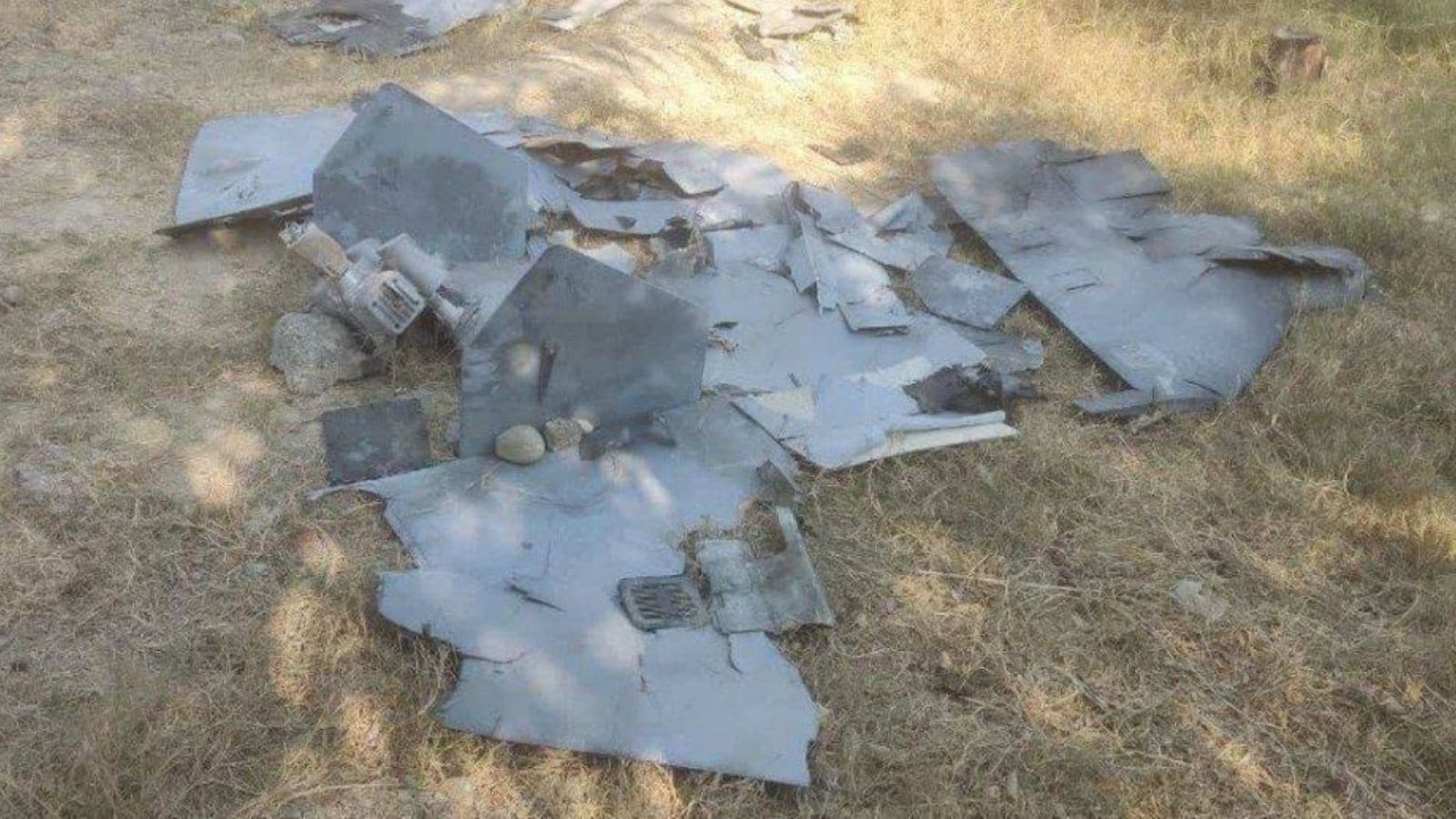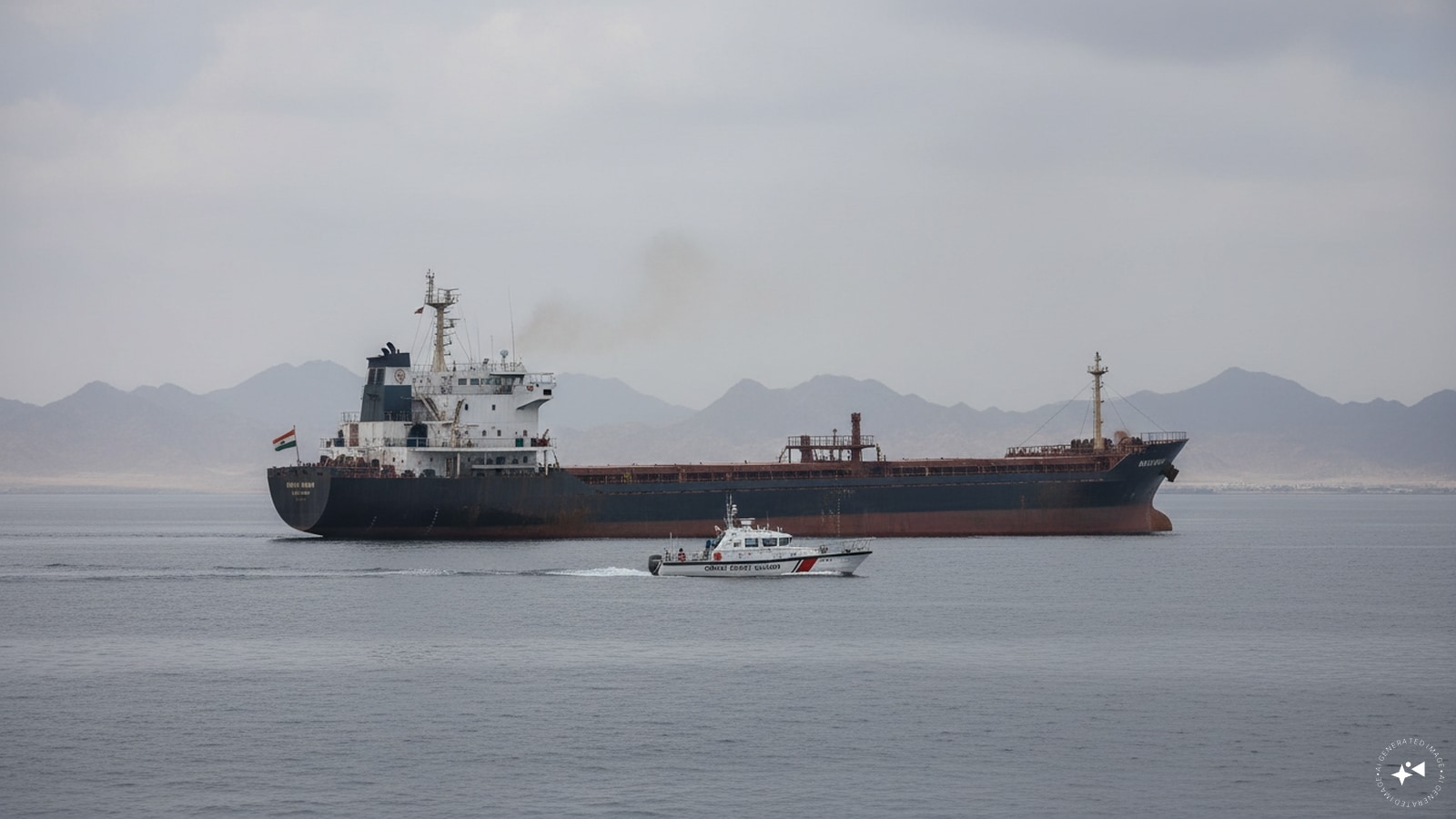
Another merchant ship burns in the Gulf of Oman. Another seafarer dies on deck while maritime press releases dutifully repeat the phrase "unidentified aerial object" like a sedative.
Read the standard coverage of an Indian-crewed vessel getting struck off the Omani coast and you will see the exact same lazy consensus every single time. Reporters treat the strike as a sudden geopolitical anomaly. Shipping executives call it an unforeseeable tragedy. Insurers adjust a spreadsheet, tack on a war-risk surcharge, and tell charterers that the system is working as designed.
It is not working. The modern commercial shipping model was built for a world where oceans were neutral highways, merchant hulls were untouchable, and cheap one-way attack drones did not exist in the inventories of non-state militias and regional proxies. Pretending that a fatal aerial strike off Oman is merely an unfortunate blip in normal trade is how crews get killed.
The Lie of the Unidentified Aerial Object
When a commercial ship takes a hit off Oman, the immediate linguistic reflex is to strip the event of agency. "Unidentified aerial object" sounds like weather. It sounds like a meteor or a stray calibration balloon.
That phrasing is a deliberate corporate and diplomatic buffer. Naming the munition forces accountability. Calling it a loitering munition, an
I have sat in maritime risk briefings where security consultants spent forty minutes debating whether a hull puncture came from an Iranian-designed Shahed variant or a modified commercial quadcopter, while completely ignoring the fact that the vessel's bridge crew had zero electronic warfare capability and zero warning time. Obsessing over the serial number of the debris misses the point. Commercial hulls are thin-skinned steel boxes filled with volatile fuel, pressurized pipes, and exhausted human beings. A fifty-kilogram warhead detonating near an engine room casing or accommodation block does not need military-grade precision to turn a routine transit into a mass-casualty event.
Why Commercial Ships Are Sitting Ducks
Naval warships survive aerial threats through layered defense: long-range radar, electronic jamming, surface-to-air interceptors, and close-in weapon systems that shred incoming projectiles seconds before impact.
Merchant vessels have none of that. International maritime law and port-state regulations actively prohibit commercial cargo ships and tankers from carrying offensive weaponry or heavy defensive systems. Even when private maritime security teams are embarked—a practice normalized during the Somali piracy crisis—those contractors carry small arms designed to deter skiffs at three hundred meters, not high-speed aerial drones diving at a forty-five-degree angle.
Putting armed guards with rifles on a tanker to stop an aerial drone strike is like handing a security guard an umbrella to stop artillery. Yet shipping companies still market "enhanced security protocols" to nervous cargo owners as if extra deck watches can outstare an incoming warhead at night.
The War-Risk Insurance Illusion
If you want to understand why ships keep transiting high-threat corridors right up until the moment a hull is breached, follow the underwriting money.
The London insurance market and the
Here is the dirty secret of maritime underwriting: risk pricing is not risk prevention.
A 0.5% or 1% surcharge on a hundred-million-dollar vessel generates massive premium revenue for syndicates while doing literally nothing to harden the ship's superstructure or protect the fourteen crew members sleeping above the waterline. Charterers pay the fee, pass the cost down the supply chain to consumers, and treat the insurance certificate as a moral absolution. If the ship makes it through, everyone pockets the margin. If the ship gets hit and a seafarer dies, the Protection and Indemnity club processes the death benefit according to standardized collective bargaining tables.
Imagine a scenario where a charterer faces a choice between a 48-hour delay to wait for naval convoy coordination or an immediate transit through an unpatrolled strait with a paid war-risk rider. Nine times out of ten, the commercial pressure of demurrage penalties—which can easily burn $30,000 to $60,000 a day—pushes the master to sail. The financial penalties for being late are guaranteed and immediate. The risk of taking an aerial hit is statistical and abstract—until the radar screen flashes and the accommodation block catches fire.
The Invisible Cost Paid by Indian Seafarers
Look closely at the crew manifest whenever a merchant vessel is struck in the Middle East. Time and again, the casualties are Indian, Filipino, or Eastern European mariners.
India supplies roughly 10% to 12% of the global seafaring workforce, according to data tracked by the
When a foreign-flagged vessel—owned by a shell company in Marshall Islands, managed out of Greece or Dubai, insured in London, and carrying cargo between Gulf ports and Asia—gets hit off Oman, diplomatic responsibility fractures instantly.
- The flag state often lacks a blue-water navy capable of escorting its registered fleet.
- The beneficial owner is shielded behind layers of corporate maritime law.
- The home nation of the crew is left managing grieving families and negotiating repatriation after the smoke clears.
We talk endlessly about supply chain resilience, port automation, and carbon intensity indicators, while treating the human beings operating the ships as interchangeable biological components. A seafarer signing a nine-month contract does not get a vote on whether the charterer accepts a risky spot fixture near a conflict zone. Refusing to sail into a war-risk listed area can mean contract termination, blacklisting by manning agencies, and financial ruin for a family relying on remittances. That is not free consent. That is economic coercion dressed up as maritime tradition.
Dismantling the Maritime Security Myths
If you search for answers after a strike in the Gulf of Oman, you will run into three persistent myths pushed by industry commentators. Every single one of them is dangerously wrong.
Myth 1: Turning Off AIS Makes a Ship Invisible
Ship masters routinely switch off their
This is tactical theater. Turning off AIS only hides a vessel from open-source ship-tracking websites and basic commercial receivers. Any state actor or sophisticated proxy force operating along the Omani or Iranian coastline has access to coastal surface-search radar, electro-optical patrol drones, commercial synthetic aperture radar satellites, and human spotters on fishing dhows. Going dark on AIS does not hide a 250-meter steel tanker; it actually strips away the ship's public visibility, making it harder for allied naval task forces in the region to track the vessel and respond rapidly when an emergency beacon fires.
Myth 2: Flag Neutrality Protects Non-Belligerent Vessels
Many analysts assume that ships with no direct corporate ties to combatant nations are safe from deliberate targeting. The reality of asymmetric maritime warfare proves the exact opposite.
Modern maritime disruption campaigns rely on ambiguity and broad economic friction. Attackers frequently target vessels based on outdated ownership registries, historical port calls from two years prior, or simply because a ship represents an accessible, high-visibility target that drives up regional freight rates. The crew on deck has zero visibility into who owned the hull three corporate restructurings ago. Assuming a neutral cargo manifest acts as a shield against an incoming drone is lethal naivety.
Myth 3: Naval Coalitions Can Guarantee Safe Passage
Whenever a ship burns in the Arabian Sea, governments announce new naval patrols or maritime security initiatives. Destroyers and frigates deploy, helicopters launch, and press conferences celebrate freedom of navigation.
Navies are indispensable for rescuing survivors—as seen when thirteen crew members are pulled from lifeboats after a strike—but naval presence cannot seal hundreds of thousands of square miles of ocean against low-cost aerial threats. A single air-defense interceptor fired by a naval destroyer costs between $2 million and $4 million. A one-way attack drone costs $20,000. You cannot mathematically win an attrition exchange when the defender pays two hundred times more per shot than the attacker, and you cannot station a guided-missile destroyer beside every merchant ship transiting between Fujairah and Mumbai.
What Actually Needs to Change
Complaining about asymmetric warfare does not protect a single engine room. If the shipping industry wants to stop burying seafarers every time regional tensions flare off Oman, it needs to abandon cosmetic compliance and enforce structural changes.
- Mandatory Passive Hardening on High-Risk Routes: Vessels transiting war-risk listed areas must carry reinforced blast-mitigation plating around fuel manifolds, redundant fire-suppression risers, and hardened safe rooms (citadels) rated against shrapnel and overpressure—not just small-arms fire.
- Electronic Detection and Counter-UAS Kits: Maritime regulators must carve out clear legal frameworks allowing commercial ships to mount passive radio-frequency drone detectors and non-kinetic electronic jamming systems. A bridge crew should never learn about an aerial threat from the sound of an explosion.
- Unconditional Right of Refusal Without Blacklisting: International maritime labor conventions must be enforced with teeth. Any seafarer who refuses to transit a designated war-risk zone must be guaranteed full repatriation at the owner's expense with zero penalty to future employment.
- Penalize Reckless Routing: Charterers who force vessels through unescorted high-threat corridors to save fuel or avoid port congestion should face direct statutory liability—not a tax-deductible insurance write-off—when a crew member is killed.
The maritime industry loves to boast that 90% of global trade moves by sea. It rarely mentions that the entire edifice rests on the willingness of underpaid crews to sail unarmed targets through contested waters while executives debate freight indices in air-conditioned offices.
Until the financial cost of losing a seafarer exceeds the cost of rerouting a ship, the phrase "unidentified aerial object" will keep appearing in the headlines, and bodies will keep coming home in cargo holds.