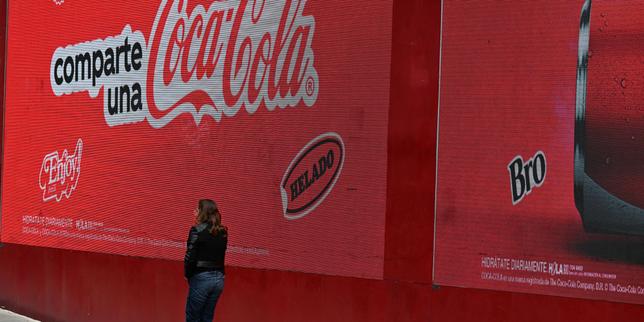
The standard narrative on Coca-Cola in Mexico is a tired, predictable script. You know it by heart. Multinationals "exploit" local culture, weaponize sports like the World Cup to hook children on sugar, and drain the water tables while the population rots from the inside out with type 2 diabetes. It is a story of villains and victims.
It is also an intellectual shortcut.
Critics love to point at the World Cup marketing and scream "predatory." They see a billboard in Chiapas or a television spot during a Mexico national team match and conclude that marketing is a form of mind control. This assumes the Mexican consumer is a mindless vessel with no agency. It ignores the reality of why these products are embedded in the fabric of the country. If you want to understand the "soda crisis," you have to stop looking at the red cans and start looking at the collapse of public infrastructure and the failure of domestic food policy.
The Myth of the Marketing Monopoly
The argument that Coca-Cola "uses" the World Cup to "thirst for profits" implies that without this marketing, Mexico would suddenly become a bastion of kale smoothies and artisanal spring water. This is a fantasy.
In Mexico, Coca-Cola isn't just a beverage; it’s a logistics miracle. I have spent years observing supply chains in Latin America, and the "last mile" delivery capabilities of these bottling companies put government social programs to shame. In remote villages where the state fails to provide paved roads, electricity, or even basic medicine, the red truck still arrives.
Why? Because the distribution network is built on the backs of hundreds of thousands of "tienditas"—family-owned micro-businesses. For these families, the "profit" critics despise is actually their mortgage payment, their kids' school fees, and their survival. Attacking the brand’s presence during a global event like the World Cup ignores the fact that for the local shopkeeper, these events represent one of the few times their inventory turnover actually matches their overhead.
The Water Scapegoat
The most popular cudgel against the industry is water scarcity. The optics are easy: a giant factory pumping millions of liters while nearby taps run dry. It makes for a great headline. It also misses the math of the hydrological cycle.
Industrial water use by beverage companies typically accounts for less than 2% of total water consumption in Mexico. Agriculture, by contrast, consumes roughly 75% to 80%, often using antiquated, wasteful flood irrigation techniques supported by government subsidies. If you shut down every bottling plant in the country tomorrow, the water crisis in places like San Cristóbal de las Casas wouldn't disappear. It wouldn't even noticeably improve.
The real culprit is a crumbling, corrupt municipal water management system that loses up to 40% of its water to leaks and theft before it ever reaches a household. Focusing on the soda plant is a convenient distraction for politicians who would rather blame a foreign entity than fix the pipes or regulate the massive agricultural conglomerates wasting the lion's share of the resource.
The Tax That Failed
The 2014 sugar tax was hailed as a "paradigm-shifting" victory for public health. A decade later, the data tells a messy story. While there was a slight initial dip in consumption, the long-term impact on obesity rates has been negligible.
The tax failed because it was a regressive penalty that didn't account for the "calorie substitution" effect. When people with limited income face higher prices for one calorie source, they don't necessarily switch to water (which, in many parts of Mexico, isn't safe to drink from the tap). They switch to cheaper, equally processed alternatives.
The tax didn't address the "food desert" reality of rural and low-income urban Mexico. When the only source of hydration that won't give you cholera is bottled, and the most affordable source of quick energy is a high-calorie snack, a 10% price hike is just a tax on being poor. It doesn't change behavior; it just shrinks the grocery budget for everything else.
The World Cup as a Cultural Mirror
Critics act as if Coca-Cola is forcing its way into the Mexican soul through football. The reality is the opposite: the brand is desperately trying to keep up with a cultural obsession that already exists.
Football in Mexico is a secular religion. The World Cup is its high holy period. The "thirst for profits" is simply a response to a massive spike in consumer demand and engagement. The idea that people are "tricked" into drinking soda while watching a match is patronizing. They drink it because it is part of the social ritual, much like beer in Germany or tea in England.
If we are going to talk about "predatory" behavior, let’s talk about the lack of investment in public sports facilities. Let’s talk about the fact that it is often cheaper and safer for a kid in a Mexico City suburb to sit on a couch with a soda than it is for them to find a safe, well-lit park to play football. The brand isn't replacing the sport; the brand is filling the vacuum left by a society that has commodified every inch of public space.
The Hard Truth About Public Health
Mexico’s health crisis is real. The rates of diabetes are staggering. But you cannot solve a systemic health crisis by banning billboards or taxing a single ingredient.
The solution requires:
- Massive investment in water treatment: Making tap water drinkable is the only way to break the dependency on bottled beverages.
- Structural agricultural reform: Shifting the 80% water usage away from wasteful practices.
- Urban redesign: Creating environments where physical activity is a default, not a luxury for those with gym memberships.
The "contrarian" take isn't that soda is good for you. It obviously isn't. The take is that the obsession with the "Big Soda" villain is a lazy intellectual exercise that allows the true architects of Mexico’s decline—the corrupt bureaucrats and the inefficient state planners—to escape accountability.
We love to hate the red logo because it’s easy to see. It’s much harder to fix a broken country.
The World Cup will end, the banners will come down, and the critics will move on to the next outrage. Meanwhile, the water will still leak from the pipes, the parks will remain closed, and the "tiendita" owner will still be the only person providing a reliable supply chain to the forgotten corners of the nation.
Stop asking why the soda is there. Ask why nothing else is.