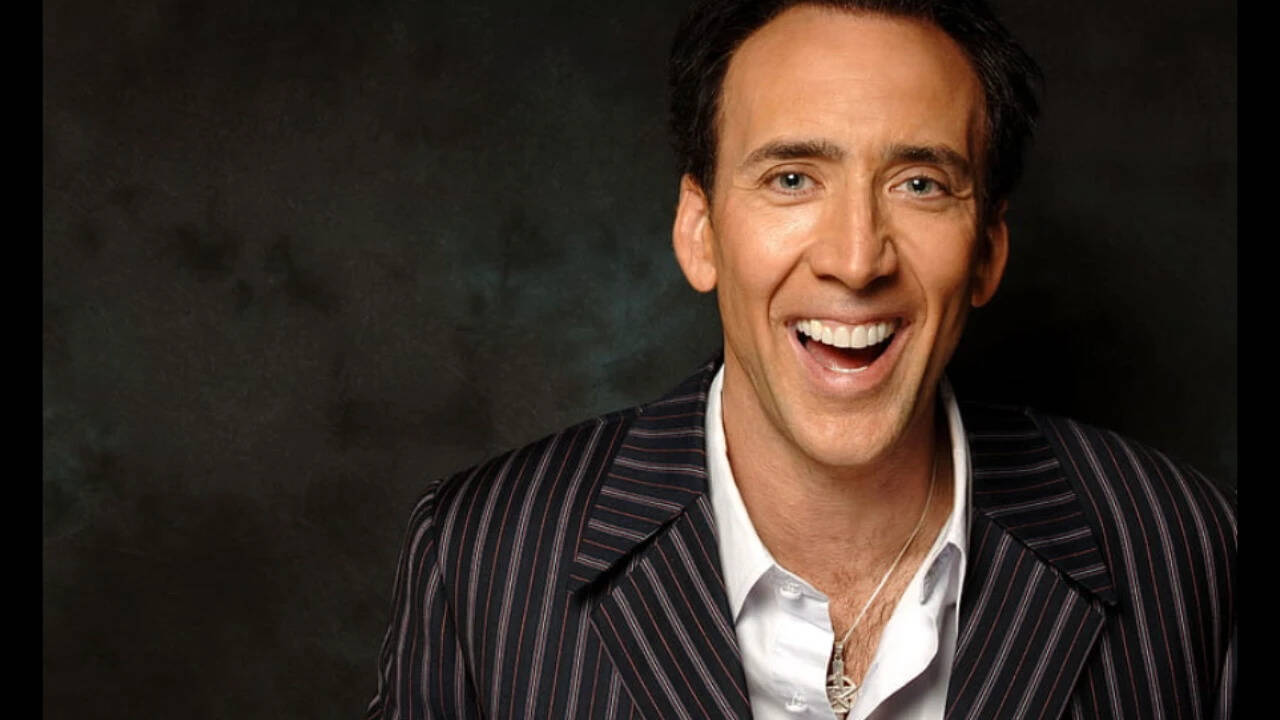
Every financial journalist with a keyboard and a subscription has dragged Nicolas Cage through the mud for buying a Rhode Island estate for fifteen million seven hundred thousand dollars and dumping it a year later for a devastating loss. The headlines write themselves. Eccentric actor buys castle, goes broke, gets fleeced by the market. It is a comforting fable for people who prefer simple moralizing over market mechanics.
It is also complete nonsense. Also making news in this space: The Illusion of Safety When Millions Are on the Line.
I have watched wealth evaporate across three decades of high-net-worth advisory, corporate liquidations, and distressed asset restructuring. I have seen founders blow fortunes on private islands, venture capitalists sink sovereign wealth into vanity tech plays, and celebrities buy architectural white elephants that should carry hazard warnings. But blaming Cage for a personal financial collapse based on the Grey Craig mansion sale completely misdiagnoses how mega-wealth actually implodes. The narrative of the reckless spender buying haunted castles is a lazy media pacifier. The reality is a masterclass in macroeconomic timing, forced liquidation dynamics, and the brutal mathematical truth of illiquid trophy assets colliding with a global liquidity freeze.
Let us look past the tabloid folklore and examine what actually happened on that Newport peninsula. Further details on this are covered by Reuters.
The Myth of the Reckless Buyer in a Rational Market
The consensus story goes like this. Nicolas Cage made millions starring in blockbuster movies, lost his mind, bought a collection of castles, skull bones, and sprawling historical manors, and got crushed by his own profligacy. This framing assumes a functioning, rational market where buyers make deliberate choices based on long-term value discovery.
That assumption is your first mistake.
When Cage acquired Grey Craig in Newport, Rhode Island, in June two thousand seven, he was not acting as a casual homebuyer comparing school districts and kitchen granite. He was operating at the absolute vertical apex of the largest credit bubble in human history. Asset prices were completely decoupled from reality. Money was cheap, abundant, and aggressively pushed onto anyone with a recognizable name and a line of credit.
Financial institutions were throwing eight-figure loans at borrowers with zero underwriting discipline. When capital is free and flowing like river water, price discovery breaks down entirely. Calling someone foolish for buying at the peak of two thousand seven is like blaming a sailor for standing on deck during a tidal wave. The entire ecosystem was engineered to separate high-earning individuals from their capital through structural debt and inflated valuations.
Furthermore, treating a nineteenth-century stone manor in Newport like a standard piece of residential real estate is fundamentally illiterate. Grey Craig is not a house. It is an industrial-scale financial liability wrapped in Vermont granite and slate. It requires a standing army of specialized artisans just to keep the roof from leaking and the HVAC systems from seizing. When you buy a sprawling historical estate, you are not buying a place to sleep. You are acquiring an unlisted, illiquid operating business with zero revenue and infinite overhead.
The Anatomy of a Forced Fire Sale
The real story of the Rhode Island estate is not about overpaying. It is about the absolute terror of a forced liquidation.
There is a massive, life-altering difference between choosing to sell an asset and being forced to hand over the keys at gunpoint by your creditors, the Internal Revenue Service, and a compromised business management team. By two thousand eight and two thousand nine, Cage was not managing his portfolio from a position of calm, strategic detachment. He was embroiled in a bitter, multi-million-dollar legal war with his former business manager, Samuel Levin, whom Cage sued for negligence and fraud, alleging that Levin pushed him into catastrophic financial positions and failed to pay his taxes on time.
When the tax man comes knocking for mandatory back-taxes running into the millions, and your cash flow is suddenly choked off by legal disputes and contracting studio fees, your balance sheet undergoes a violent state change. You no longer have the luxury of time. You cannot wait for the right buyer, stage the property for architectural digests, or hold out for a price that reflects replacement cost.
In a forced fire sale, you take whatever bid is standing on the table before the sheriff arrives at the gate.
Selling Grey Craig for roughly six point two million dollars after purchasing it for fifteen point seven million dollars looks like an unmitigated disaster on a simple spreadsheet. But in the theater of distress, transaction velocity overrides valuation optimization every single time. If your choice is between accepting a brutal multi-million-dollar nominal loss or facing asset seizures, bankruptcy court rulings, and public humiliation, you take the haircut. The buyer who picked up that Newport estate for pennies on the dollar did not possess superior market foresight. They simply stood at the exit door with cash while a drowning man was thrown a rope made of barbed wire.
Why Ultra-Luxury Real Estate is Not an Investment
People look at real estate as an appreciating asset class. They buy into the cultural dogma that bricks and mortar always win in the long run. This fairy tale works reasonably well for suburban tract housing and standard urban multi-family units where a deep pool of credit-approved middle-class buyers guarantees baseline liquidity.
At the ultra-luxury tier, that entire framework shatters into glass.
Properties priced north of ten million dollars do not trade on rational economics. They trade on vanity, ego, sentiment, and the microscopic intersection of ultra-high-net-worth buyers who happen to want a specific architectural style in a specific zip code at that exact moment in time. The buyer pool for a sprawling historical mansion in Rhode Island is not deep. On any given Tuesday, there might be zero qualified buyers on planet Earth who want to take on the heating bills, historical preservation restrictions, and maintenance headaches of Grey Craig.
When you buy a trophy asset, you are purchasing a call option on liquidity. If the market turns south, or if your personal cash flow stutters, that option expires worthless with terrifying speed.
I have seen corporate executives and successful entrepreneurs make the exact same mistake with commercial real estate and private aviation. They confuse income with liquidity. They assume that because their annual cash generation is high, they can service the crushing carrying costs of hyper-illiquid luxury holdings. Then a macro shock hits, revenues contract by fifty percent, and fixed costs remain entirely rigid. The asset that looked like a badge of triumph becomes a financial anchor dragging the entire balance sheet into the abyss.
Cage did not lose money because he bought a castle in Rhode Island. He lost money because he was burdened with excessive debt in assets that take years to monetize, right as the global financial system suffered a cardiac arrest.
The Tax Reality Nobody Talks About
Let us talk about the silver lining that tabloid journalists conveniently ignore because it ruins a good morality play.
When an investor or high-earning individual realizes a massive capital loss, that loss does not simply vanish into thin air. Under federal tax laws, capital losses can be used to offset capital gains. Furthermore, depending on the structuring of the business entities involved and the specific nature of the write-downs, realized losses of that magnitude can provide substantial tax sheltering capabilities against ordinary income or future earnings over subsequent tax years.
While losing millions in cash equity is never a profitable strategy, high-net-worth individuals operate in a completely different financial dimension than the average wage earner. A multi-million-dollar loss realized during a restructuring phase can act as a financial reset button. It clears the decks of toxic liabilities, stops the bleeding of ongoing maintenance overhead on a drainpipe property, and allows the individual to restructure their financial architecture from the ground up.
Did Cage take a bath on the transaction? Absolutely. Was it the catastrophic end of his career and financial existence? Look at his filmography, his earnings, and his ongoing career over the subsequent decade and a half. He kept working, kept producing, kept paying off obligations, and remains one of the most culturally vital and industrious actors working in cinema today. The narrative of the penniless star wiped out by bad real estate is a myth invented by writers who cannot conceptualize millions of dollars moving through an active corporate balance sheet.
People Also Ask
Did Nicolas Cage go bankrupt from buying castles?
No. While he faced severe liquidity crunches, tax liens, and a messy legal battle with his former business manager over alleged financial mismanagement, his financial distress was driven by a toxic combination of massive cash-flow interruptions, aggressive tax liabilities, and over-extended illiquid assets during a global financial collapse. He did not file for formal personal bankruptcy; he restructured, sold off assets, and aggressively worked off his obligations.
Is Grey Craig still standing in Newport?
Yes. The historic estate located on Newport's prestigious Ocean Drive continues to exist as a monument to early twentieth-century architectural ambition. Subsequent owners have poured millions into modernizing and restoring the property, proving that the physical asset itself was never broken—the financial timing and liquidity structure surrounding its purchase in two thousand seven were simply lethal.
Why do celebrities buy historical mansions?
Psychology, status signalling, and creative inspiration. For actors and artists, environment dictates output. A historic stone manor feels like a living canvas. But romanticizing architecture without accounting for holding costs and liquidity constraints is a recipe for financial trauma.
The Brutal Rules of High-Net-Worth Survival
If there is any genuine lesson to extract from the Nicolas Cage Rhode Island real estate saga, it has nothing to do with acting, film choices, or personal eccentricity. It is a harsh clinic in asset-liability management that every entrepreneur, executive, and high earner should tattoo on their forearm.
First, income is not liquidity. Earning twenty million dollars a year means nothing if your fixed overhead and debt service commitments consume twenty-one million.
Second, illiquid trophy assets are financial weapons pointed directly at your own balance sheet. If an asset cannot be liquidated within thirty days at a predictable price floor, it is not an investment. It is a luxury consumption expense masquerading as an asset. Treat it accordingly. Never fund illiquid lifestyle purchases with short-term capital or variable-rate credit lines.
Third, when the macro environment shifts from expansion to contraction, speed is your only defense. The worst financial mistake you can make during a liquidity crisis is hesitation. Trying to protect your ego by holding out for a better price while holding depreciating, cash-bleeding inventory is how empires turn to dust. Take the loss, cut the cord, and preserve your core operational cash.
Nicolas Cage did not fail because he bought a castle in Rhode Island. He failed because he fell victim to the oldest trap in high finance: confusing a temporary flood of cheap credit with permanent structural wealth, and getting caught holding the bill when the tide went out. Stop judging his taste in real estate and start learning from his crash.