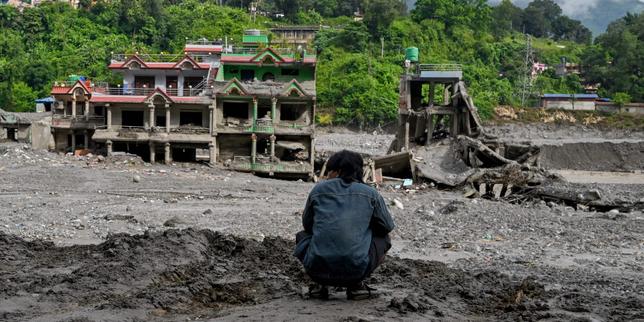
Every time water swallows a mountain village, the media reaches for the same lazy script. We get satellite shots of brown torrents, a somber anchor quoting casualty figures, and a collective sigh about the wrath of angry skies. The headlines scream about unprecedented monsoons, climate anomalies, and tragic acts of god. It is a comforting narrative because it absolves everyone in power.
It is also a dangerous lie.
When thousands vanish in the valleys of Nepal and Tibet, the trigger is rarely just heavy rain. The trigger is decades of reckless infrastructure design, corrupted environmental oversight, and a systemic refusal to treat mountain geography with the respect it demands. We are not watching a natural disaster. We are watching an engineering crime scene.
The Myth of the Unprecedented Downpour
Meteorologists track rainfall metrics down to the millimeter. Every wet season, authorities trot out percentages showing how this year exceeded the fifty-year average. They want you to believe that the sheer volume of water defied all human capability to prepare.
That argument collapses under basic scrutiny.
Monsoons in the Himalayas have never been gentle. Seasonal flooding is an ancient, predictable ecological rhythm. The mountain architecture evolved over millions of years to handle massive water pulses through deep gorges and wide floodplains. The failure does not lie in the clouds. It lies in what we built beneath them.
I have spent years walking the Himalayan corridors, talking to hydrologists who are too terrified of local ministries to publish their real findings. The data points to a different reality. The damage scales directly with human intrusion into natural drainage zones. When you narrow a river channel with unengineered road cuttings, pave over ancient absorption zones, and dump millions of tons of debris from poorly planned hydroelectric projects directly into riverbeds, you create a hydraulic time bomb.
The rain just pulls the pin.
Engineering Hubris at High Altitudes
Take a look at how mountain roads are built across the region. To connect remote trading posts and border outposts, contractors slice into unstable mountain toes using heavy excavators. The excavated earth and rock do not get hauled away—hauling costs money. Instead, it gets pushed down the slope toward the nearest river.
This practice, known locally as side-casting, turns every road project into an active contributor to downstream destruction. When the monsoon hits, that loose scree liquefies into a fast-moving slurry. It turns ordinary streamflow into a debris flow, a dense wave of mud and boulders that multiplies the kinetic energy of the water tenfold.
A normal flood washes over a field. A debris-flow avalanche takes out concrete bridges, crushes multi-story buildings like soda cans, and buries entire hamlets under twenty feet of gravel.
Yet, when the rescue helicopters finally land, the press release never mentions the contractor who cut corners to save a week on the timeline. It blames the climate. It blames the clouds.
The Trans-Boundary Data Black Hole
Another favorite excuse from officials is the lack of early warning systems. Tibet and Nepal sit in a geopolitical fault line where sharing hydrological telemetry is often bogged down by bureaucratic friction and strategic paranoia. Upper riparian states sit on crucial upstream data about glacial lake outbursts and heavy precipitation cells, while downstream communities wait blindly for the wave to hit.
This is a governance failure disguised as a technical limitation.
Modern satellite remote sensing can track soil saturation and precipitation anomalies in real time. We possess the radar imagery, the weather modeling, and the sensor technology to predict flash floods hours before they materialize. But knowing about a threat is useless if the political structure has no mechanism to evacuate a valley without causing economic panic.
Local commerce dictates that tourist lodges stay open, that transport trucks keep rolling, and that construction sites keep digging right up until the water breaches the doorframe. Money wins over safety every single time. Then the bodies are counted, the condolences are wired, and the rebuilding begins on the exact same vulnerable riverbanks.
Disrupting the Disaster Economy
We need to stop treating these events as anomalies to be survived and start treating them as design feedback.
If your bridge washes out every three years, the problem is not that the river is unusually angry. The problem is that you built the bridge in the wrong place, using the wrong span, with a total disregard for bedload transport dynamics.
Real mitigation requires abandoning the delusion that we can control Himalayan hydrology with concrete gabions and reactive dredging. It means enforcing strict zoning laws that keep permanent human habitation out of active alluvial fans. It means holding civil engineers criminally liable when their shortcuts lead to catastrophic failures downstream.
Until we stop hiding behind the weather report, the death tolls will keep climbing, and the mountains will keep proving that human arrogance is the most fragile structure on Earth.