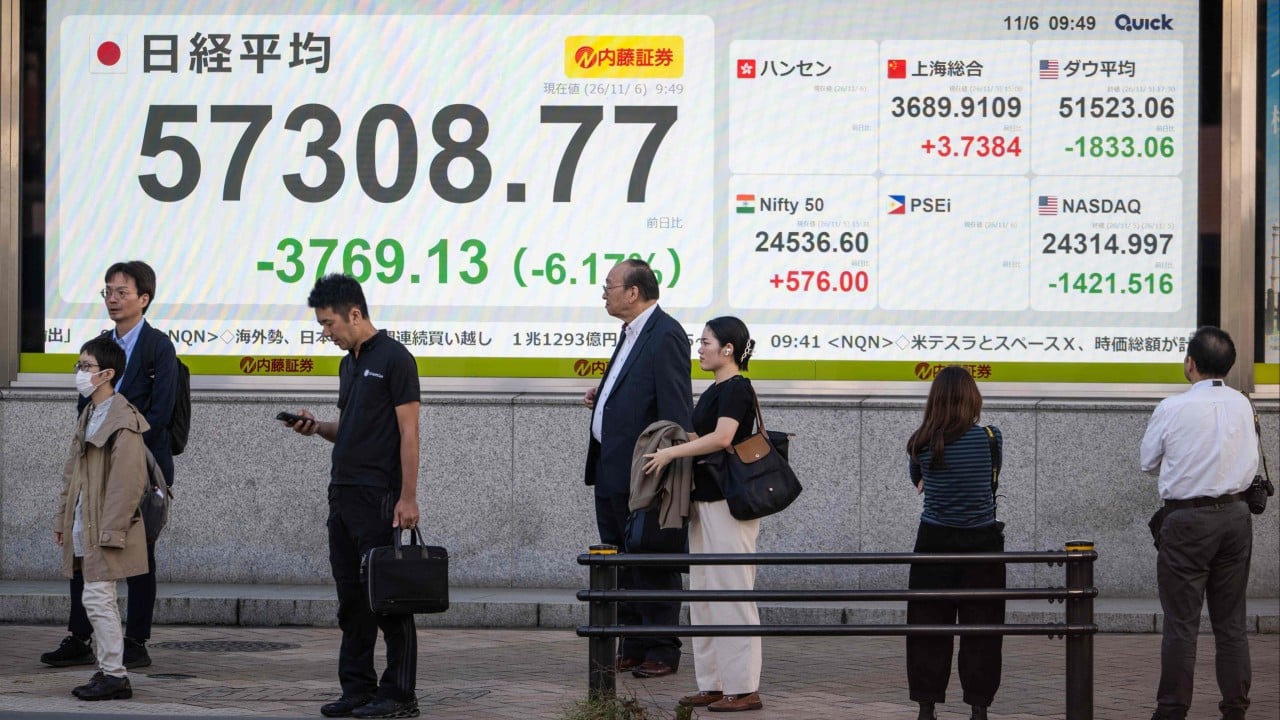
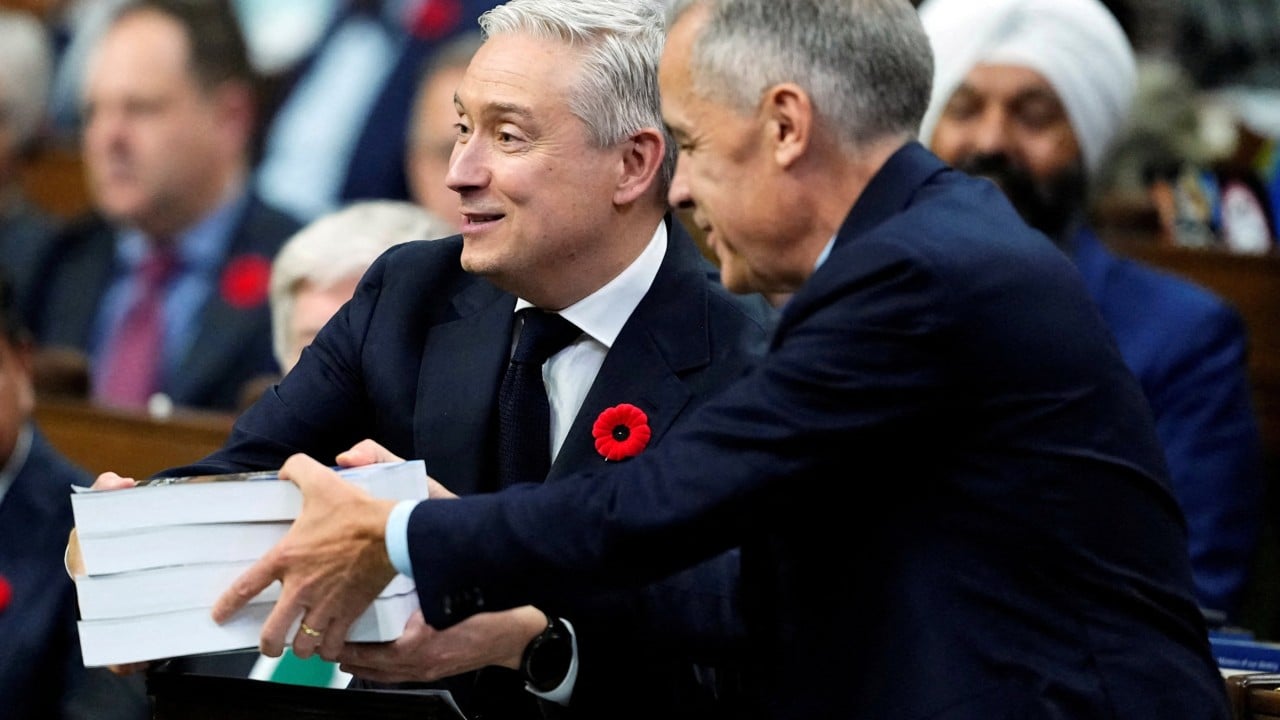
Wall Street loves a scapegoat, and Washington loves taking credit—or shifting blame—for things it barely controls.
Every two years, financial media falls into the exact same trap. When equities take a nosedive right after ballots are counted, pundits scramble to connect the red or blue dots on an electoral map to the red numbers flashing on Bloomberg terminals. The latest lazy consensus? That a Democratic midterm victory somehow spooked institutional investors into dumping trillions of dollars in U.S. equities, validating Donald Trump’s claim that a shift in congressional power caused the selloff.
It is a great headline. It generates clicks from angry partisans on both sides of the aisle. It is also completely detached from how institutional capital actually moves.
If you are trading your portfolio based on who holds the gavel in the House of Representatives, you are playing a rigged game with terrible odds. Markets do not crash because of surprise midterm outcomes. Markets sell off because of liquidity crunches, valuation compression, and central bank balance sheets—and they use political theater as a convenient excuse to reprice risk that was already mispriced months ago.
The Myth of the Political Market Maker
I have spent nearly two decades sitting on institutional trading desks watching retail investors get chewed up by political narratives. I have seen family offices blow millions rotating into "defense stocks" or "green energy plays" the morning after an election, only to watch those exact sectors crater while the broader S&P 500 rips higher.
Why does this happen? Because political pundits view the stock market as a real-time approval rating for politicians. Institutional algorithms view the stock market as a discounting mechanism for future cash flows.
To understand why blaming a midterm outcome for a selloff is pure amateur hour, you have to understand price discovery. By the time the first Tuesday in November rolls around, prediction markets, institutional polling aggregators, and dark pool positioning have already priced in the probabilities of every viable electoral outcome. Historically, the president's party loses seats in the midterms. That is not breaking news; it is the baseline expectation baked into every quantitative model on Wall Street since the 19th century.
When an expected event happens and the market drops anyway, financial journalists call it a "reaction." Traders call it a liquidity event.
What Actually Triggers Post-Election Selloffs
When equities dump right after an election, look past Capitol Hill and look straight at the yield curve and corporate earnings revisions.
- The End of the Buyback Blackout: Corporate share repurchases are the single largest source of net demand for U.S. equities. During earnings season—which coincides directly with the run-up to November elections—companies enter a mandatory blackout period where they cannot buy back their own stock. Liquidity dries up. Order books get thin. When thin order books meet macro selling pressure, prices gap down violently.
- Tax-Loss Harvesting Season: November is prime time for institutional mutual funds and hedge funds to dump their losers before year-end to offset capital gains. That selling pressure has nothing to do with Congress and everything to do with the IRS calendar.
- The Fed’s Shadow: The Federal Reserve’s Federal Open Market Committee (FOMC) controls the price of money. Congress controls fiscal spending, which takes quarters—sometimes years—to filter through the real economy. When the cost of capital rises or real yields spike, high-multiple tech stocks get slaughtered regardless of whether a Republican or a Democrat signs the bills.
Gridlock Is Actually Wall Street's Favorite Drug
The fundamental flaw in claiming a Democratic midterm win tanks the market is that it ignores historical market mechanics. Institutional capital despises one thing above all else: legislative certainty.
Wait. Read that again.
Retail investors think Wall Street wants one party in total control so they can pass pro-business deregulation and tax cuts. That is half-true for about twenty minutes. Total one-party control also means radical policy swings, massive deficit spending, and unpredictable regulatory overhauls.
What big money actually craves is divided government.
When the White House is held by one party and one or both chambers of Congress flip to the opposition, sweeping legislative changes die in committee. Tax codes stabilize. Regulatory frameworks freeze. Major industry disruptions get shelved for at least two years. Corporations can suddenly forecast their capital expenditures, tax liabilities, and compliance costs with pinpoint accuracy.
Data compiled across decades of S&P 500 performance—analyzed extensively by firms like LPL Financial and Vanguard—consistently shows that the twelve-month period following midterm elections is historically one of the strongest stretches for U.S. equities, regardless of which party wins. Not because politicians suddenly become competent, but because the uncertainty of the election cycle vanishes and legislative paralysis sets in.
Blaming a Democratic congressional win for a market drop ignores the structural reality that Wall Street routinely bids up stocks specifically because a divided government prevents the executive branch from executing unilateral economic experiments.
Dismantling the "People Also Ask" Fallacies
When retail traders panic-search Google during a red week in November, they ask all the wrong questions. Let’s tear down the most common misconceptions driving bad portfolio decisions right now.
"Do stock markets always crash when Democrats win the midterms?"
No. The premise is statistically false. Market performance following midterm elections correlates with where the economy sits in the business cycle, not the party affiliation of the Speaker of the House. In 2018, Democrats won the House, and the market sold off sharply in Q4—not because of Nancy Pelosi, but because Federal Reserve Chair Jerome Powell explicitly stated that interest rates were "a long way from neutral" while simultaneously shrinking the Fed's balance sheet. Once the Fed pivoted in early 2019, the S&P 500 surged nearly 29% with the exact same Democratic House in place.
"Should I move my portfolio to cash before a contentious election?"
Moving to cash before an election is one of the fastest ways to permanently impair your compounding returns. Volatility spikes ahead of elections because implied volatility in the options market (measured by the CBOE Volatility Index, or VIX) gets bid up by institutions buying downside protection. Once the votes are counted, that implied volatility collapses—a phenomenon options traders call vol crush. Dealers who sold those protective puts buy back their hedges, creating mechanical upward pressure on stock prices. If you sit in cash, you miss the exact rebound triggered by the unwinding of pre-election hedges.
"Can a president actually crash the stock market with rhetoric?"
Short-term? Yes. Long-term? Never. Algorithms scrape news feeds and social media posts for keywords like "tariffs," "sanctions," or "tax hikes" and execute millisecond trades. That creates violent intraday candles that terrify retail traders watching 5-minute charts. However, algorithmic knee-jerks do not alter a company’s free cash flow yield over a three-year horizon. Rhetoric creates noise; earnings create trend.
The Uncomfortable Truth About My Contrarian View
Every market thesis has a breaking point, and pretending otherwise is how analysts lose credibility. While political posturing rarely drives sustained bear markets, there are two legitimate scenarios where Washington genuinely breaks the market's back:
- Sovereign Debt Brinkmanship: When congressional gridlock escalates from harmless legislative paralysis into legitimate threats of a U.S. Treasury default over the debt ceiling, the risk-free rate itself comes under attack. If the plumbing of the global repo market seizes up because politicians play chicken with Treasury payments, equity valuations will crater.
- Sudden Trade and Tariff Shocks: Unlike tax legislation, which moves through Congress at a glacial pace, trade policy and tariffs can often be enacted rapidly through executive authority. When supply chains are forcibly rerouted overnight, corporate profit margins compress immediately, forcing analysts to slash earnings-per-share (EPS) estimates across multinational indices.
Outside of those two acute shocks, political blame games are pure theater.
How to Actually Trade Post-Election Volatility
If you want to survive the crossfire between political opportunists and hyper-reactive financial news networks, stop watching cable news and start watching credit markets.
Imagine a scenario where the S&P 500 drops 3% the day after a midterm election while pundits scream that the winning party is destroying capitalism. Instead of hitting the sell button, open a chart of high-yield corporate credit spreads (such as the ICE BofA US High Yield Index Option-Adjusted Spread).
If stocks are dumping because of a genuine economic catastrophe triggered by policy shifts, junk bond spreads will blow out violently as lenders demand massive premiums to hold risky corporate debt. If stocks are dumping while credit spreads remain calm and tight, you are not witnessing a structural collapse. You are witnessing an equity positioning washout—weak hands getting shaken out of leveraged positions while the smart money quietly absorbs the supply at a discount.
Here is your playbook for the next political selloff:
- Mute the politicians. Whether a president takes credit for an all-time high or blames the opposition for a 400-point drop in the Dow, treat both statements as campaign marketing, not financial analysis.
- Track real yields, not approval ratings. Pull up the 10-year Treasury Inflation-Protected Securities (TIPS) yield. When real yields surge, equity multiples contract. That math works identically under red and blue administrations.
- Sell fear, don't buy it. When pre-election panic drives the VIX above 25 and pundits predict partisan apocalypse, look at fundamentally sound companies with strong free cash flow and low debt-to-equity ratios. Let the emotional sellers hand you their shares at a discount.
Politicians will always claim they built the boom and blame their rivals for the bust. Wall Street will gladly play along because volatility generates trading commissions. Stop donating your capital to their narrative.