Every time a private aircraft goes down in the Mediterranean, the mainstream commentariat rolls out the exact same tired script. We hear about freak wind gusts, mechanical anomalies, and the inherent hazards of island aviation. We get solemn profiles of the victims, hand-wringing about regional safety records, and vague calls for better oversight.
It is a comfortable narrative. It lets everyone point fingers at machinery, weather, and bad luck.
It is also completely wrong.
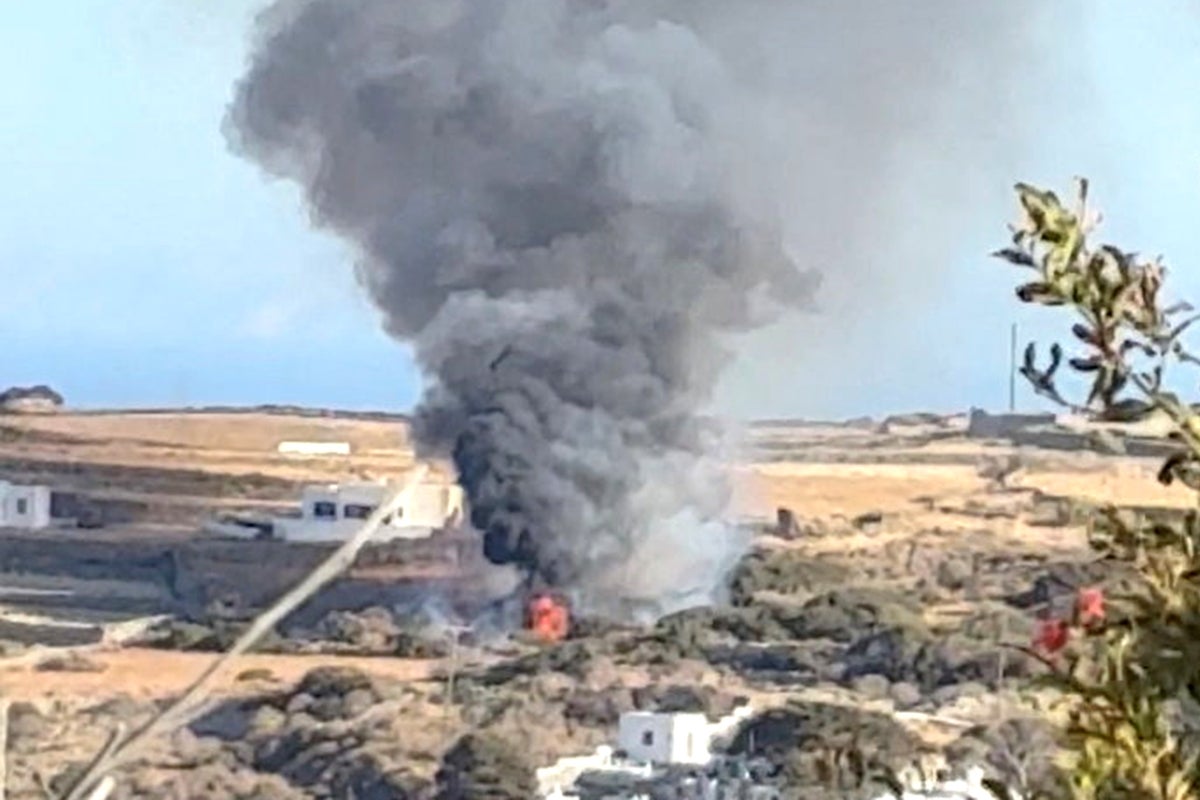
The Greek island helicopter crash that claimed the lives of a British couple wasn't a freak tragedy born of bad weather or a rogue engine part. It was the predictable byproduct of an escalating arms race in elite leisure, where high-net-worth consumers demand door-to-door VIP convenience in environments fundamentally unsuited to high-frequency private aviation.
I have spent two decades advising high-end hospitality brands and private transit syndicates across the Aegean and Ionian archipelagos. I have watched the luxury tourism sector transform from a niche market for the quietly wealthy into an industrial-scale machine moving impatient vacationers across jagged coastlines, tiny airfields, and notoriously volatile microclimates.
The dirty secret of modern luxury travel is that comfort breeds complacency, and speed kills.
The Myth Of The Controlled VIP Environment
When tourists book a five-figure luxury package complete with private helicopter transfers between Athens and the Cyclades, they are buying an illusion of absolute control. They believe that bypassing the ferry or the regional turboprop means bypassing risk.
That belief is lethal.
The lazy consensus in travel journalism is that accidents happen because someone cut corners on maintenance or because a pilot pushed through bad weather. But aviation safety data in the region points to a much more uncomfortable reality: the pressure to maintain the illusion of seamless luxury forces operations into marginal conditions.
Imagine a scenario where a high-paying client lands at a private resort, has dinner plans on a neighboring island ninety nautical miles away, and faces a tightening window of daylight and rising crosswinds. The commercial pressure on a pilot to deliver that VIP experience, rather than grounding the aircraft and telling a billionaire they have to take a ferry, is immense. We rarely talk about economic coercion as a causal factor in aviation disasters, but it belongs at the top of the accident report.
Let us define the actual mechanics at play here. The topography of the Greek islands creates extreme wind shear, downdrafts, and sudden visibility drops known locally as the Meltemi during peak season. These are not secret phenomena. Every certified pilot knows them. Yet, the proliferation of helipads perched on hotel rooftops, private clifftops, and yacht decks treats landing zones like urban taxi stands rather than high-risk mountain outposts.
When you normalize landing heavy rotary-wing aircraft on postage-stamp platforms surrounded by complex terrain, you are not providing a luxury service. You are playing Russian roulette with a carbon-fiber rotor blade.
Dismantling The People Also Ask Fallacy
If you look at search trends following any high-profile aviation incident in Europe, the same questions pop up: Are Greek island helicopters safe? Is private aviation riskier than commercial airlines? Why do helicopter crashes happen so often?
Let us answer those questions without the PR gloss.
Are private helicopters as safe as commercial airliners? Absolutely not. Commercial aviation benefits from redundant systems, strict dispatch reliability, dual-pilot crews flying fixed routes between major instrument-landing-system airports, and institutional safety cultures that dwarf anything found in private charter operations. A twin-engine Airbus or Bell helicopter flown single-pilot into a private pad on a Greek island is operating in an entirely different risk category.
Why do accidents keep happening? Because the barrier to entry for booking private air transit has dropped while the complexity of the airspace has skyrocketed. Every boutique hotel now fancies itself an aviation hub. Operators are incentivized to fly closer to minimums because the cancellation of a single transfer triggers a cascade of customer complaints, refund demands, and ruined brand partnerships.
We need to stop pretending that every tragic crash is an isolated act of God. They are systemic failures fueled by consumer entitlement and an industry too timid to say no to a paying customer.
The Cost Of Frictionless Travel
Modern tourism is built on the religion of frictionlessness. We want to click a button and be transported instantly from our superyacht or luxury villa to a taverna fifty miles away without waiting in lines, dealing with security queues, or experiencing the mundane realities of geography.
Geography does not care about your itinerary.
The Aegean is a harsh, beautiful, unforgiving maze of wind and rock. It was never meant to be conquered by twenty-minute hop-skipping in light aircraft to satisfy the whims of travelers who refuse to experience a moment of logistical inconvenience.
I have seen operators blow millions on top-tier fleet upgrades while cutting corners on localized meteorological tracking for specific island micro-zones. I have watched booking agents override pilot safety calls because a client threatened to take their business to a rival charter company.
This is the dark side of the luxury experience economy. When every service provider bends over backward to ensure the customer never hears the word "no," safety margins are the first things sacrificed on the altar of hospitality.
What To Do Instead
If you are planning a trip to the Mediterranean, or anywhere else defined by challenging topography and maritime weather, discard the fantasy that private aviation is just another concierge amenity like a bottle of champagne in your room.
Treat it for what it is: high-risk transport requiring absolute operational discipline.
- Never pressure an operator. If a pilot calls a weather hold, support them. Tip them. They just saved your life. If your hotel concierge looks annoyed that you have to take a ferry instead of a chopper, find a new hotel.
- Insist on dual-pilot crews. Single-pilot operations under VFR in complex island terrain are an unnecessary hazard for private passengers. If the operator cannot staff two pilots, do not board.
- Embrace the friction. Take the boat. Take the scheduled regional flight. The best parts of the Mediterranean have always belonged to those willing to move at the speed of the sea, not those trying to helicopter over it.
The romantic notion that we can bypass nature with enough credit is costing lives. Until travelers and operators alike accept that some places cannot be rushed, the wreckage will keep piling up along the cliffs.