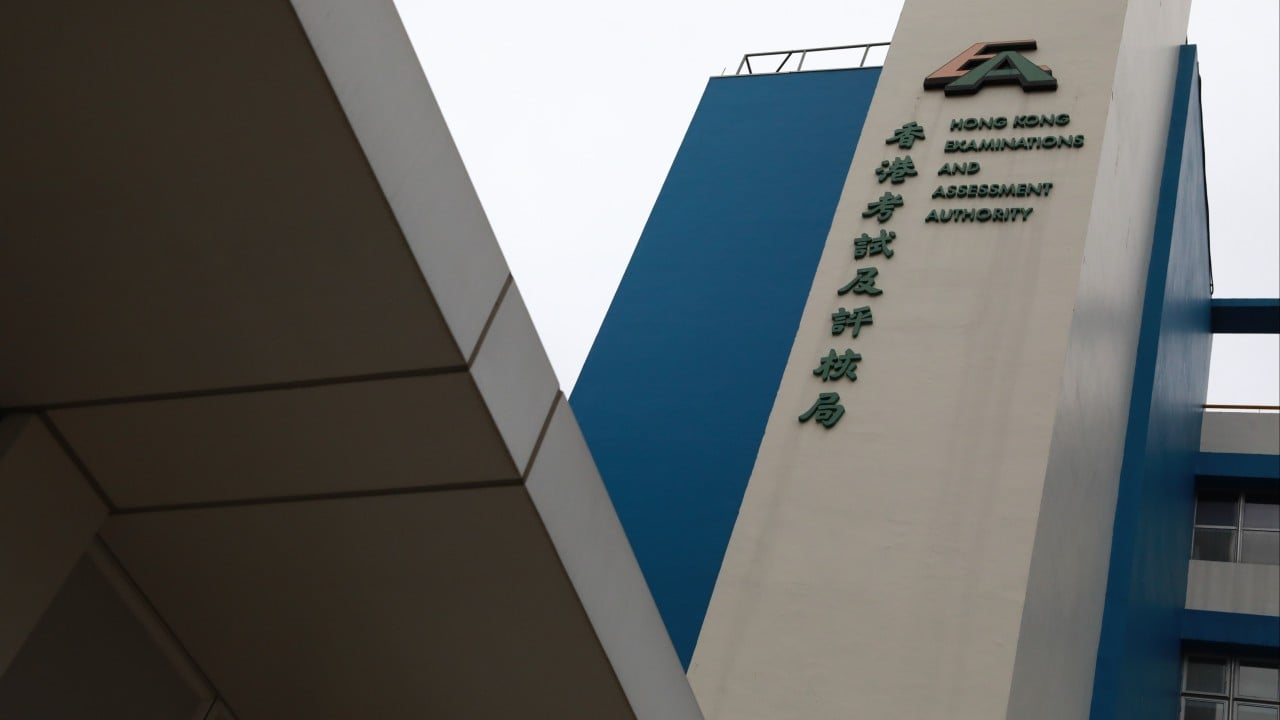
Seventeen thousand mainland Chinese students just had their personal data exposed by the Hong Kong Examinations and Assessment Authority, and the cybersecurity pundits are already reading from their usual, exhausted script.
You know the drill. Outrage over sophisticated threat actors. Hand-wringing about perimeter defenses. Demands for bigger IT budgets, fancier threat detection software, and mandatory vendor audits. Everyone wants to treat the HKEAA breach like a digital bank heist executed by shadowy criminal masterminds.
They are wrong. Completely, dangerously wrong.
This wasn't a failure of perimeter defense, and obsessing over how the attackers got in misses the entire point. The real scandal isn't that an external party breached a database containing names, identification numbers, and contact details of cross-border test-takers. The real scandal is that an examination body was hoarding high-risk, unencrypted, permanently identifiable records in a single accessible repository long after the operational need for that data had expired.
When you build a toxic waste dump in the middle of a crowded city and someone lights a match, you don't blame the arsonist for the zoning laws.
The Lazy Consensus of Modern Cybersecurity
Read any mainstream report on the HKEAA incident—or almost any institutional data leak over the last decade—and you will find the same comforting lie. The narrative frames the organization as a hapless victim struck by an unforeseeable digital storm. According to this consensus, the cure for data breaches is always more security: tighter firewalls, stricter access controls, multi-factor authentication, and zero-trust architectures.
I have spent years auditing enterprise systems and watching public-sector institutions burn millions of dollars on security theater while leaving their actual data architecture completely exposed. Buying enterprise-grade intrusion detection systems to protect a bloated, poorly governed database is like putting a titanium vault door on a cardboard shack.
Let's look at the mechanics of what actually happens in educational and statutory bodies. Institutions collect everything they possibly can during registration phases because storage is cheap and bureaucracy loves a paper trail. They pull passport numbers, mainland resident IDs, home addresses, phone numbers, email addresses, and candidate numbers into centralized staging databases. Then, they leave that data sitting in production environments—or worse, forgotten test environments—for months or years.
Security vendors love this broken model. Every time a public body leaks tens of thousands of records, security firms sell more monitoring tools, compliance consultants bill more hours, and executives issue somber apologies promising to "strengthen our cyber defenses." Nobody questions why the data was sitting there like low-hanging fruit in the first place.
Data Minimization Is the Only Defense That Never Fails
If you want to understand why the HKEAA breach happened, stop looking at network logs and start looking at database schemas.
In information security, there is a foundational principle known as data minimization. Formally codified in frameworks like the European Union's General Data Protection Regulation (GDPR) and echoed in Hong Kong's own Personal Data (Privacy) Ordinance (PDPO), data minimization dictates that an organization should only collect personal data that is strictly necessary for a specific, stated purpose, and retain it only for as long as that purpose requires.
Most institutions treat data minimization as a paperwork exercise rather than an engineering requirement.
Think about what an examination authority actually needs to administer a standardized test like the Hong Kong Diploma of Secondary Education (DSE). On test day, proctors need to verify that the person sitting in the chair matches the government ID presented at the door. Once the exam is graded and the certificate is issued, what operational reason exists to keep a student's national ID number linked directly to their home address and phone number in a web-facing portal?
None. Zero.
Imagine a scenario where the HKEAA separated identity verification from exam administration from day one. When a mainland student registers, an isolated, air-gapped verification service checks their ID, generates a cryptographic hash—a one-way mathematical fingerprint that cannot be reversed into the original ID number—and immediately purges the raw identification document from the active system. The exam portal only ever sees a randomized candidate token.
If an attacker compromises that portal, what do they get? A list of meaningless alphanumeric strings and test scores. No national IDs. No phone numbers to fuel targeted phishing campaigns. No home addresses. You cannot leak what you do not hold.
Why Institutional Bureaucracy Breeds Toxic Data
If cryptographic separation and aggressive data purging are well-established engineering practices, why do major examination bodies still store raw personally identifiable information (PII) in vulnerable databases?
Because bureaucracy prioritizes convenience over risk reduction.
Administrative staff hate friction. When a student calls asking about a missing score report or a registration error, customer support wants to type a name or ID number into a single search bar and pull up every piece of information associated with that person. Building segmented databases where identity records are decoupled from operational records requires upfront architectural discipline. It forces administrators to use proper authentication workflows rather than looking up raw records in a flat table.
Furthermore, public and statutory bodies suffer from a fatal misalignment of incentives. When an institution hoards data, the convenience benefits are immediate and internal. When that data leaks, the consequences are externalized onto the victims. The 17,000 mainland students affected by the Hong Kong breach are the ones who will spend the next five years dealing with credential stuffing, identity theft, and precision-engineered telecommunications fraud. Meanwhile, the institution faces a slap on the wrist from a privacy commissioner, issues a boilerplate press release advising victims to "remain vigilant against suspicious calls," and moves on.
In the private sector, catastrophic data mismanagement can trigger class-action lawsuits and plummeting stock prices. In quasi-governmental exam boards, there is no market competitor for students to switch to. If you want the credential, you surrender your data on their terms.
Dismantling the Myths Around Cross-Border Student Data
Whenever a breach involves mainland Chinese students interacting with Hong Kong institutions, the commentary inevitably veers into geopolitical theater or alarmism about cross-border data flows. Let's strip away the noise and address the actual questions people are asking—starting with the flawed premises baked into them.
Are mainland students uniquely targeted because of cross-border data transfers?
No. Attackers do not care about political borders; they care about data liquidity. Mainland identification numbers, combined with active mobile numbers and academic records, are high-value commodities in underground cybercrime markets because they bypass standard identity checks used by financial apps and telecom providers. Whether the database sits in Kowloon, Shenzhen, or Singapore, an unsegmented repository of verified student identities is a prime target for financially motivated criminals.
Will stricter data localization laws prevent breaches like this?
Data localization—forcing organizations to store data on servers within specific geographic boundaries—does nothing to improve security. A poorly configured database hosted on a local server is just as vulnerable to SQL injection, credential theft, or misconfigured cloud permissions as one hosted overseas. Geography is not a firewall.
Does changing your password protect you after an exam board leaks your data?
This is the worst piece of standard advice handed out after institutional breaches. Passwords are mutable; you can change them in ten seconds. Your date of birth, your national identification number, and your educational history are immutable. You cannot reset your government ID. When an institution leaks static identity markers, the damage is permanent. Victims do not need password managers; they need credit freezes, heightened skepticism toward any caller claiming to be from a government or educational agency, and secondary phone numbers for financial accounts.
The Uncomfortable Trade-Offs of Real Security
If you are an executive, a chief information officer, or a systems architect reading this, you might be thinking that aggressive data minimization sounds great in theory but falls apart in practice. You would be half right.
There is a real cost to doing this properly, and pretending otherwise would be dishonest.
First, cryptographic tokenization and strict data purging break legacy workflows. If your examination board relies on twenty-year-old enterprise resource planning software, you cannot simply flip a switch to decouple PII from exam records. You have to rebuild the ingestion pipeline, retrain administrative staff, and accept that edge-case customer service inquiries—like resolving duplicate registrations or investigating academic dishonesty—will take hours instead of seconds.
Second, aggressive deletion creates audit friction. Statutory bodies are legally required to maintain records for dispute resolution, grade appeals, and historical verification. If a university calls five years later to verify that a candidate actually passed their exams, the exam board must be able to prove it.
However, proving a credential does not require keeping a live, internet-accessible database of raw national IDs. Verification records can be written to offline, write-once-read-many (WORM) storage or archived using zero-knowledge proofs, where the system confirms a match without ever exposing the underlying record to a web application. It is harder to build, more expensive upfront, and utterly unforgiving of sloppy engineering.
Most institutions choose the cheap, easy path during development and pay the reputation tax later when the inevitable breach occurs.
How Organizations Must Rebuild Trust After a Breach
If the HKEAA—and every other educational institution sitting on a ticking time bomb of student records—wants to actually solve this problem rather than just survive the news cycle, they need to abandon the traditional incident response playbook.
- Publish a radical transparency report, not a PR statement. Telling victims that "personal data may have been accessed" is cowardice. Institutions must specify the exact database tables exposed, whether the records were stored in plaintext or hashed, the exact attack vector used, and the retention age of the leaked files. If records from three years ago were sitting in an active server, admit the governance failure publicly.
- Enforce automated Time-to-Live (TTL) on all PII. Every piece of personally identifiable data collected during an application cycle should be tagged with a hard expiration timestamp at the database level. Once the exam window closes and grades are finalized, an automated cron job should overwrite and purge raw contact details and national IDs without requiring human approval.
- Decouple identity from operations. Never store government identification numbers in the same database cluster that serves web traffic, student portals, or third-party vendor integrations. Use an isolated identity provider that issues internal tokens, ensuring that a breach of the front-end portal yields zero actionable identity data.
- Shift liability to the data collector. Regulatory fines that represent a fraction of a percent of an institution's operating budget are merely a cost of doing business. Until leadership faces direct financial penalties and mandatory independent architectural audits for retaining unnecessary PII, data hoarding will remain the default setting.
The End of the Victim Excuse
Cybersecurity experts love to say that there are only two types of organizations: those that have been breached, and those that don't know they've been breached yet. That aphorism was coined to remind engineers to prepare for failure, not to give executives a free pass for negligence.
Breaches are inevitable. Catastrophic data exposure is a choice.
When 17,000 students hand over their most sensitive personal details to sit for an exam, they are entering into an asymmetrical bargain. They have no power to negotiate the terms, no ability to audit the servers, and no option to opt out. The very least an institution owes them is the discipline not to leave their lives sitting unguarded in a digital warehouse long after the pencils have been put down.
Stop asking how the hackers broke in. Start asking why the vault was full of glass.