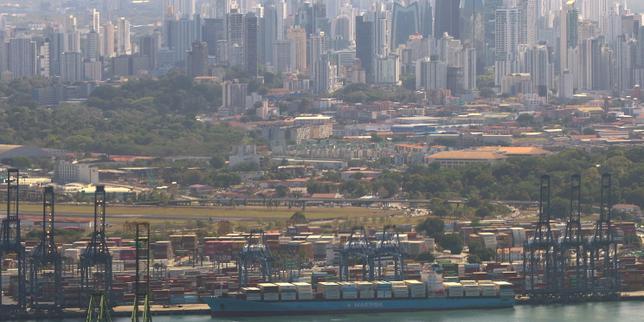
The lazy consensus loves a convenient ghost. Tell a modern audience that Panama is unequal because of twentieth-century Canal Zone apartheid or colonial Spanish caste lines, and everyone nods sagely. It sounds academic, compassionate, and neat. It also completely misses how modern capital actually operates on the isthmus.
Blaming historical segregation for contemporary wealth gaps is an intellectual cop-out. It lets modern policy failures, crony capitalism, and structural state-rentier mechanics off the hook.
I have watched international development pundits burn millions of dollars analyzing historical trauma while ignoring the real-time financial plumbing draining value out of Colón and Panama City. The math does not care about your historical narrative. Let us look at why the standard inequality narrative is broken.
The Myth Of The Path-Dependent Trap
The core premise of the standard critique is path dependency: because the US-run Canal Zone used a "gold roll" and "silver roll" payroll system dividing white American expatriates from Black West Indian and local laborers, modern Panama is permanently scarred by an immutable racial hierarchy.
This argument treats history as a life sentence. It ignores economic mobility, market shifts, and the agency of modern actors. Panama boasts one of the highest GDP growth rates in Latin America over the past two decades. If historical segregation were the primary bottleneck preventing wealth accumulation, economic growth would track linearly with historical segregation indices. Instead, we see astronomical wealth creation sitting adjacent to structural poverty—not because of Jim Crow ghosts, but because of a modern tax-haven and service-economy architecture designed to funnel liquidity straight to the top of the domestic oligarchy.
Define terms precisely. Panama is not a segregated society in the legal or structural sense; it is a hyper-financialized transit hub. The friction point is no longer racial apartheid. The friction point is an extractive economic model that treats ordinary labor—regardless of skin color—as a cheap input for global shipping and logistics.
Follow The Liquidity Not The Ancestry
Imagine a scenario where the Panama Canal generates billions in annual toll revenues, yet the neighborhoods housing the dockworkers remain chronically underfunded. That is not a thought experiment. That is the daily reality of Colón.
The lazy analyst points to the descendants of West Indian laborers and stops there. The structural analyst looks at how the centralized state budget allocates tax revenues. Panama's fiscal system relies heavily on regressive consumption taxes like ITBMS rather than progressive income or wealth taxes. This means a dockworker in Colón pays proportionally more of their income into state coffers relative to a corporate lawyer in Costa del Este than any historical Jim Crow policy could ever mandate.
The inequality engine of modern Panama runs on three distinct pillars:
- A hollowed-out public education system that refuses to scale technical competencies for the logistics and digital services boom.
- Protected retail and corporate sectors where family-owned conglomerates maintain anti-competitive moats.
- A centralized state patronage machine that absorbs surplus labor via bloated public sector payrolls instead of fostering productive private-sector competition.
None of these pillars require a racist decree from 1910 to function. They require political cowardice and a populace distracted by historical finger-pointing.
The Real Question Nobody Is Asking
People often ask: How can Panama overcome the legacy of racial discrimination embedded during the construction of the canal?
That is the wrong question entirely. The question you should be asking is: How long can the political class use historical grievances as a smoke screen to avoid broad-based tax reform and anti-trust laws?
When the state creates institutional bodies like SENADAP to address Afro-Panamanian development, it often acts as a pressure valve, offering symbolic representation while leaving the underlying neoliberal extraction machinery untouched. Cultural recognition is important, but cultural recognition does not pay for a municipal water system or a competitive fiber-optic broadband network in marginalized provinces.
Economists like Daron Acemoglu and James Robinson have popularized the framework of extractive versus inclusive economic institutions. Apply that lens to Panama. The country’s macro institutions are brilliantly inclusive for international maritime capital, offshore banking, and multinational logistics firms. Simultaneously, they remain ruthlessly extractive for domestic labor and small domestic enterprises.
If you are born into a low-income household in San Miguelito or the interior, your primary obstacle is not what a Zonian official wrote on a payroll ledger in 1914. It is the absolute lack of credit markets for small businesses, an educational curriculum stuck in the past century, and an economic policy framework built exclusively to please international credit rating agencies.
Unconventional Solutions For A Rigged Game
If we want to dismantle structural inequality in Panama, we must stop treating historical racism as the primary variable and start treating market concentration as the enemy.
First, dismantle domestic monopolies. Panama’s retail, energy, and import sectors are heavily consolidated among a handful of elite families. Introducing ferocious antitrust enforcement would lower the cost of living overnight, freeing up household liquidity.
Second, overhaul the fiscal architecture. Shift the tax burden away from consumption and directly onto speculative real estate and corporate windfalls.
Third, vocational radicalism. Strip the universities of archaic degree programs and pivot the educational output toward high-value software engineering, port logistics optimization, and automated supply-chain management.
Stop waiting for history to apologize. The system is not broken; it is doing exactly what it was optimized to do. Change the incentives, or keep getting the same results.