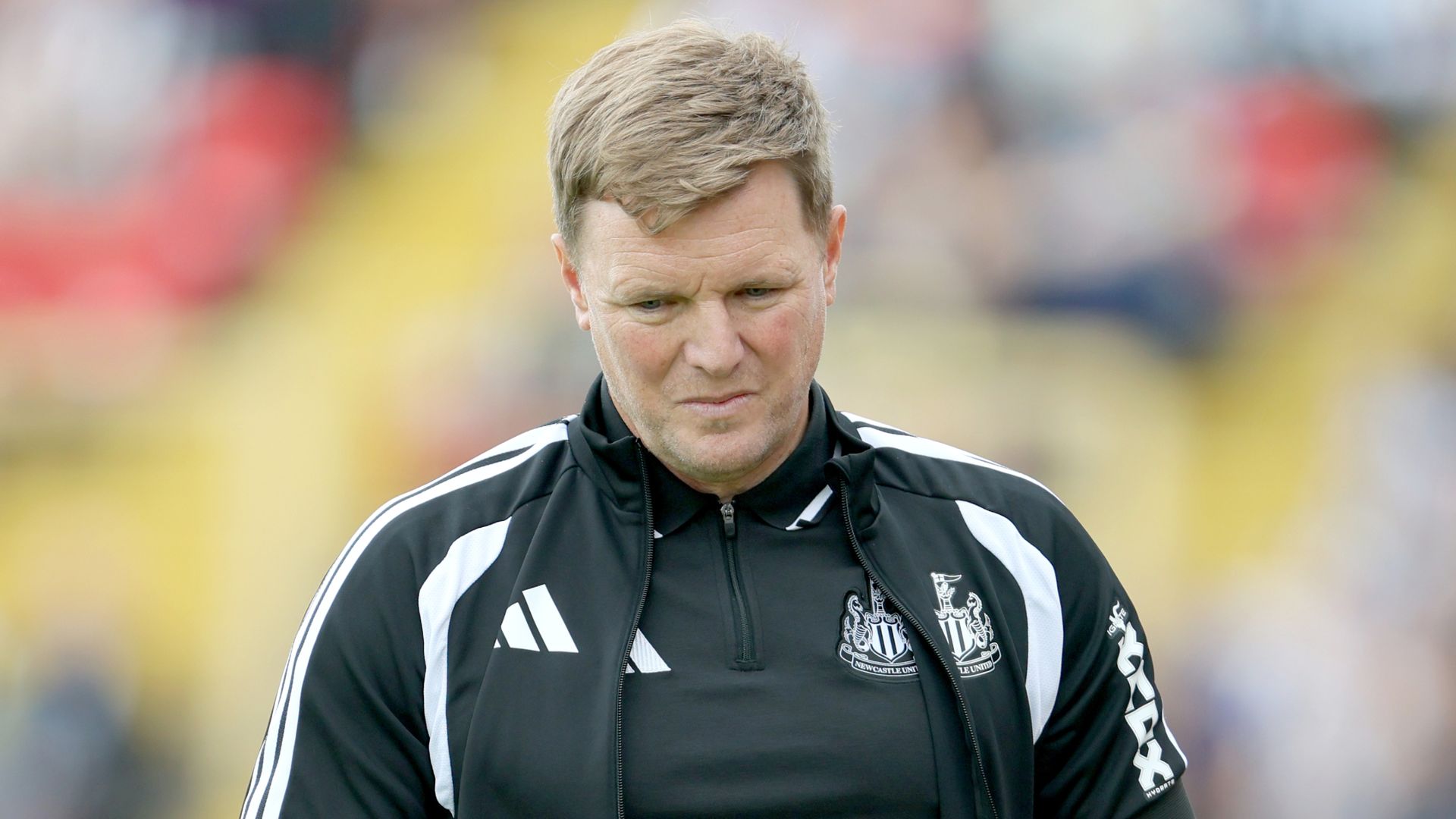
The football media wants you to believe a neat, tidy narrative. Eddie Howe is tired. Five years in the Tyneside trenches took their toll. A friendly defeat to Bristol City broke the camel's back, and the weary Englishman chose a quiet exit to recharge his batteries.
It is a comforting bedtime story. It is also entirely wrong.
Let us look past the PR-friendly spin of an amicable departure and examine the structural reality of modern football management. Eddie Howe did not walk away because he needed a holiday. He walked away because the ceiling of the Newcastle United project was locked from the outside, his autonomy over recruitment was systematically stripped away, and he possessed the professional clarity to recognize a sinking ship before everyone else started bailing.
The Myth of the Weary Savior
The lazy consensus across every major sports desk frames Howe as a exhausted martyr who gave everything, won a historic Carabao Cup, and simply ran out of steam after a 12th-place finish. This narrative ignores the fundamental mechanics of how ambitious managers operate. Successful coaches do not voluntarily detonate their employment contracts three weeks before a Premier League campaign out of sheer fatigue. They do it when the conditions required to win have been fundamentally compromised.
Look at the ledger. Over the past twelve months, Newcastle has transformed from a cohesive, aggressive challenger into a hyper-inflation trading post. Alexander Isak was sold to Liverpool. Anthony Gordon packed his bags for Barcelona. Sandro Tonali headed to Tottenham. Meanwhile, the recruitment strategy pivoted aggressively toward teenagers—raw prospects like Bazoumana Touré and Sean Steur.
These are not the acquisitions of an elite manager gearing up to crash the Premier League's established financial elite. These are the asset-accumulation maneuvers of a club terrified of Profit and Sustainability Rules, operating under an ownership group with multi-club empire ambitions.
The PIF Feedback Loop and the Al-Ahli Blueprint
The appointment of Matthias Jaissle as Howe's successor tells you everything you need to know about the architecture of this decision. Jaissle arrives directly from Al-Ahli, another cornerstone of the Public Investment Fund's global portfolio.
Imagine a scenario where a modern manager is hired to build a culture of gritty, English-grounded identity, only to find the club's administrative machinery pivoting toward a centralized, cross-continental talent pipeline. Howe is an obsessive, hands-on coach who builds teams through relentless on-training-ground repetition and relational chemistry. When you strip away his senior assets, leave the future of Bruno Guimarães twisting in the wind with Arsenal circling, and hand him a dressing room increasingly populated by project-stage youth, you are asking a master artisan to paint with broken crayons.
Howe realized that repeating last season's 12th-place descent would permanently stain his market value. By stepping down now, control of the narrative shifts. He exits as the man who broke a 70-year trophy drought, not the man fired by a sovereign wealth fund after a mid-season relegation scrap.
The Brutal Truth About State Ownership
We need to stop pretending that state-owned football clubs operate like traditional football clubs. They are geopolitical assets, entertainment portfolios, and corporate networks. In that ecosystem, managers are interchangeable middle management.
Howe understood his shelf life. He recognized that the initial momentum of the 2021 takeover—where sheer emotional release and a united St James Park could paper over structural ceilings—had evaporated. The friction between a traditional English manager wanting direct control over immediate competitiveness and a modern multi-club hierarchy prioritizing balance sheets and asset appreciation is insurmountable.
He didn't lose his passion. He saved his reputation.
Stop mourning the end of an era. Applaud a rare instance of a football manager looking at a compromised chessboard, refusing to play a losing hand, and walking away with his dignity and his stock completely intact.