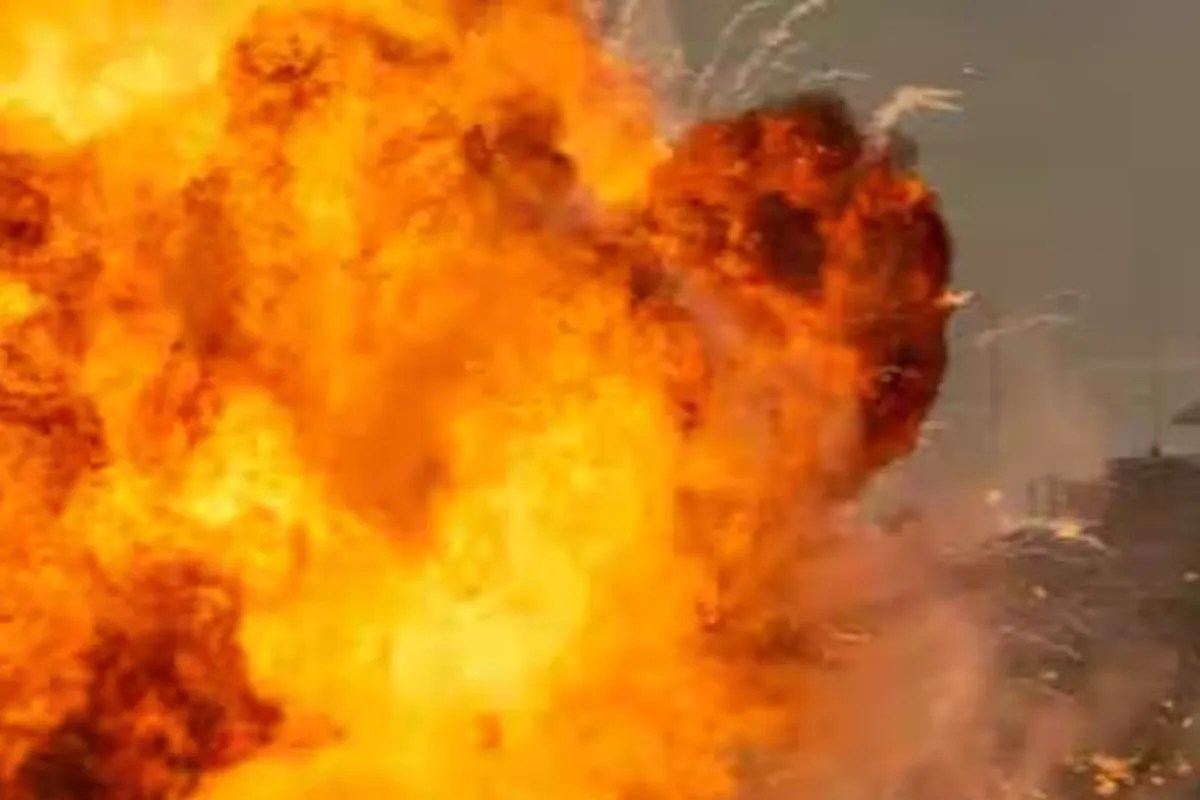
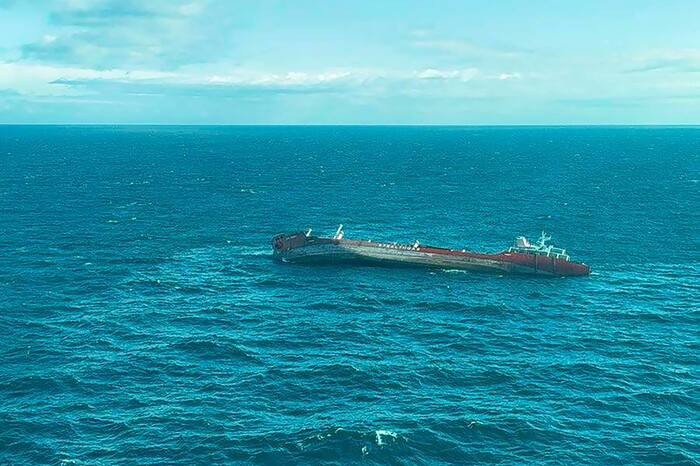
Every time a Soviet-era turboprop hits the dirt, the Western aviation press runs the exact same obituary.
They tally the dead. They cite the fuselage age. They throw around words like relic, obsolete, and crumbling. When a Russian Antonov An-12 goes down with up to seventeen souls on board, the lazy consensus writes itself before the smoke even clears from the crash site. The narrative is simple, comforting, and completely wrong. It tells you that the airframe failed because it was designed in the 1950s. If you found value in this post, you should read: this related article.
That narrative is journalistic malpractice.
If age alone killed airplanes, the United States Air Force wouldn’t be flying B-52 Stratofortresses designed during the Truman administration, nor would they rely on the C-130 Hercules, a direct contemporary of the An-12 that entered service in 1956. Airframes do not have expiration dates stamped on their tails like cartons of milk. They have flight-hour limits, stress cycles, and maintenance schedules. For another angle on this development, check out the recent coverage from NPR.
When an Antonov An-12 crashes in Russia, you are not witnessing the death of an old airplane. You are witnessing the inevitable mathematical consequence of an institutionalized logistical collapse, brutal operational overreach, and a black-market parts ecosystem that treats airworthiness directives as optional suggestions.
The Myth of the Obsolete Turboprop
Let’s look at the hardware first, because most commentators covering military aviation couldn't tell a turboprop gearbox from a lawnmower engine.
The Antonov An-12—NATO reporting name Cub—is an absolute tank of an aircraft. Designed by the Antonov Design Bureau in Kyiv during the mid-1950s and first flown in 1957, it was built with a singular, uncompromising mandate. It had to haul twenty metric tons of cargo into unimproved, frozen, mud-choked Siberian airstrips where western jets would ingest gravel and tear themselves apart within thirty seconds of touch-down.
Its four Ivchenko AI-20M turboprop engines are mechanical masterpieces of brutal simplicity. They don't rely on delicate, hyper-sensitive digital engine controls that throw fault codes if a sensor gets damp. They were engineered to be repaired in sub-zero temperatures by mechanics wearing thick mittens, using heavy wrenches and basic diagnostic gauges.
In aviation engineering, we differentiate between chronological age and fatigue life. Chronological age is irrelevant. Fatigue life is measured in pressurization cycles (every time the cabin inflates and deflates during climb and descent) and equivalent baseline hours (the structural stress accumulated through turbulence, hard landings, and heavy payloads).
A forty-year-old An-12 sitting in a dry hangar with low cycle counts has more structural integrity left in its main wing spar than a ten-year-old regional jet that flies six short hops a day through coastal salt air. Blaming the 1950s engineering team in Kyiv for a crash happening decades later is like blaming Henry Ford when a neglected Model A blows a gasket because the owner stopped putting oil in the crankcase.
The Real Killer Is Supply Chain Cannibalism
If the airframe is a masterpiece of rugged utility, why do they keep falling out of the sky?
Look at the map. The Antonov Design Bureau is in Ukraine. The engines—the AI-20 series—were manufactured by Motor Sich in Zaporizhzhia, Ukraine.
Read that again.
Russia’s primary medium-lift tactical transport fleet was designed and built in a country it has been actively invading since 2014, and at full-scale war with since 2022. Even before the full-scale invasion, the post-2014 severance of military-technical cooperation between Moscow and Kyiv cut the Russian aerospace sector off from the Original Equipment Manufacturer (OEM).
In commercial and military aviation, losing access to the OEM is a slow-motion death sentence. When you cannot buy certified turbine blades, landing gear actuators, or propeller pitch-control mechanisms from the people who hold the original blueprints and metallurgical tolerances, you have only three options:
- Ground the fleet. (Politically impossible during active military operations and Arctic logistics missions).
- Cannibalize parked airframes. (Strip working parts off broken planes to keep flyable ones in the air).
- Reverse-engineer or buy counterfeit components. (Manufacture knock-off parts without the original alloy specifications or heat-treatment data).
Russia chose options two and three.
When you cannibalize an airframe, you are taking a used component with an undocumented stress history and bolting it onto an active aircraft. Often, the paper trail—the component logbook that tracks every hour, overhaul, and hard landing that specific part has endured—is either lost, forged, or ignored to meet a commander's departure deadline.
I’ve spent years auditing aviation maintenance operations and watching operators try to cheat the regulatory clock. When a fleet manager starts treating life-limited components—like turbine discs or wing-root bolts—as "on-condition" parts (meaning they only replace them when they visibly crack), you aren't running an airline or an air force anymore. You are running a casino. And eventually, the house collects.
The Icing Trap and the Unpressurized Reality
To understand why an An-12 crash happens so violently, you have to understand how this specific aircraft flies in the environments Russia forces it to operate in.
The An-12 has a notorious aerodynamic vulnerability: tailplane icing.
Unlike modern fly-by-wire transports that automatically adjust trim and alert the crew to subtle changes in airflow over the horizontal stabilizer, the An-12 uses conventional mechanical flight controls with aerodynamic tabs. When flying through supercooled water droplets—a daily reality across the Russian Far East, Siberia, and the Arctic—ice accumulates rapidly on the leading edges of the wings and the tail.
If the pneumatic or electro-thermal de-icing boots fail—which happens frequently when rubber seals dry-rot and replacement parts are stuck in customs or non-existent—ice builds up on the horizontal stabilizer. This disrupts the airflow, causing a tailplane stall.
Unlike a standard wing stall, where you push the nose down to regain airspeed, a tailplane stall violently pitches the nose straight down toward the earth. If a pilot reacts with standard stall-recovery muscle memory and pushes forward on the yoke, they accelerate the dive into the ground. You have seconds to recognize the inversion, retract flaps, and pull back against immense aerodynamic forces.
Add another layer of brutal reality to this equation: the cargo hold of the An-12 is unpressurized.
Only the forward flight deck and a small compartment directly behind it are pressurized. When a Russian military An-12 carries seventeen people, a significant portion of those passengers are sitting in a freezing, deafeningly loud aluminum tube equipped with portable oxygen masks, surrounded by strapped-down freight. If an explosive decompression occurs, or if a cargo pallet shifts during severe icing turbulence because a worn-out floor lock sheared off, the aircraft becomes unflyable before the crew can even key the microphone to declare an emergency.
Dismantling the "People Also Ask" Fallacies
When a military transport crashes, casual observers flood search engines with predictable, surface-level questions. Most of these questions are built on flawed assumptions about how military aviation actually works.
Why does Russia still use the Antonov An-12?
Because nothing else they build can replace it at scale. The Ilyushin Il-76 is a heavy strategic lifter—too big, too expensive, and too runway-dependent for smaller tactical hops. The Ilyushin Il-112V, which was supposed to be the modern light-to-medium tactical replacement, suffered a catastrophic prototype crash in 2021 that killed its test crew and effectively stalled the program. Russia doesn't fly the An-12 out of nostalgia; they fly it because their domestic aerospace industry failed to deliver a viable successor for thirty years.
Are Russian military planes safe to fly?
Safety is not an inherent property of metal; it is the output of a Safety Management System (SMS). Western military aviation, governed by strict frameworks like the FAA’s military equivalents and NATO airworthiness standards, treats every near-miss as a systemic failure to be investigated without blame. In the Russian Aerospace Forces (VKS) and state-affiliated cargo operators, the culture is strictly hierarchical and punitive. Mechanics who ground a plane for a hydraulic leak risk career ruin if a general needs that cargo moved by morning. Pilots who abort a takeoff due to a questionable engine instrument are viewed as timid. Under those conditions, no aircraft—not even a brand-new Boeing or Airbus—is safe.
How many Antonov An-12s are still flying?
On paper, dozens remain in service across Russian military branches, interior ministry troops, and state-linked "commercial" cargo operators like Aviacon Zitotrans or Kosmos Airlines that regularly haul defense freight. In reality, the true number of airworthy airframes is a fraction of the registry. Many are "hangar queens" stripped down to bare fuselages to keep a rotating pool of active airframes airborne.
The Physics of Overload and Corruption
Let’s address the elephant in the cargo bay: weight and balance.
Every aircraft has a strict Maximum Takeoff Weight (MTOW) and a tightly defined Center of Gravity (CG) envelope. For the An-12, MTOW sits around 61 metric tons.
In western commercial operations, every single pallet is weighed on calibrated scales, logged into a load sheet, and verified by a loadmaster whose license is on the line if the math is wrong. In Russian military and quasi-military transport operations, manifest accuracy is notoriously elastic.
Imagine a scenario where a logistics officer at a remote Siberian base needs to move heavy machinery, spare munitions, and seventeen personnel before a winter storm closes the runway. The official manifest says the cargo weighs 14 tons. In reality, unweighed crates, extra fuel drums, and personal gear push the payload past 21 tons.
Here is what happens when an overloaded An-12 takes off from a short runway in high-density altitude or freezing conditions:
- Takeoff roll extends beyond calculations. The crew rotates at the usual airspeed, which is now below the actual stall speed for the true weight of the aircraft.
- Engine failure becomes unrecoverable. The An-12 can fly on three engines—if it is within weight limits and the failing engine's propeller feathers (turns its blades edge-on to the wind to stop creating massive aerodynamic drag). If an engine fails right after lift-off on an overloaded plane, and a worn-out autofeather system fails to trigger, the windmilling propeller acts like a giant barn door hanging off one wing.
- Asymmetric thrust rolls the plane. At low altitude and low airspeed, the rudder does not have enough airflow over it to counteract the drag of the dead engine and the thrust of the three good ones. The aircraft rolls uncontrollably toward the dead engine and impacts the ground inverted.
This isn't a theoretical flaw in Antonov's blueprint. It is basic Newtonian physics punishing institutional corner-cutting.
The Heavy Hitters Know the Score
You don't have to take my word for the systemic rot eating away at post-Soviet fleet sustainment. Look at the data published by organizations that actually track aviation safety without political spin.
The Flight Safety Foundation and the Aviation Safety Network (ASN) have documented hundreds of hull losses involving the An-12 since its introduction. When you strip away combat losses in warzones like Afghanistan, Angola, and Ukraine, a glaring pattern emerges in the non-combat accident reports.
The primary causes of peacetime An-12 crashes are overwhelmingly human and organizational:
- Controlled Flight Into Terrain (CFIT) due to outdated navigation suites and poor crew resource management.
- Fuel exhaustion caused by inaccurate fuel-flow gauges and inadequate flight planning.
- In-flight fires originating from chafed, decades-old electrical wiring bundles soaked in leaked hydraulic fluid.
- Loss of control during approach due to unaddressed icing or improper flap settings.
Even the Interstate Aviation Committee (MAK)—the post-Soviet body responsible for investigating civil aviation accidents across the region—has repeatedly highlighted chronic maintenance falsification and inadequate crew training in its own public incident reports over the last two decades. When the region's own regulators admit that paperwork is being forged to keep dilapidated airframes flying, Western journalists have zero excuse for blaming the airplane's birth certificate.
The Flaw in My Own Argument
To be intellectually honest, you have to acknowledge the limits of a pure maintenance-and-culture critique. Even if Russia possessed the finest supply chain on earth, the unlimited budget of the Pentagon, and an immaculate safety culture, the Antonov An-12 would still be a high-risk platform by modern standards.
Why? Because 1950s safety architecture lacks modern redundancy.
Modern tactical transports like the Lockheed Martin C-130J Super Hercules or the Airbus A400M Atlas are built around fail-operational philosophy. They feature triple- and quadruple-redundant hydraulic systems, digital Full Authority Digital Engine Controls (FADEC) that prevent pilots from over-temping turbines, Ground Proximity Warning Systems (GPWS) that scream at crews before they fly into a mountain in fog, and Traffic Collision Avoidance Systems (TCAS).
The An-12 was built around a fail-safe philosophy at best, and a man-up-and-fly-it philosophy at worst. Its cockpit ergonomics are atrocious, forcing pilots to scan dozens of scattered analog dials in high-workload emergencies. Its hydraulic and electrical buses run too close together, meaning an uncontained engine failure can sever control lines and kill electrical power simultaneously.
You cannot completely engineer away sixty-five years of metallurgical fatigue and archaic cockpit design simply by hiring better mechanics. Eventually, micro-fractures form in places ultrasound inspections miss.
How to Actually Read the Next Crash Report
The next time a Russian military transport vanishes from radar over Irkutsk, Khabarovsk, or Belgorod, ignore the pundits who immediately point to the aircraft's Soviet pedigree. They are reading the surface layer of a deep operational failure.
If you want to understand what actually brought that plane down, look for three specific indicators in the aftermath:
- The Operator's Status: Was it flown by regular VKS crews, or a shadowy contract carrier operating under quasi-military oversight? Contract haulers operate on razor-thin margins and routinely push duty-time limits and maintenance intervals to keep lucrative state contracts.
- The Route and Season: Did it go down during transitional weather (October–November or March–April) in Siberia or the Far East? That points straight to icing combined with degraded de-icing systems and rushed pre-flight inspections.
- The Missing Black Box Data: Watch how quickly the authorities claim the flight data recorders were "destroyed by fire" or "unreadable." In an era where solid-state crash-survivable memory units can withstand a direct impact into granite and an hour of jet-fuel fire, a "destroyed" black box usually means the recording contains evidence of an unairworthy aircraft that never should have been cleared for takeoff.
The Antonov An-12 didn't fail Russia. It was an extraordinary workhorse that carried the logistical weight of an empire across the most hostile terrain on the planet. Russia failed the airplane—by starving it of legitimate parts, burying its mechanics under a culture of fear, and flying it past the edge of physical reality until gravity finally enforced the rules that commanders ignored.