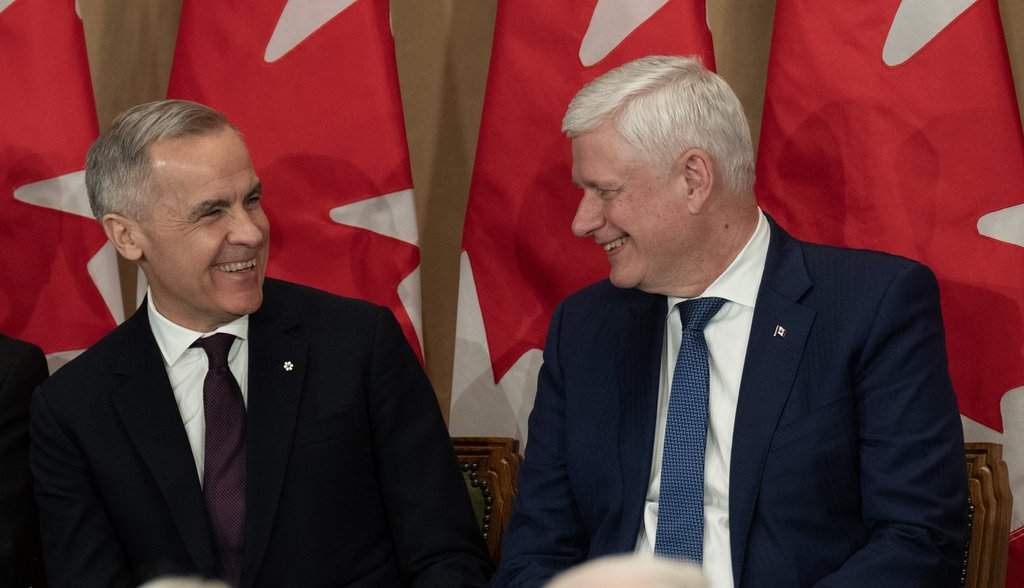
Ottawa pundits are currently hyperventilating over a revelation from a new memoir: back in 2012, Conservative Prime Minister Stephen Harper privately offered Bank of Canada Governor Mark Carney the job of Minister of Finance.
The mainstream press is treating this anecdote like a lost chapter of Canadian political romance. They frame it as proof of Harper’s pragmatic brilliance—a ruthless partisan willing to reach across the ideological aisle to recruit a "non-partisan" technocrat. They frame Carney as the ultimate fiscal prize, a central banker so capable that both blue and red tribes wanted him running the treasury.
That narrative is lazy, historically illiterate, and completely backward.
Harper did not offer Mark Carney the Finance portfolio out of bipartisan respect. He offered it as a political neutralization tactic, and Carney’s refusal was not a noble defense of central bank independence—it was a calculated career trade-up from a poisoned chalice in Ottawa to the global prestige of Threadneedle Street.
If you want to understand how power actually operates at the intersection of central banking and executive politics, stop reading press-gallery fairy tales. Look at the institutional mechanics, the timing of the 2012 Eurozone crisis, and the cold reality of what happens when a technocrat steps into a partisan meat grinder.
The Myth of the "Non-Partisan" Central Banker
Every coverage piece on this memoir repeats the same tired trope: Carney was a pure, apolitical technocrat whom Harper wanted to bring into the political fold.
Let’s define our terms precisely. Central bank independence is an institutional arrangement designed to insulate monetary policy from short-term electoral cycles. It does not mean central bankers lack political instincts, ideological priors, or partisan ambitions. In fact, survival at the top of the Bank of Canada, the Federal Reserve, or the Bank of England requires sharper political reflexes than winning a suburban riding.
By 2012, Mark Carney was no longer a mere central banker. He was a global brand. Having steered Canada through the 2008 financial crisis with fewer bank failures than its G7 peers—a success owed just as much to decades-old Canadian banking regulations under Paul Martin and Jean Chrétien as to Carney’s rate cuts—Carney had become the darling of Davos and the international financial press.
Harper knew this. More importantly, Harper knew the Liberal Party of Canada was eyeing Carney as their next savior.
In 2012, the federal Liberals were decimated, sitting in third place behind the NDP after Michael Ignatieff’s catastrophic defeat. They needed a credible, charismatic outsider to rebuild the party before the 2015 election. Whispers of a "Draft Carney"