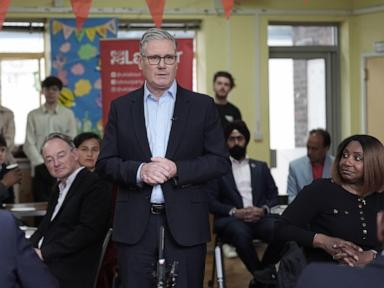
Keir Starmer is reaching for the one lever he promised never to pull with such desperation. Facing an internal party revolt and sagging poll numbers that suggest the honeymoon didn't just end but ended in a bitter divorce, the Prime Minister is pivotting toward a closer relationship with the European Union. This isn't a sudden burst of Europhilia. It is a survival mechanism. By signaling a "reset" with Brussels, Starmer hopes to unlock the economic growth that has remained stubbornly elusive since he took office, while simultaneously distracting from a growing chorus of backbenchers calling for a change in leadership.
The strategy is high-risk. For years, the Labour leadership insisted that "Make Brexit Work" was the mantra. They swore off a return to the Single Market or the Customs Union. But the reality of a stagnant UK economy and the friction of trade barriers has forced a quiet, yet undeniable, shift in tone. Starmer is now betting that the British public's exhaustion with economic drift will outweigh any lingering "Leave" sentiment.
The Economic Mirage of the Reset
The Treasury is currently staring at a black hole that refuses to shrink. Standard fiscal measures—tax hikes and spending cuts—have already been deployed to lukewarm results. Starmer’s team knows that without a meaningful uptick in trade efficiency, the promised "decade of national renewal" will be dead on arrival.
Re-engaging with the EU offers the most direct path to boosting GDP without the political suicide of massive new borrowing. However, Brussels is not in a mood for charity. The European Commission has been clear that any reduction in trade barriers must be met with alignment on regulations. This is the "regulatory trap" that Starmer’s predecessors spent years trying to avoid.
If the UK agrees to mirror EU standards on chemicals, food, and labor rights, it loses the sovereignty that was the central promise of the 2016 referendum. If it refuses, the "reset" remains a cosmetic exercise in handshakes and photo opportunities. Starmer is trying to thread a needle that might not even have an eye. He wants "bespoke" deals on veterinary standards and professional qualifications, but the EU’s "no cherry-picking" rule remains the foundation of their negotiating stance.
A Prime Minister Under Siege
The timing of this European charm offensive is no coincidence. Inside Number 10, the atmosphere is described as bunker-like. The "Freebie-gate" scandals and the perception of a government without a clear narrative have emboldened Starmer’s critics. Within the Parliamentary Labour Party (PLP), the whispers of "one term Keir" have graduated into louder conversations about who might be better suited to lead the party into the next election.
The threat comes from two sides. The left of the party remains suspicious of Starmer’s centrist instincts and his perceived lack of ambition on social spending. Meanwhile, the pragmatic center-right of the party is terrified that the government’s lack of a "big idea" is handing the momentum back to a fractured but dangerous Conservative opposition.
By framing the EU reset as a grand strategic move, Starmer is attempting to provide a sense of direction to a party that feels aimless. He is trying to create a "Big Project" that can define his premiership. If he can secure even a minor win—such as a simplified youth mobility scheme or reduced checks on agri-food products—he can claim to be the man who finally settled the UK’s post-Brexit identity.
The Brussels Perspective
While Starmer looks to the Continent for a lifeline, the leaders in Berlin, Paris, and Brussels are watching with a mixture of skepticism and fatigue. They have seen British Prime Ministers come and go, each promising a "new chapter" that eventually gets bogged down in domestic British politics.
The European leadership has its own fires to put out. The rise of the far-right in France and Germany, coupled with the ongoing war in Ukraine, means that renegotiating the Trade and Cooperation Agreement (TCA) with a struggling British PM is low on their list of priorities. To the EU, the current deal is working reasonably well; it protects the integrity of the Single Market and maintains a predictable, if somewhat cold, relationship with London.
For Starmer to get anything meaningful, he will have to offer something the EU actually wants. This usually means money, alignment, or a commitment to shared defense and security frameworks that goes beyond mere rhetoric. The Prime Minister’s refusal to discuss a return to the Single Market makes him a difficult partner for a bloc that views its market as an all-or-nothing proposition.
The Border Problem
Nowhere is the failure of the current arrangement more visible than at the border. The implementation of the Border Target Operating Model has seen costs for small businesses skyrocket.
- Small-scale importers are seeing administrative fees eat their entire profit margins.
- Supply chains in the automotive and aerospace sectors are experiencing "micro-delays" that aggregate into massive annual losses.
- Consumer prices remain higher than they would be under a more integrated system.
These are not abstract problems; they are the daily reality for the voters Starmer needs to keep on his side. He is betting that the pain at the checkout counter will eventually make the public more receptive to "alignment" than they were in 2019.
The Youth Mobility Gambit
One area where a deal seems possible is youth mobility. The EU is keen to see its young citizens able to work and study in the UK again, and vice versa. For Starmer, this is a dangerous area. Any move that looks like "restoring Freedom of Movement" will be seized upon by his enemies as a betrayal of his election promises.
Yet, the labor shortages in hospitality, social care, and agriculture are acute. A youth mobility scheme would act as a pressure valve for these industries. Starmer’s challenge is to sell it as a "cultural exchange" or a "targeted labor initiative" rather than a return to the pre-2016 status quo. It is a linguistic game that requires perfect execution.
The Specter of the 1922 Committee Style Revolt
While Labour doesn’t have a "1922 Committee" in the same way the Conservatives do, the mechanics of a leadership challenge are well-defined. If the dissatisfaction reaches a tipping point, the letters will start to flow to the chair of the PLP. Starmer is not yet at that cliff edge, but the ground is crumbling.
The European reset is a gamble designed to stop the slide. If he can show that Britain is "back at the table," he reinforces his image as the serious adult in the room—a stark contrast to the perceived chaos of the previous administration. He is counting on the idea that no one in his party wants to return to the era of internal warfare while the public is watching.
The Hard Truth of Sovereignty
Ultimately, Starmer’s biggest hurdle is the honesty gap. He cannot tell the British people that he is giving up "control" to get "growth." That was the very trade-off the country rejected. Instead, he must pretend that he can find a third way—a "Goldilocks" zone where Britain is close enough to the EU to be prosperous, but far enough away to be independent.
History suggests this zone doesn't exist. The Swiss have been trying to find it for decades, and they are constantly at loggerheads with Brussels. The Norwegians have it, but they pay for the privilege and have no say in the rules they must follow. Starmer is asking for something even more elusive: the benefits of the club without the membership fees or the rulebook.
The Shadow of the Next Election
The Prime Minister knows that the clock is ticking. The "change" he promised during the campaign was not just a change of personnel, but a change of circumstance. If by the mid-point of this parliament the average voter doesn't feel richer, his "reset" with the EU will be judged a failure.
The calls for his ouster will not be silenced by a few more summit meetings in Brussels or a warm reception in Paris. They will only be silenced by a tangible improvement in the standard of living. If the EU cannot provide that, Starmer will have sacrificed his political capital for a dream that died years ago.
The Prime Minister is currently walking a tightrope over a canyon of his own making. On one side is the demand for economic results that only the EU can provide; on the other is the political requirement to maintain the distance that Brexit supposedly created. He is leaning toward the Continent because he has nowhere else to go.
The move is tactical, not ideological. It is the action of a man who realizes that the domestic levers he has at his disposal are not connected to anything. By the time the next party conference rolls around, we will know if the Brussels card was an ace or a desperate bluff. For now, the PM remains in the game, but the stakes are rising with every passing week of economic stagnation.
Starmer’s survival depends on whether he can convince his party—and the country—that he isn't just managing the decline of a post-Brexit Britain, but actually reversing it. It is a tall order for a leader who is increasingly viewed as a manager in a crisis that requires a visionary. The European reset is his attempt to bridge that gap, but the foundations are shaky at best.
The coming months will see a flurry of diplomatic activity. There will be talk of security pacts, energy cooperation, and "restoring trust." But beneath the diplomatic language, the core question remains: how much sovereignty is Starmer willing to trade for a percentage point of GDP? His career, and the future of his government, rests entirely on the answer to that question. If he gets it wrong, the calls for his ouster will turn from whispers into a deafening roar that no amount of European diplomacy can drown out.
)