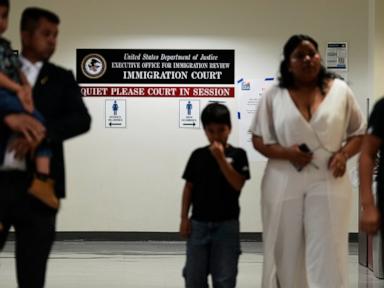
Speed kills. In the federal immigration court system, speed is actively weaponized against the rule of law, converting judicial benches into assembly lines where administrative efficiency supersedes constitutional safeguards. When dockets swell and performance quotas loom over judges like corporate sales targets, the result is a measurable surge in default removal orders.
The core premise is stark. Breakneck scheduling in the Executive Office for Immigration Review forces a systemic breakdown in legal representation, communication, and basic preparation, ultimately driving up deportation orders through sheer logistical impossibility.
For decades, career adjudicators warned that turning a court of law into a high-volume processing plant would produce catastrophic errors. Those warnings were ignored. Today, practitioners watch as vulnerable individuals face life-altering removal hearings armed with nothing more than a hearing notice delivered weeks late to an obsolete address.
The Quota System and the Metrics of Removal
Bureaucracy loves a metric. Under successive administrations, the Department of Justice imposed quantitative case-completion goals on immigration judges. A judge must clear a specific number of cases annually to satisfy performance evaluations.
This output-driven model fundamentally changes judicial incentives. When a judge faces hundreds of pending files, taking the time required to evaluate a complex asylum claim feels like an administrative luxury. Granting a continuance to allow a respondent to secure counsel slows the docket. Denying it keeps the metrics green.
The structural design creates an irresistible gravitational pull toward swift closures. Swift closures in immigration court almost uniformly mean removal orders.
Consider a hypothetical docket in a busy metropolitan immigration court. A judge walks onto the bench with fifty cases scheduled for a single morning. Many respondents are unrepresented. Language barriers complicate every interaction. If half of those respondents fail to appear because notice arrived via a mail system experiencing massive backlogs, the judge faces a stark operational choice. They can issue a in absentia removal order immediately, or they can reschedule, compounding next month's backlog.
The pressure favors the gavel dropping on an empty chair.
The Mechanics of Notice Breakdown
The legal foundation of an in absentia removal order rests entirely on proper notice. If the government proves a respondent received a notice to appear with a specific date and time, and failed to show up, the law mandates a deportation order.
The theory is clean. The reality is chaotic.
Immigration enforcement agencies frequently mail notices to addresses that change frequently, or rely on outdated contact details gathered during initial processing under chaotic border conditions. Address updates submitted by respondents often vanish into bureaucratic black holes, failing to sync between the Department of Homeland Security and the immigration court database.
When a notice fails to arrive, the legal fiction of notice remains intact for the court. The respondent is marked as a failure to appear. The deportation order issues automatically. Weeks later, that individual might be picked up by immigration authorities for removal, having never known a hearing took place.
Motions to reopen based on lack of notice require legal sophistication, access to records, and time—three things unavailable to most people trapped in the system. The speed of the initial default sets off a cascading chain of finality that is extraordinarily difficult to reverse.
The Representation Deficit
Law changes outcomes. Statistical studies consistently show that individuals with legal representation in immigration court secure relief at rates exponentially higher than unrepresented respondents.
Yet, there is no right to government-appointed counsel in civil immigration proceedings. Respondents must find and pay for private attorneys or rely on overburdened legal aid organizations.
When courts accelerate timelines, the market for legal defense shatters. Private attorneys cannot ethically take cases where a master calendar hearing is scheduled days away, leaving zero time to gather country conditions evidence, review charging documents, or interview traumatized clients. Legal aid groups, stretched thin across thousands of detainees, must triage their caseloads, leaving thousands to navigate complex statutory frameworks alone.
An unrepresented respondent standing before an immigration judge under a compressed schedule experiences a profound procedural disadvantage. They do not understand evidentiary rules. They do not know how to articulate a valid fear of persecution under asylum law. They treat the hearing as an administrative interview rather than an adversarial trial.
Judges, bound by adversarial constraints, cannot act as defense counsel. The combination of high-speed dockets and zero representation produces a predictable harvest of removal orders.
The Human Cost of Administrative Velocity
Numbers on a spreadsheet obscure the human reality of expedited dockets. Behind every default removal order is a complex migration narrative, often involving severe violence, economic desperation, or deep family ties within American communities.
When cases are rushed, valid claims for humanitarian protection are swept away in the rush to clear dockets. Individuals with legitimate fears of persecution find themselves ordered removed because they missed a filing deadline or failed to articulate their claim correctly during a ten-minute master calendar hearing conducted through an intermittent audio link.
The collateral damage extends to mixed-status families. A single deportation order executed hastily can fracture a household comprising U.S. citizen children and long-term tax-paying residents. The system registers a closed case and a statistical success. The community absorbs the social and economic disruption.
Structural Workarounds and Institutional Resistance
Reform proposals regularly circle Washington, yet systemic inertia remains formidable. Moving immigration courts out of the Department of Justice and into an independent judicial branch under Article I of the Constitution is a perennial recommendation from bar associations and former judges. Such a shift would remove political influence over docket management and insulate adjudicators from performance quotas tied to executive branch enforcement goals.
Short of structural overhaul, localized innovations show modest promise. Dedicated dockets for families and vulnerable populations, when paired with universal representation models, dramatically reduce failure-to-appear rates and ensure orderly adjudications. When people understand the process and have counsel to guide them, they show up.
However, political appetite for funding due process mechanisms remains volatile. Enforcement-first strategies prioritize numerical output over procedural integrity, viewing delays not as safeguards for justice, but as loopholes to be closed.
The breakneck pace continues. The dockets remain overloaded. The default orders pile up quietly in database logs, away from public view, preserving the illusion of an efficient border enforcement apparatus while systematically eroding the foundational principles of administrative justice.