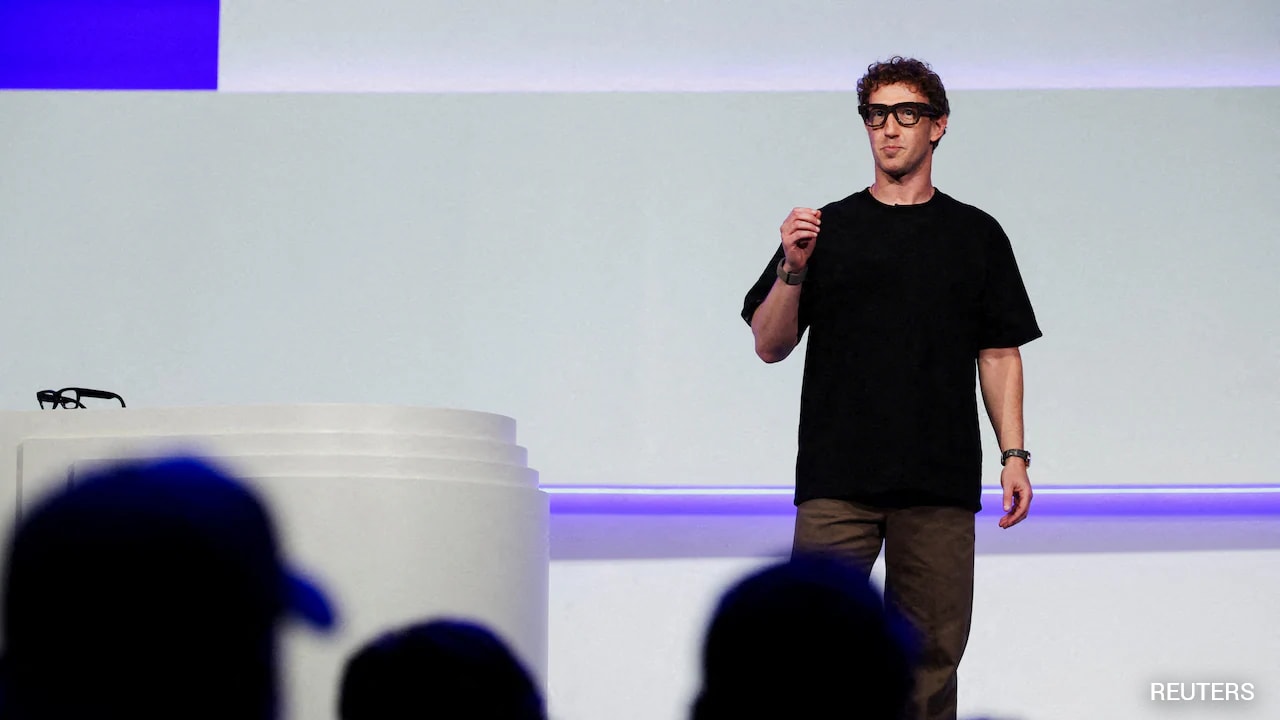
Dario Amodei sat in a room that smelled faintly of whiteboard markers and cold drip coffee, looking at a curve that had stopped obeying him.
For years, the trajectory of artificial intelligence had felt like a steep hill. You pushed, it climbed. You added more compute, it answered with proportional competence. It was predictable in the way a fast car is predictable: press the pedal down further, watch the speedometer tick higher. But somewhere around the turn of the decade, the hill steepened into a sheer cliff face. The math didn't just scale; it compounded in the dark, folding in on itself like dough kneading itself into bread. In related news, read about: Why Palantir and Nvidia Restricting AI Models is the Best Thing That Could Happen to Tech.
By the time the Anthropic CEO admitted publicly that he had misjudged the sheer velocity of global AI growth, the curve had already left him behind. And if the person steering one of the most powerful intelligence engines on Earth was surprised by the acceleration, what does that say about the rest of us?
We treat technology like weather. We look out the window, see a cloud, and grab an umbrella. But machine intelligence is not a storm passing overhead. It is an ocean rising, and we built the levees out of paper. ZDNet has also covered this important subject in great detail.
The Mechanics of Surprise
To understand why the architects of these systems were caught flat-footed, you have to understand how exponential math tricks the human brain.
Human beings are linear creatures. We walk a mile in twenty minutes; walk two miles, it takes forty. If a puppy grows two inches in its first month, we intuitively expect it to grow another two inches in the next. Our ancestors survived by extrapolating tomorrow from yesterday. That cognitive machinery kept us alive on the savannah, but it is utterly useless in the presence of compounding technological loops.
Consider a simple riddle about a lily pad on a pond. It doubles in size every day. If it covers the entire pond on the thirtieth day, how much of the pond is covered on the twenty-ninth?
Half.
On the twenty-eighth day, it covers a quarter. On the twenty-fifth day, it covers a mere three percent. To an observer watching for the first three weeks, the pond looks mostly green and pleasant, with plenty of open water to spare. The threat appears negligible. Then, in a matter of forty-eight hours, the water vanishes.
That is precisely what happened inside the large language model labs.
When researchers scaled up parameter counts and training data, they weren't just getting better at predicting the next word in a sentence. They were stumbling across emergent properties—abilities like multi-step reasoning, basic coding, and complex translation that no one specifically programmed into the weights. The models began to reason not because they were taught logic, but because logic became the most efficient compression algorithm for predicting human text.
When you build a system that learns how to learn faster than you can write the textbooks, your own projections become obsolete before the ink dries. Amodei and his peers were planning for a horizon five years away, only to find it arriving by Tuesday.
Living Inside the Acceleration
Walk into any modern corporate office at nine in the morning, and you can smell the quiet panic.
It does not look like science fiction. There are no chrome corridors or flashing red lights. It looks like middle managers staring blankly into glowing rectangles, realizing that the software script they spent six months designing has just been outperformed in six seconds by a model that costs fractions of a cent to query.
We are living through a strange historical pivot: the moment when human expertise is suddenly cheap, while human judgment is terrifyingly scarce.
A junior copywriter spends four years learning the cadence of commercial persuasion, only to compete with a neural network that has read every advertisement written since the invention of the printing press and can synthesize a bespoke campaign tailored to a specific demographic in the time it takes to blink. A radiologist who spent a decade in residency now shares a diagnostic room with an algorithm that spots micro-fractures in an X-ray before the human eye has even adjusted to the contrast.
This is not automation as we knew it in the twentieth century. The industrial revolution replaced muscle with steam; this revolution is replacing cognition with silicon.
And the speed is the shock. Previous technological shifts gave societies a generation to adapt. The agricultural age bled into the industrial across centuries. Even the personal computer took twenty years to permeate households. Artificial intelligence scaled from a laboratory curiosity to a global economic earthquake in less than thirty-six months.
We did not migrate to this new world. We were teleported into it while we were sleeping.
The Blind Spots of the Builders
Why didn't they see it coming?
Partly, it is the trap of proximity. When you are inside the workshop, covered in sawdust and grease, you see the individual gears turning. You see the bugs, the hallucinations, the massive electricity bills, the endless training runs that crash halfway through because a server farm in Oregon overheated. From the inside, AI looks fragile, stupid, and profoundly expensive. It looks like a toddler throwing tantrums with a billion-dollar toy.
It is easy to mistake the toddler's clumsiness for a lack of growth, forgetting that the toddler is doubling its capacity every few months.
Furthermore, the economic incentives of Silicon Valley reward a very specific kind of optimistic short-termism. If you tell your investors that the technology will radically transform human civilization by next Tuesday, you sound like a visionary. If you tell them that the system is accelerating beyond your ability to model, control, or predict its long-term trajectories, you sound like a liability.
So the leaders built models they could drive, right up until the accelerator welded itself to the floorboard.
Amodei’s admission is significant precisely because he is not a breathless tech evangelist selling snake oil on a podcast. Anthropic was founded explicitly out of a desire for caution—a breakaway group of researchers who looked at the reckless commercialization of early generative AI and said, We need to slow down, build guardrails, and focus on safety.
If the cautionary camp—the people whose entire brand is built around being careful and measured—gets blindsided by the velocity of growth, then nobody is steering the ship. We are all passengers clinging to the handrails of a rocket sled we built ourselves, watching the scenery blur into a gray smear.
The Weight of What Comes Next
We spend a lot of time arguing about whether the machines are conscious, whether they will take our jobs, or whether they will eventually write better poetry than us. These are comfortable debates. They are intellectual parlor games that let us pretend we are still in control of the agenda.
The real crisis is much quieter and much more demanding.
It is the erosion of our ability to project our lives into the future. For centuries, human culture has relied on a stable timeline. You learned a trade, practiced it for forty years, and passed it down. You bought a house, built a career, and planned for a retirement that looked vaguely like your parents' retirement.
That mental model is dead.
When the underlying substrate of human knowledge and labor reinvents itself every six months, long-term planning becomes an exercise in absurdity. How do you advise a nineteen-year-old on a college major when the profession they are studying for might be automated before they graduate? How do you regulate an industry where the regulators cannot even comprehend the technical architecture of the systems they are trying to fence in?
We are forced to live entirely in the immediate present, reacting to waves we cannot see, generated by forces we barely understand, moving at a velocity that defies our evolutionary design.
The curve keeps climbing. The models keep growing. Somewhere in a server room humming with liquid coolant, a new generation of weights is settling into place, learning patterns we haven't even thought to look for yet.
The CEO looked at the graph, shook his head, and confessed he was wrong about the speed. The rest of us are still trying to figure out if we are standing at the dawn of a golden age or at the edge of an event horizon, watching the clock hands spin so fast they finally blur into a solid, unbroken circle.