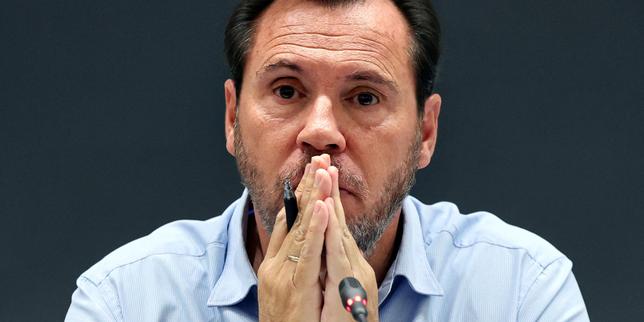
Everyone is celebrating. The press got their scalp. The opposition got their soundbite. The public got a clean, cinematic villain to blame for the devastating rail tragedy in Spain.
The Minister of Transport stepped down, and the collective sigh of relief from Madrid to Brussels is deafening. Accountability, they say, has been served. The system works.
They are completely wrong.
Firing—or forcing the resignation of—a cabinet minister after a catastrophic infrastructure failure isn't accountability. It is political theater designed to protect the exact bureaucratic rot that killed those people. While journalists pat themselves on the back for covering a high-profile resignation, the actual mechanics of why Spanish trains fail remain untouched, unexamined, and lethal.
The Lie of Ministerial Accountability
Let’s look at the lazy consensus dominating the headlines right now. The narrative goes like this: a fatal train crash happens, the public demands blood, and the person at the top of the org chart falls on their sword to restore public trust.
It sounds noble. In reality, it is a get-out-of-jail-free card for the permanent bureaucracy.
I’ve spent fifteen years advising European transport operators and dissecting post-incident regulatory inquiries. I have seen governments blow hundreds of millions of euros on "reforms" after disasters, only to watch the exact same technical blind spots trigger another catastrophe five years later. Why? Because when you decapitate the political leadership, the press pack moves on to the leadership race. The spotlight shifts from the tracks to the parliament.
A transport minister is a transient politician. They hold the portfolio for an average of eighteen to twenty-four months. They do not weld the rails. They do not calibrate the ERTMS (European Rail Traffic Management System) signaling software. They do not sign off on daily rolling stock maintenance logs or manage the chronic understaffing at Adif (Administrador de Infraestructuras Ferroviarias), Spain’s state-owned railway infrastructure manager.
When the minister resigns, two catastrophic things happen immediately:
- Institutional Amnesia: The incoming minister arrives with zero technical briefing, spends six months learning the acronyms, and instinctively freezes all ongoing safety overhauls while they "conduct a comprehensive review." Progress stops dead.
- The Scapegoat Shield: Middle-management directors at the infrastructure agency and safety regulators breathe a sigh of relief. The public’s anger has been absorbed by a politician. Nobody asks why the procurement budget for trackside sensors was diverted to shiny new high-speed vanity lines.
You don't fix a broken braking system by firing the guy who bought the car three weeks ago. You fix it by tearing apart the engine block and firing the mechanics who lied about the inspection.
The Two-Tier Trap Nobody Talks About
If you want to understand why Spanish rail safety is an accident waiting to happen, stop looking at the Ministry of Transport and start looking at the structural schizophrenia of the Spanish rail network.
Spain is rightfully proud of its AVE (Alta Velocidad Española) high-speed network. It is the longest in Europe and second only to China globally. Politicians love cutting ribbons on 300 km/h bullet trains connecting Madrid to regional capitals. It wins elections. It looks glorious on international infrastructure rankings.
Meanwhile, the conventional rail network—the commuter lines (Cercanías) and regional freight corridors that millions of working-class Spaniards rely on every single day—has been treated like an unwanted stepchild for three decades.
This is the nuance the mainstream media completely missed in their rush to cover the minister's resignation speech. You cannot starve the conventional network of capital expenditure while pouring billions into high-speed prestige projects and expect zero friction where the two systems meet.
Where the Money Actually Goes
Let’s look at the operational reality on the ground. In rail engineering, safety isn't a single switch you flip; it is a stack of redundant barriers. When budgets get tight on legacy lines, those barriers are quietly thinned out:
- Signaling Asymmetry: While high-speed lines run on Level 2 ETCS (European Train Control System) that automatically overrides human error and applies emergency brakes, vast stretches of Spain's conventional and transitional track still rely on ASFA (Anuncio de Señales y Frenado Automático). ASFA is an older cab-signaling system that relies heavily on driver reaction times. The transition zones—where a high-speed train enters a conventional approach, or where commuter traffic shares track geometry—are notorious cognitive traps for drivers.
- Deferred Maintenance: Track geometry degrades. Ballast shifts. Switches wear down. When an infrastructure manager faces political pressure to keep ticket prices low and expand high-speed mileage simultaneously, preventive maintenance budgets are the first to get raided. You switch from predictive maintenance (replacing a part before it fails) to corrective maintenance (fixing it after it breaks). On a railway, corrective maintenance is another word for body bags.
- Liberalization Friction: Since the European Union forced the liberalization of passenger rail, Spain’s tracks have become drastically more crowded. State operator Renfe now shares the rails with private competitors like Iryo and Ouigo. More trains mean tighter headways, shorter overnight maintenance windows for track crews, and exponentially higher stress on aging switches and overhead catenary lines.
Did the resigning minister invent EU rail liberalization? No. Did they design the twenty-year budgetary bias favoring AVE over Cercanías? No.
By forcing them out, the public just traded a deep, structural audit of Spanish rail economics for a cheap, two-day news cycle about who replaces them in the cabinet.
Stop Asking Who Should Be Fired
If you search online right now for news about the crash, the suggested queries are predictable: "Who is the new Spanish transport minister?" and "Will Renfe executives be prosecuted?"
These are the wrong questions. They are emotionally satisfying and operationally useless.
In aviation—the gold standard for transport safety—the industry abandoned the "blame and fire" model decades ago. Pioneered by safety theorists like James Reason (famous for his "Swiss Cheese Model" of accident causation) and institutionalized by organizations like the ICAO (International Civil Aviation Organization), modern safety science operates on a strict premise: human error is a symptom, not a cause.
Imagine a scenario where an airline pilot misreads an altimeter in bad weather and crashes. If the airline simply fires the pilot and forces the Minister of Aviation to resign, the exact same cockpit layout remains in 500 other planes. Next winter, another pilot will make the exact same mistake.
Aviation succeeds because investigators ignore political scapegoats and obsess over systemic design. They ask: Why was the altimeter easy to misread? Why did the fatigue roster put that crew on a night flight? Why didn't the ground proximity warning trigger three seconds earlier?
European rail, particularly in countries with heavy state-owned monopolies, is still trapped in the 19th-century punitive mindset. Prosecutors immediately hunt for criminal negligence—a driver going too fast, a signalman missing a call, a minister failing to oversee—because criminal charges satisfy the public's thirst for vengeance.
But vengeance doesn't upgrade a single mile of track.
The Uncomfortable Truth About The "Just Culture" Approach
I will be the first to admit the massive downside of this contrarian stance: it feels morally repulsive in the immediate aftermath of a tragedy.
When families are burying their loved ones, telling the public "don't fire the minister, let's look at systemic procurement incentives and ASFA-to-ETCS transition protocols" sounds cold, technocratic, and heartless. People want someone to pay. Anger is a natural human response to preventable death.
Furthermore, a "Just Culture" that refuses to punish top-level executives can easily be hijacked by corrupt officials to evade genuine criminal negligence. If a director actively falsified safety certificates or pocketed maintenance funds, they belong in a prison cell, not a seminar on systemic engineering.
There is a razor-thin line between systemic immunity and systemic accountability. Right now, Spain is getting the worst of both worlds: the politician takes a symbolic fall, the criminal courts drag out a scapegoat trial for seven years, and the underlying engineering culture never changes.
What Real Accountability Actually Looks Like
If Spain actually wants to ensure this catastrophe is the last of its kind, the Prime Minister should have rejected the minister's resignation, locked them in a room with the heads of Adif, Renfe, and the CIAF (Comisión de Investigación de Accidentes Ferroviarios), and forced through four brutal, non-negotiable mandates before sunrise.
1. Strip the Transport Ministry of Safety Oversight
Right now, the political apparatus that boasts about building new rail lines is structurally tangled with the bodies meant to police them. The CIAF—Spain’s rail accident investigation body—has faced repeated criticism from the European Union Agency for Railways (ERA) over its lack of true independence from the Ministry of Transport. You cannot have the referee working for the team owner. Safety regulation must be completely severed from infrastructure promotion, funded independently, and given the statutory power to shut down non-compliant track segments on the spot—even if it causes political chaos for the government.
2. Freeze All New High-Speed Expansion for 36 Months
Stop cutting ribbons. Every single euro of discretionary capital expenditure earmarked for new AVE extensions should be frozen and redirected immediately into the conventional network and transitional junctions. Bring every kilometer of shared track up to full ETCS Level 2 standards. Eliminate the cognitive cliff edges where trains drop from automated digital protection back into legacy driver-reliant signaling.
3. Mandate Radical Telemetry Transparency
We live in an era of ubiquitous sensors, yet rail infrastructure managers hoard maintenance data like state secrets. Every track geometry fault, every delayed switch replacement, and every near-miss incident (Signals Passed at Danger, or SPADs) on the Spanish network should be published on a public, real-time dashboard. When infrastructure executives know that deferred maintenance on a commuter line in Catalonia or Andalusia is visible to every journalist and passenger in the country, budgets magically reallocate themselves without a single minister needing to resign.
4. Tie Executive Compensation to Leading Safety Indicators
Stop paying rail directors bonuses for on-time performance or passenger volume growth. Those metrics actively incentivize corner-cutting; they encourage dispatchers to push trains through degraded track sections to avoid delay penalties. Tie 50% of senior management compensation at Adif and Renfe to leading safety indicators: track inspection completion rates, rapid closure of near-miss reports, and reduction in driver fatigue violations.
The Illusion of the Clean Slate
Tomorrow morning, the Spanish press will run profiles on the shortlist of candidates to become the new Minister of Transport. Pundits will debate their political loyalty, their regional alliances, and their media savvy.
Meanwhile, out in the dark, thousands of commuter and freight trains will roll across aging switches, entering legacy signaling zones at high speeds, operated by overworked crews running on infrastructure budgets stretched thin by twenty years of political vanity.
The minister is gone. The system that killed those people is still running on schedule.