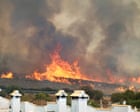
The horrific inferno that ripped through Almería in southern Spain, claiming at least 12 lives, isn't just another bad summer news story. It's a terrifying preview of a new ecological reality. A fast-moving blaze tore through the scrubland of Los Gallardos, trapping victims in their cars and catching a largely unprepared expat community off guard. While early reports point to a fallen power line as the spark, blaming a single wire misses the point entirely.
The real culprit is a lethal cocktail of extreme weather anomalies and profound societal shifts that have turned the Spanish countryside into a ticking time bomb.
If you think this is just about rising temperatures, you're missing the bigger picture. To understand why Spain is burning with such unprecedented ferocity, you have to look at what happened months before the first flame even ignited.
The Counterintuitive Fuel Build-Up
The anatomy of the Almería disaster began with a surprisingly wet winter and spring across the Iberian peninsula. Heavy rains caused surface soil moisture to spike, triggering an explosion of plant growth. On paper, a green landscape sounds like a shield against fire. In reality, it creates a massive surplus of fine fuel like grasses and light scrub.
When the heatwaves hit, the script flipped fast.
Western Europe endured its warmest June on record, immediately followed by back-to-back heatwaves pushing temperatures past 42°C (107°F). That dense, lush vegetation didn't just dry out; it baked into highly flammable tinder. When the Almería fire started, fueled by 30 mph winds, it had an ocean of hyper-dry fuel to consume. It advanced an astonishing nine miles in just two hours.
Fire scientists call this compounding risk. You get a wet growth period, followed by an intense flash drought. It's a pattern that catches communities completely off guard because the landscape looks healthy just weeks before it becomes an inferno.
The Hollowing Out of Rural Spain
Climate change gets all the headlines, but the physical structure of the land itself has changed in a way that favors mega-fires. For decades, Spain has dealt with a massive migration from the countryside to the cities. This phenomenon, known locally as España Vaciada (Empty Spain), has left vast tracts of agricultural land abandoned.
Data from historical land-use studies shows a dramatic shift. In regions like Valencia and Andalusia, agricultural land cover has plummeted over the last few decades, with abandoned plots quickly reverting to dense scrubland and unmanaged forest.
[1957 Land Use] ---> 44% Active Agriculture | 17% Dense Forest/Scrub
[Recent Decades] ---> 20% Active Agriculture | 29% Dense Forest/Scrub
When farmers leave, the natural vacuum is filled by highly flammable species like esparto grass and dense brushwood. Without goats to graze the undergrowth, crops to break up the terrain, or locals to manage the trees, the landscape loses its natural firebreaks.
Instead of a mosaic of green fields and managed woods, you get a continuous, unbroken sea of fuel. Once a fire catches, there's nothing to stop it from ballooning into an uncontrollable monster.
Why Fire Suppression Backfires
For generations, the standard response to any forest fire has been total suppression. Hit it hard, put it out fast. It sounds logical, but firefighting experts are realizing this approach creates an even bigger monster down the road.
By putting out every minor fire instantly, we prevent the natural, low-intensity burns that historically cleared out dead wood and forest floor debris. This build-up of biomass acts as a ladder. When a fire inevitably breaks out during a severe heatwave, the flames climb this accumulated debris, moving from the ground straight into the treetops.
This turns a manageable brush fire into a crown fire. These mega-fires generate so much heat and energy they create their own weather systems, throwing embers miles ahead of the main front and rendering traditional firefighting tactics useless.
The Human Cost and the Dry Riverbed Trap
The tragedy in Almería highlights another deadly factor: the friction between changing environments and human behavior. The area around the Sierra de Los Filabres is dotted with scattered properties, heavily populated by retired expats and tourists who don't speak the language fluently and don't know the local geography.
During the panic, emergency management officials explicitly told residents of Bedar to stay put or use designated evacuation routes. Instead, several families fled blindly.
Four victims died inside a right-hand-drive vehicle when the flames overtook them. Seven others abandoned their cars and tried to escape on foot through a dry riverbed. In a Mediterranean flash fire, a dry ravine is a geographical death trap. The terrain funnels smoke, intense heat, and wind directly through the canyon, creating a chimney effect that makes survival impossible.
Actionable Steps for Fire-Prone Zones
If you live in or visit rural southern Europe, relying solely on emergency services is a gamble you shouldn't take. You need to take active, physical steps to protect your property and your life before the smoke appears.
- Create a Defensible Space: Clear all dead vegetation, dry grass, and pine needles within 10 meters (30 feet) of your home. Thin out trees and remove lower branches up to two meters from the ground to prevent fire from climbing.
- Ditch the Flammable Landscaping: Replace highly resinous plants like cypresses and eucalyptus with fire-resistant native species like holm oak, carob, or aloe vera near structures.
- Hard-Harden Your Home: Block any vents or gaps under eaves with fine metal mesh to stop flying embers from entering your attic. Keep your gutters completely clear of dry leaves.
- Know the Stay-or-Go Threshold: Never wait for an official evacuation order if you see thick smoke or face high winds. If you miss the early window to leave via a clear, paved main road, shelter indoors. Lock doors, close windows, fill sinks and tubs with water, and stay away from outside walls.
The reality is that Europe is warming at twice the global average. The conditions that caused the Almería tragedy aren't an anomaly; they're the new baseline. Relying on emergency response to save a home built in the middle of overgrown, unmanaged brush during a 42°C heatwave is no longer a viable strategy. Managing the land and understanding evacuation physics is the only way forward.


