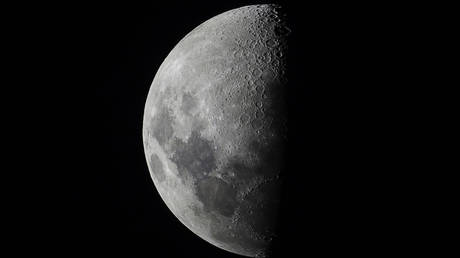
A four-ton piece of discarded SpaceX hardware struck the lunar surface at nearly six thousand miles per hour, confirming months of independent tracking and thrusting the quiet crisis of cislunar pollution into the harsh light of public scrutiny. This high-speed impact in March 2022 marked a bleak milestone in space exploration history. It was the first unintended anthropogenic collision with the moon, an uncontrolled booster stage from a 2015 Falcon 9 launch tumbling through deep space until gravity finally reclaimed it.
Yet the mainstream reaction was remarkably muted. Observers marveled at the celestial billiards trick while ignoring the glaring regulatory void that permitted a multi-ton rocket body to wander uncontrolled for seven years. Low Earth orbit receives constant surveillance from military and civilian agencies tracking operational satellites and active debris. Beyond geosynchronous orbit, however, the monitoring network thins dramatically. Space is vast, but our carelessness is expanding even faster.
The Anatomy of an Orbital Ghost
To understand how a used rocket stage vanishes into the void only to reappear as a lunar impactor, we must examine the mechanics of high-energy orbital mechanics. When a Falcon 9 second stage completes its primary mission deploying a deep-space payload like the DSCOVR climate observatory, it often possesses excess velocity. Once it clears the Earth-Moon system's gravitational well, standard de-orbit procedures become impossible. Fuel reserves are exhausted. Guidance systems go dark.
The stage becomes an orbital ghost.
Without active propulsion, solar radiation pressure, Earth's asymmetric gravitational pull, and lunar perturbations begin to tug at the tumbling metal cylinder. Tracking these objects requires dedicated optical telescopes rather than radar, because radar cross-sections diminish exponentially with distance. Independent astronomers like Bill Gray, who first identified the impending lunar collision trajectory using open-source orbital software, often rely on amateur networks and university scopes to do the work that space agencies fail to prioritize.
Government oversight bodies treat cislunar space like international waters. If an object is not interfering with active commercial constellations in low Earth orbit, it effectively ceases to exist on official ledgers. This administrative blind spot allows commercial and state actors alike to treat the space between Earth and the moon as an industrial dumping ground.
The False Security of Deep Space
Space is big. That phrase serves as the primary defense for every aerospace executive and regulatory bureaucrat who wishes to avoid the costly engineering burden of propellant management. The logic goes that the sheer volume of the cosmos makes collisions statistically improbable.
This argument collapses under scrutiny.
While the volume of cislunar space is enormous, the pathways to and from the moon are increasingly congested. Lunar missions are no longer rare scientific anomalies. Commercial payload delivery services, national space agency exploration programs, and private lunar orbiters are multiplying. Every mission that travels beyond geosynchronous orbit leaves behind spent upper stages, adapter rings, and protective shrouds.
Consider a hypothetical commercial cargo flight to a future lunar South Pole base. The transport vehicle uses a heavy upper stage to inject itself into a trans-lunar trajectory. If that stage is abandoned without a disposal burn, it remains in a chaotic heliocentric or Earth-intersecting orbit for decades. Over thousands of orbital cycles, the probability of intersection with active lunar assets or future crewed habitats climbs.
We are populating the lunar highway with invisible landmines.
The Regulatory Vacuum
International space law remains anchored to treaties drafted during the Cold War. The Outer Space Treaty of 1967 governs liability, stating that launching states retain jurisdiction and control over their objects and remain internationally liable for damage caused by them. But liability requires identification, attribution, and a clear legal mechanism for enforcement.
None of these elements exist for spent rocket bodies abandoned in deep space.
When independent researchers tracked the SpaceX booster toward the moon, no international body stepped in to coordinate observations, calculate the exact impact coordinates with official authority, or demand mitigation. NASA's Lunar Reconnaissance Orbiter eventually hunted for the twin craters left by the impact, confirming the strike months later. Science documented the event, but policy did not react.
Commercial entities face strict Federal Aviation Administration guidelines for de-orbiting hardware in low Earth orbit. Satellites must possess active passivation systems to vent remaining fuel and batteries, and they must guarantee a controlled re-entry within twenty-five years of mission completion. These rules dissolve the moment a mission reaches escape velocity. The regulatory framework treats deep space as a legal vacuum, and operators have eagerly filled that vacuum with dead weight.
The Scientific Cost
The physical scarring of the moon is not merely an aesthetic concern. The lunar surface acts as a pristine archive of the solar system's history. Unaltered by plate tectonics or a dense atmosphere, the regolith preserves impacts from asteroids and comets spanning billions of years.
Contaminating this environment with terrestrial petrochemical residues, titanium alloys, and unburned propellant alters the local geochemical baseline. While the mass of a single Falcon 9 second stage is negligible compared to the total mass of the moon, its localized impact disrupts pristine scientific sites. Future planetary geologists analyzing samples from the lunar regolith near impact zones will find anthropogenic contaminants baked into the local soil.
Furthermore, uncontrolled impacts threaten future infrastructure. A base established near the lunar poles will rely on predictable environmental conditions. Blindly dropping multi-ton debris fields into the lunar sphere of influence introduces unnecessary existential risk to expensive assets and human lives.
Engineering Solutions Within Reach
The tragedy of the situation is that the technical fixes are entirely feasible. Aerospace engineers do not lack the capability to manage deep-space debris; they lack the regulatory mandate to spend capital on it.
A responsible cislunar architecture requires three immediate structural shifts.
First, mandatory tracking beacons must be integrated into upper stages designed for deep space missions. Passive reflectivity or low-power solar-charged transponders ensure that independent astronomers and space situational awareness networks never lose sight of a spent stage.
Second, mission profiles must incorporate heliocentric disposal burns. Instead of leaving an upper stage in an Earth-Moon crossing orbit where it will eventually strike the Earth or the moon, remaining propellant can be husbanded to push the vehicle into a stable solar orbit where it poses zero threat to terrestrial or lunar infrastructure.
Third, national licensing authorities like the FCC and the FAA must extend their orbital debris mitigation rules past geosynchronous orbit. If a company wishes to launch a payload to the moon, its license should depend on a certified plan for the safe disposal of every piece of hardware required to get it there.
The SpaceX lunar impact was widely reported as a quirky space oddity, a momentary collision of human engineering with ancient dust. It was actually a warning shot. We have exported our terrestrial habit of trashing our environment into the orbital sphere, and unless we enforce accountability in the deep void, the next impact might not hit an empty patch of lunar highlands.