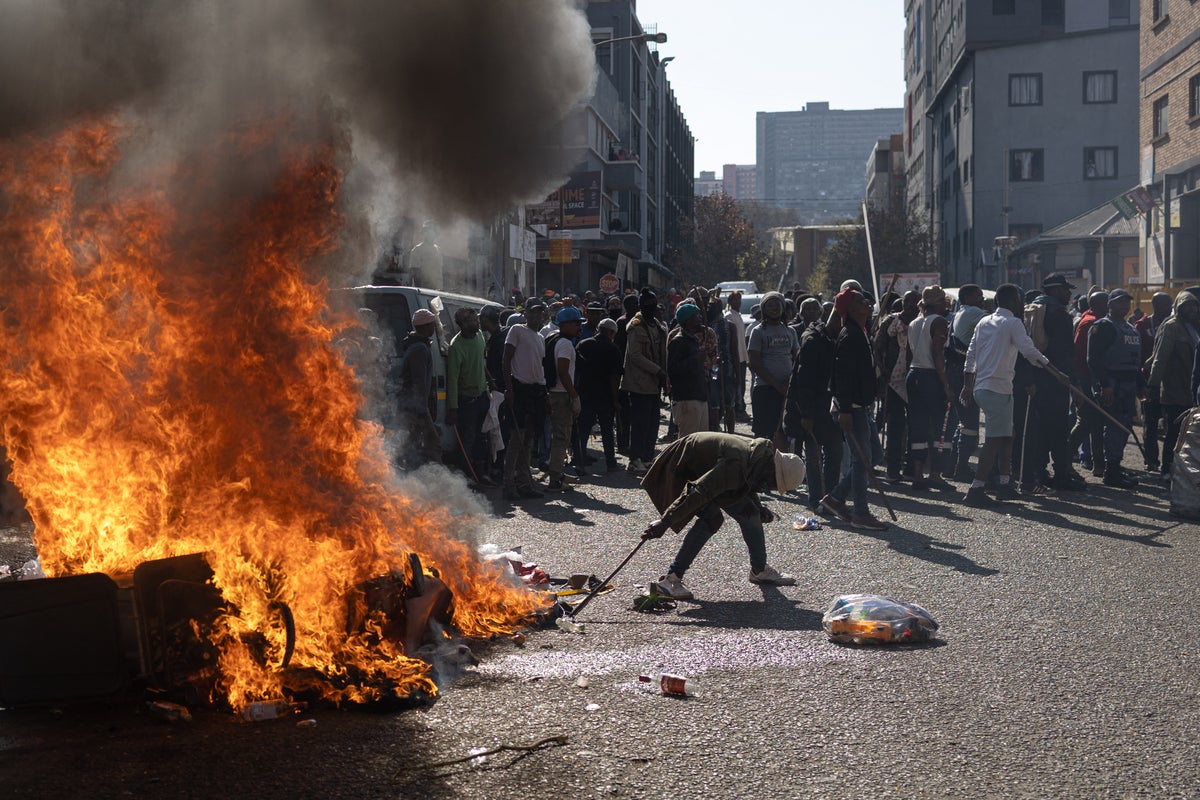
Nelson Mandela's vision of a unified, multi-ethnic "Rainbow Nation" faces its toughest structural test yet. In recent weeks, thousands of demonstrators draped in national flags and carrying traditional weapons have marched through major urban hubs like Johannesburg, Pretoria, and Durban. Spearheaded by citizen-led movements like March and March, these demonstrators issued an unofficial June 30 deadline for all undocumented immigrants to pack up and leave.
While the South African government rejected the ultimatum, the ground reality turned hostile. Mobs looted foreign-owned shops, forced evictions, and set informal settlements ablaze. At least five foreign nationals lost their lives, and over 25,000 migrants have fled their homes, seeking safety in makeshift displacement camps or opt-in state repatriation programs. Meanwhile, you can read other events here: The Geopolitical Cost Function of the Indo-Pacific: Securing the India-Japan Defense and Supply Chain Architecture.
If you want to understand why these anti-migrant protests keep fracturing South African society, you have to look past the surface-level finger-pointing. The unrest isn't just about immigration status. It's a symptom of severe economic exhaustion and public institutional breakdown.
The Real Numbers Versus The Street Rhetoric
Vigilante groups frequently blame the country’s massive socio-economic woes entirely on foreign nationals. They claim undocumented arrivals run illicit drug operations, drain public clinics, and steal livelihoods from locals. To understand the full picture, check out the excellent analysis by NBC News.
The official numbers from Statistics South Africa paint a completely different picture. A national survey showed there are roughly 3.1 million migrants living in South Africa. That makes up about 4.1% of the total population, which is actually a drop from 5.6% a decade ago.
Furthermore, data engineers and economic researchers at the University of the Witwatersrand ran the numbers on the local job market. They found that if every single job held by a foreign national was instantly stripped away and handed to an unemployed citizen, the national unemployment rate would only drop by about 6%—shifting from a staggering 43.6% down to 37.6%.
The data proves that removing migrants won't magically cure the structural cracks in the economy. Yet, seven out of ten South Africans surveyed by Afrobarometer still view the economic impact of immigrants as purely negative. When everyday survival gets tough, people look for an easy target.
Thirty Years of Fractured Promises
To understand the raw anger on the streets, you have to look at the daily reality for the average citizen. South Africa holds the title of the most economically unequal country on earth according to the World Bank. The post-apartheid economic growth engine stalled out long ago, leaving the official unemployment rate sitting above 33%.
Decades of corruption scandals and systemic mismanagement have hollowed out public trust. The ruling African National Congress lost its outright legislative majority for the first time in three decades during the 2024 elections. This political shift reflects a voting base that is deeply tired of rolling power blackouts, failing water infrastructure, and a lack of basic services.
Local community organizers point out that grassroots vigilante movements like March and March and Operation Dudula successfully redirect this deep institutional anger. Instead of confronting local municipal offices over uncollected trash or lack of electricity, citizen patrols focus on checking the paperwork of shopkeepers from Malawi, Mozambique, and Zimbabwe.
A Brewing Continental Trade and Diplomatic Crisis
This domestic crisis is quickly turning into an expensive foreign policy nightmare for President Cyril Ramaphosa's administration. South Africa built its modern identity on being the progressive, human-rights-focused capital of the continent. Now, nations like Nigeria, Ghana, and Malawi are actively repatriating their citizens to protect them from the violence.
Governments in Accra and Abuja are openly evaluating international legal avenues to sue Pretoria for financial compensation over the destruction of their citizens' businesses. The South African Football Association even watched as domestic fans symbolically donned Mexican jerseys during a recent national team match against Mexico to protest the state's failure to protect fellow Africans.
For an economy heavily reliant on continental trade through the African Continental Free Trade Area, alienating regional neighbors is bad business. The political benefits that local leaders get by playing into nationalist sentiments during municipal election campaigns are directly harming the country’s broader economic standing.
Turning the Tide Against Vigilante Exclusion
Fixing this structural fracture requires moving away from short-term policing and addressing the root institutional failures. If you are tracking the stability of the region or trying to understand how to cool down localized civil unrest, the next operational steps require targeted, systemic changes.
- Impartial Accountability for Vigilantes: The state must aggressively prosecute criminal acts of extortion, property damage, and assault carried out under the banner of citizen documentation checks. When police allow unlawful groups to blockade health clinics or evict tenants with impunity, it signals that the state has surrendered its monopoly on law enforcement.
- Fixing the Broken Refugee and Asylum System: The Department of Home Affairs needs structural modernization. Years of bureaucratic backlogs leave legal asylum seekers without updated physical documentation, making them vulnerable to street-level harassment by vigilantes who cannot distinguish between legal and undocumented residents.
- Direct Local Economic Support: Instead of allowing local politicians to scapegoat informal corner shops run by immigrants, municipalities need to invest directly in township economies, offering micro-grants and skills training to young South Africans who feel locked out of the formal market.
The dream of the Rainbow Nation won't survive on nostalgia or old speeches alone. Without real economic reform and a firm re-establishment of the rule of law, the rainbow will keep fading into the background of a burning street.
For a visual breakdown of how these recent demonstrations unfolded across major metropolitan centers, watch this detailed on-the-scene report covering the South Africa anti-immigrant protests. This broadcast offers direct field reporting on the security deployments and the citizen movements driving the June deadlines.