The coffee in the cup holder was likely still hot.
That is the detail that haunts the periphery of every sudden tragedy. We move through our afternoons convinced of our own momentum, assuming the trajectory of our lives is a fixed line. We plan for dinner. We worry about an email we forgot to send. We walk across a familiar intersection, the pavement warm beneath our shoes, never suspecting that the mundane world is about to fold in on itself.
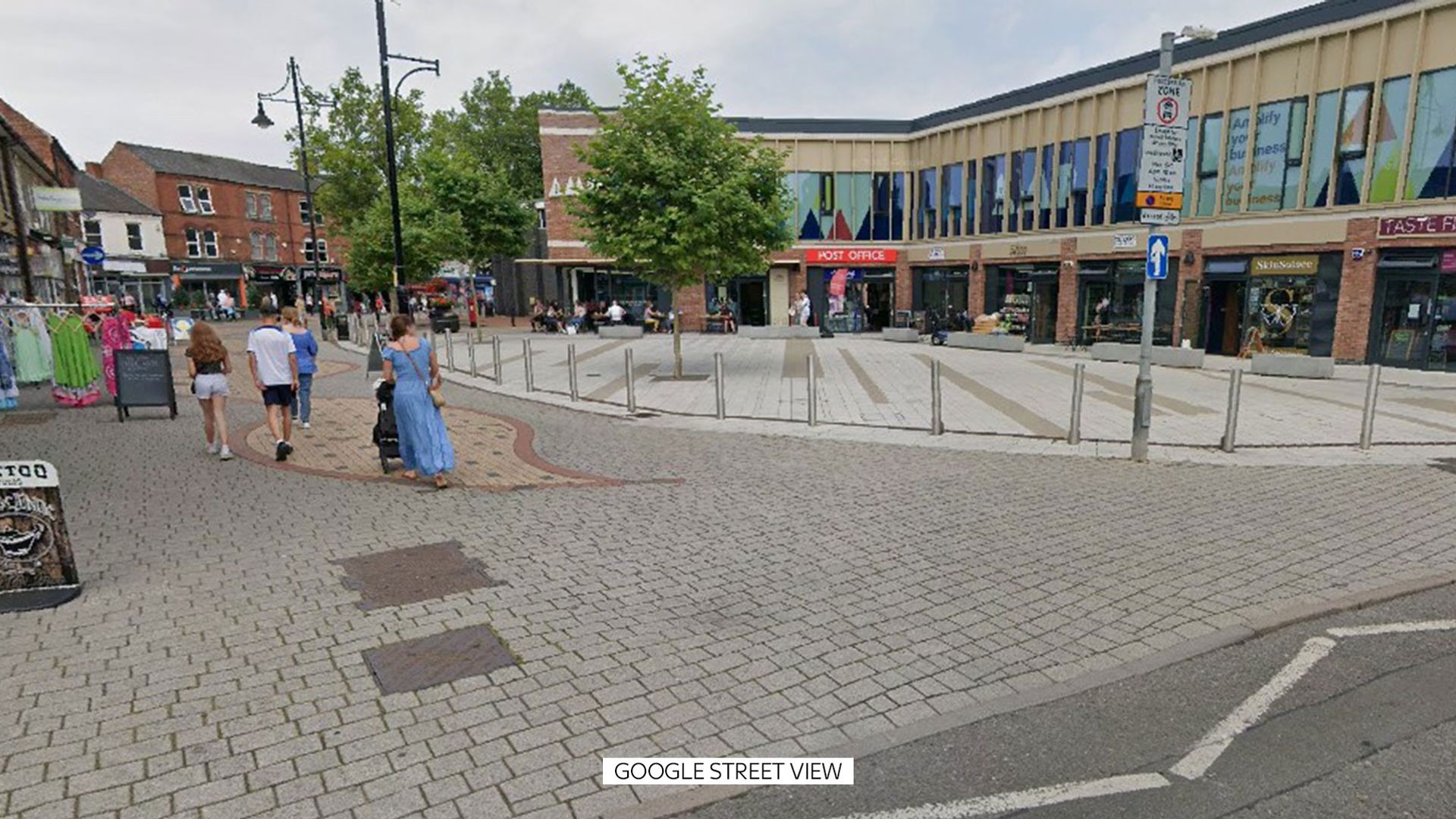
On a Tuesday that began like any other, the ordinary rhythm of a city street was replaced by the visceral, metallic scream of a car mounting a curb. In an instant, the geometry of the sidewalk changed. Pedestrians—people with names, dental appointments, and favorite songs—became statistics in a police report.
But statistics are a sterile way to describe the wreckage of a human life.
The Seconds Between Before and After
When a vehicle strikes a human body, physics is cruel. There is no grace in it. The force is a blunt, uncompromising theft of agency. Witnesses describe a sound that isn't quite like anything else—a heavy, sickening thud followed by a silence so thick you could choke on it.
One man remains in a hospital bed right now, his life measured by the steady, artificial hum of a ventilator. The reports call his injuries "life-threatening." It is a phrase we hear so often in the news that we have become insulated against its weight. We see the words and move on to the next headline.
To understand the stakes, you have to look closer. Life-threatening means a family is currently sitting in a waiting room where the fluorescent lights feel too bright and the air feels too thin. It means a surgeon is scrubbing blood off their forearms while wondering if the damage to a stranger's internal organs is too great to repair. It means that for one individual, the world has narrowed down to the space of a few square inches of medical tubing and the hope that their heart keeps beating through the night.
The Invisible Ripples of the Impact
We tend to focus on the point of contact. We look at the crumpled hood of the car or the chalk marks on the asphalt. However, the true scale of a collision like this extends miles away from the scene.
Consider the people who were walking just a few feet behind. They are the ones who saw the car veer. They are the ones who heard the impact. Tonight, they will try to sleep, but when they close their eyes, they will see that car again. They will feel the phantom rush of wind as two tons of steel passed them by. This is the hidden trauma of the city—the thousands of people walking around with the memory of a "near miss" etched into their nervous systems.
Then there is the driver.
While the investigation into the cause continues—whether it was a mechanical failure, a medical emergency, or a lapse in judgment—there is a human being behind that wheel who woke up that morning without the slightest intention of ending a life or destroying their own. Our society often demands immediate villains, but the reality is often more tragic and complicated. The weight of causing such destruction is a shadow that never truly lifts. It is a shared ruin.
The Fragility of the Public Square
We have built our world around the uneasy truce between the pedestrian and the machine. We walk along thin strips of concrete, separated from high-speed projectiles by nothing more than a six-inch curb and a mutual understanding of the rules.
When that truce is broken, it exposes the terrifying vulnerability of our daily existence. We like to think we are safe because we followed the signal. We stayed within the lines. We waited for our turn. But safety is often an illusion we maintain to keep from going mad.
The man fighting for his life didn't do anything wrong. He was simply there. He was part of the collective life of the city, contributing to the movement and energy of the street. His sudden absence from his own life is a reminder that the structures we trust—the traffic lights, the laws, the metal shells of our cars—are all that stand between us and the unthinkable.
The Architecture of Recovery
If he survives, the "after" is not a return to the "before."
Recovery from life-threatening trauma is a grueling, invisible war. It is months of physical therapy. It is the slow, painful process of re-learning how to move, how to speak, how to exist in a body that has been broken and stitched back together. The news cameras leave within hours. The yellow tape is cleared away by evening. By the next morning, commuters are walking over the same patch of sidewalk, unaware that a life-altering battle was fought on that very spot.
We must look at these events not as isolated accidents, but as cracks in the foundation of our community. Every time a car hits a pedestrian, it is a failure of our design, our focus, or our humanity.
The Weight of the Hot Coffee
The investigation will eventually find a cause. There will be a report filed in a cabinet. There may be legal proceedings, insurance settlements, and a new set of data points added to the annual safety review.
But none of that addresses the fundamental horror of the Tuesday that went wrong. It doesn't fix the empty chair at a dinner table tonight. It doesn't erase the image from the minds of the people who stood on the corner and watched the world break.
We are all just a few feet away from a different life. We are all moving through the world with our hot coffee and our distracted thoughts, trusting that the sidewalk will hold and the cars will stay where they belong. When they don't, the only thing we have left is our capacity to care for the ones left in the wake.
The man in the hospital is not just a "pedestrian." He is a son, perhaps a father, a colleague, a friend. He is the person who was supposed to be home by now.
As the sun sets over the city, the street is quiet again. The glass has been swept up. The traffic flows as it always does, a river of steel rushing past the curb. But somewhere in a quiet room, a heart is still beating, fighting against the gravity of a single, terrible moment, while a family waits for a miracle in the dark.