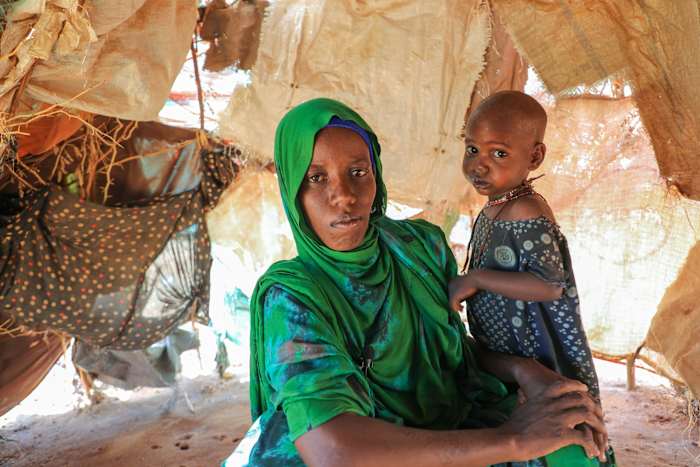
The supply chain for human survival is fragile. When missiles fly over the Persian Gulf or tensions escalate between Iran and its regional rivals, the shockwaves do not stop at the borders of the Middle East. They travel south, crossing the Gulf of Aden to land heavily on the shoulders of the world’s most vulnerable population. UNICEF recently sounded a familiar, grim alarm regarding Somalia, noting that the threat of wider conflict involving Iran creates a direct, measurable increase in child mortality thousands of miles away. This is not a matter of shared ideology or political alliance. It is a matter of cold, hard math. Somalia relies on an unstable mix of foreign aid, imported grain, and fluctuating fuel prices to keep its population alive. Any disruption to the global energy market or the diversion of humanitarian funding toward a new "hot" war in the Middle East effectively signs a death warrant for children in the Horn of Africa.
The Geography of Misery
Somalia is currently navigating one of the longest droughts in recorded history. While the climate crisis provides the backdrop, the immediate cause of the current hunger spike is an economic pincer movement. On one side, the cost of importing basic staples has skyrocketed. On the other, the international community has a finite amount of "outrage capital" and financial resources.
When a major conflict breaks out—or even threatens to break out—involving a power like Iran, the global market reacts instantly. Insurance premiums for shipping vessels in the Red Sea and the Indian Ocean jump. These costs are passed down until a bag of flour in a Mogadishu market becomes unaffordable for a family already living on the edge of nothing. We are seeing a pattern where regional instability acts as a force multiplier for local famine. It is an indirect siege.
The Fuel Tax on Human Life
Energy is the hidden ingredient in every loaf of bread. In Somalia, where infrastructure is decimated, the cost of transporting food from ports to internal displacement camps depends entirely on diesel. Iran’s role as a major oil producer and its ability to influence the Strait of Hormuz means that any military friction immediately spikes the price of a barrel.
For a humanitarian organization like UNICEF, a 20% increase in fuel costs does not just mean a tighter budget. It means fewer trucks. It means water pumps in arid regions stop running because the local NGO cannot afford the gasoline to power them. When the pumps stop, the children drink from contaminated puddles. Then comes the cholera. This sequence is predictable, mechanical, and devastatingly efficient.
The Diversion of Global Attention
Money is a coward; it flees from uncertainty. But humanitarian aid is also a fickle beast. The global donor pool is not expanding. In fact, it is shrinking as Western nations grapple with internal inflation and political isolationism. When a high-profile conflict involving Iran dominates the news cycle, the "boring" tragedy of Somali malnutrition loses its spot on the priority list.
Donors who were previously committed to the Horn of Africa often pivot their funding toward more "urgent" geopolitical crises. This creates a funding gap that cannot be bridged by local means. Somalia’s government, still struggling to assert control over territories held by militants, has no domestic safety net. They are entirely dependent on the scraps left over after the world’s major powers finish funding their proxy battles and military posture.
Why Bread Prices in Baidoa Depend on Tehran
It sounds like a stretch until you look at the trade routes. Somalia imports a significant portion of its wheat and oil from the Black Sea and the Middle East. The shipping lanes passing through the Gulf of Aden are some of the most congested and dangerous in the world. If Iran-backed groups increase activity in response to broader tensions, the entire maritime corridor becomes a high-risk zone.
Commercial shipping companies will not sail into a potential war zone without charging a premium. This "war risk" surcharge is a tax on the hungry. When you combine this with the fact that Somalia is already struggling with the collapse of the grain shipments due to the ongoing war in Ukraine, you see a country being hit by every possible global tremor. It is a victim of a globalized economy that offers it no benefits but forces it to pay all the costs.
The Biological Reality of the Long Wait
Malnutrition is not just about being hungry. It is a physiological countdown. When a child misses a critical window of nutrition, the damage to their brain development and immune system is permanent. We are currently witnessing a "wasting" crisis in Somalia that will hamper the country's productivity for the next forty years.
The humanitarian workers on the ground are forced to play a gruesome game of triage. They have to decide which child gets the therapeutic peanut paste and which child is "stable" enough to wait. This waiting list grows longer every time a headline about a potential strike in the Middle East sends the markets into a frenzy. The delay in aid delivery, caused by logistical bottlenecks or funding shifts, is measured in graves.
The Failure of the Pre-Emptive Model
For decades, the "business" of aid has been reactive. We wait for the images of skeletal children to hit the screens before the checks are signed. By then, the cost of intervention has quintupled. If the international community were serious about decoupling Somali survival from Middle Eastern geopolitics, the focus would be on sovereign food security.
Instead, the current model keeps Somalia on a life-support system that can be unplugged by a drone strike in a different time zone. There is very little investment in salt-tolerant agriculture or local grain storage that could buffer these shocks. We have built a system where a child in the Horn of Africa is biologically tied to the stability of the global oil market. It is an absurd and cruel arrangement.
Beyond the Band-Aid
The solution is not just "more aid." That is a temporary fix for a structural hemorrhage. The real work involves a brutal realization: as long as the world’s most vulnerable regions are used as the "overflow" for the costs of major power conflicts, famines will continue to occur with rhythmic regularity.
We need to look at de-risking the food supply chain. This means creating a humanitarian corridor that is legally and economically insulated from the volatility of the energy market. It means establishing strategic food reserves in East Africa that are managed by regional bodies, not subject to the whims of New York or Geneva-based donors who might get distracted by the next big war.
The warning from UNICEF is a reminder that in the modern world, there is no such thing as a localized conflict. The world is too small, and the margins for the poor are too thin. Every time a statesman talks about the "necessity" of military action in the Middle East, they should be required to look at the nutritional charts in a clinic in South Central Somalia. They would see that the "surgical strikes" they propose have a way of cutting the throats of the innocent half a continent away.
If you want to understand why Somalia is starving, stop looking only at the lack of rain. Look at the price of oil, the cost of shipping insurance, and the redirected aid budgets in the wake of Middle Eastern escalation. The famine is not just a natural disaster; it is an economic byproduct of a world that prioritizes geopolitical posturing over the fundamental right to eat.
Ask yourself what happens to the price of a life-saving sachet of RUTF (Ready-to-Use Therapeutic Food) when the cost of its plastic packaging—a petroleum product—doubles overnight because of a skirmish in the Strait of Hormuz.