Silence in a forest is never empty. If you stand long enough beneath the towering gums of an Australian reserve, the quiet begins to sort itself. There is the dry rattle of eucalyptus bark peeling in the wind, the high, whistling drop of a honeyeater, the sudden, heavy thump of a wallaby bounding through bracken.
For decades, though, a very specific kind of silence hung over these woods. It was an absence. A hollow space where a tiny, soft-footed creature used to belong.
Imagine walking through a room where a chair has been pulled away from the table for thirty years. You might not notice the missing leg at first glance, but the acoustics of the space are wrong. The air feels thinner. That was the forest without the smoky mouse.
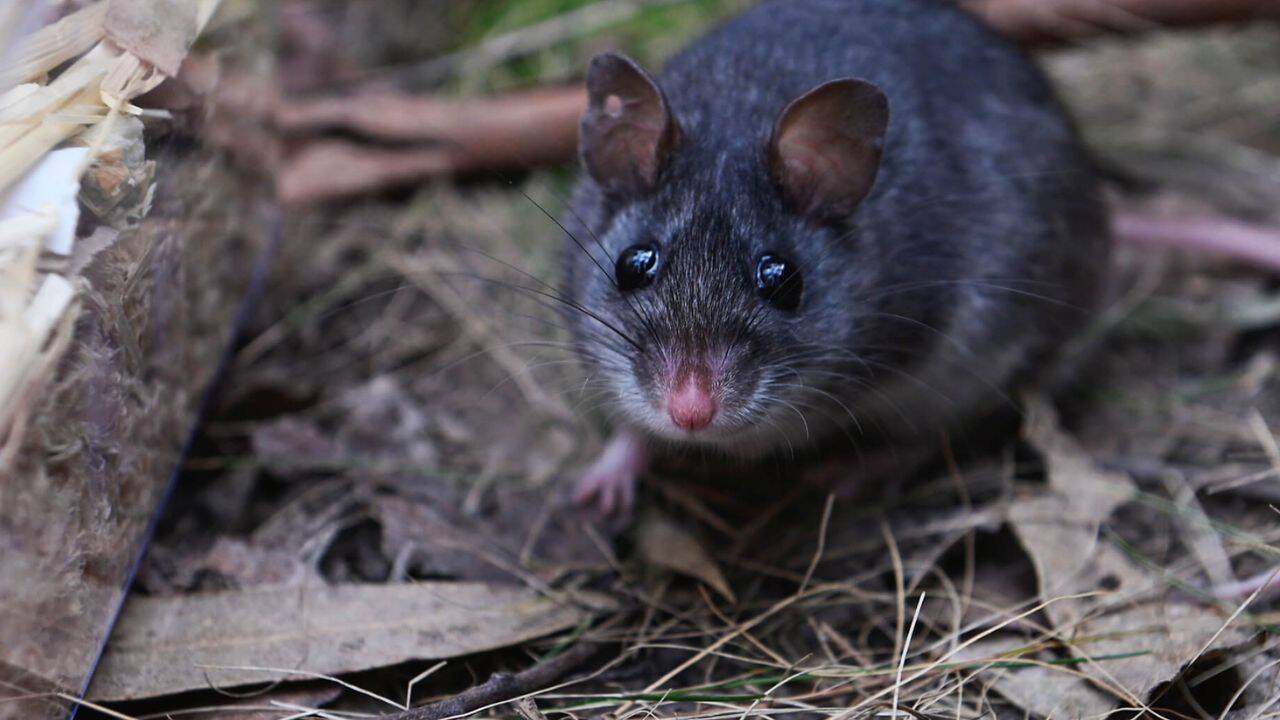
Weighing little more than a handful of coins, Pseudomys fumeus is not the kind of animal that commands headline boards. It does not roar. It does not possess the sweeping wingspan of an eagle or the soulful, liquid eyes of a koala. It is small, grey-brown, and nocturnal. It lives in burrows beneath the leaf litter, spending its short life scurrying through subterranean tunnels and nibbling on roots, fungi, and seeds.
To the untrained eye, it is just another rodent. But in the intricate machinery of the Australian bush, this mouse is a master gear.
As it burrows, it aerates the earth. As it eats truffles and fungi, it spreads spores across the woodland floor, helping to plant the trees that will outlive us all. It is an architect of the understory. And when it vanished from large swathes of its historic range—pushed to the brink by the triple threat of introduced predators like foxes and cats, habitat destruction, and devastating bushfires—the forest floor forgot how to breathe.
Then came the morning of the release.
Fifty smoky mice, bred carefully in captivity away from the jaws of feral hunters, were brought back to the damp earth of their ancestors.
Boxes opened. Whiskers twitched.
It is easy to romanticize a moment like this. We want it to look like a movie scene. We want the mice to burst forth in a triumphant wave, charging into the green with banners flying. That is not what happens.
Real conservation is quiet, breathless, and laced with quiet terror.
When the enclosure doors lifted, the mice did not rush. They hesitated. Their pink noses caught the wind—a scent cocktail of damp soil, rotting wood, and danger. For an animal that has known only the sterile, predictable safety of a breeding facility, the wild is an assault. Every shadow is a hawk. Every rustle in the leaves is a fox.
One by one, low to the ground, they melted into the ferns.
To understand why this matters, you have to look past the individual mouse and look at the philosophy of repair. For generations, humanity’s relationship with the natural world has been one of extraction. We take timber. We clear land. We introduce species that do not belong, unbalancing an ancient equation. We treat the earth like an endless warehouse.
Reintroducing fifty mice is not a fix-all. It is an apology in miniature. It is a fragile, expensive, painstakingly slow attempt to put a brick back into a collapsing wall.
Consider what happens next. These fifty mice face brutal odds. Some will fall prey to owls or feral cats within their first week. That is the harsh mathematics of rewilding. Nature is not a gentle mother; she is a strict accountant. But if enough of them survive, if they find each other in the dark and begin to dig, the ripple effects will reach trees we have never touched and fungi we have never named.
We live in an age of ecological fatigue. Turn on the news, and you are met with a daily procession of loss. Glaciers melting. Reefs bleaching. Species winking out of existence faster than we can catalogue them. It is enough to make you want to pull the blankets over your head and wait out the century.
Despair is a luxury we cannot afford.
The return of the smoky mouse teaches us something vital about resilience. It proves that what has been broken can, with staggering effort and stubborn hope, be stitched back together. It takes decades of patient work by scientists who spend their lives covered in dirt, tracking radio signals through the freezing rain, refusing to let a species slip quietly into the dark.
As the sun sets over the eucalyptus ridge, the forest shifts into its night shift. Somewhere down in the leaf litter, a tiny paw touches soil that hasn't felt its weight in a lifetime. The tunnels are waiting. The work has begun again.