Silence.
In an international terminal, silence is never natural; it is an alarm bell ringing in a frequency only your nervous system can hear, a sudden vacuum where the low, rhythmic thrum of jet engines, rolling suitcases, and muffled boarding announcements usually live.
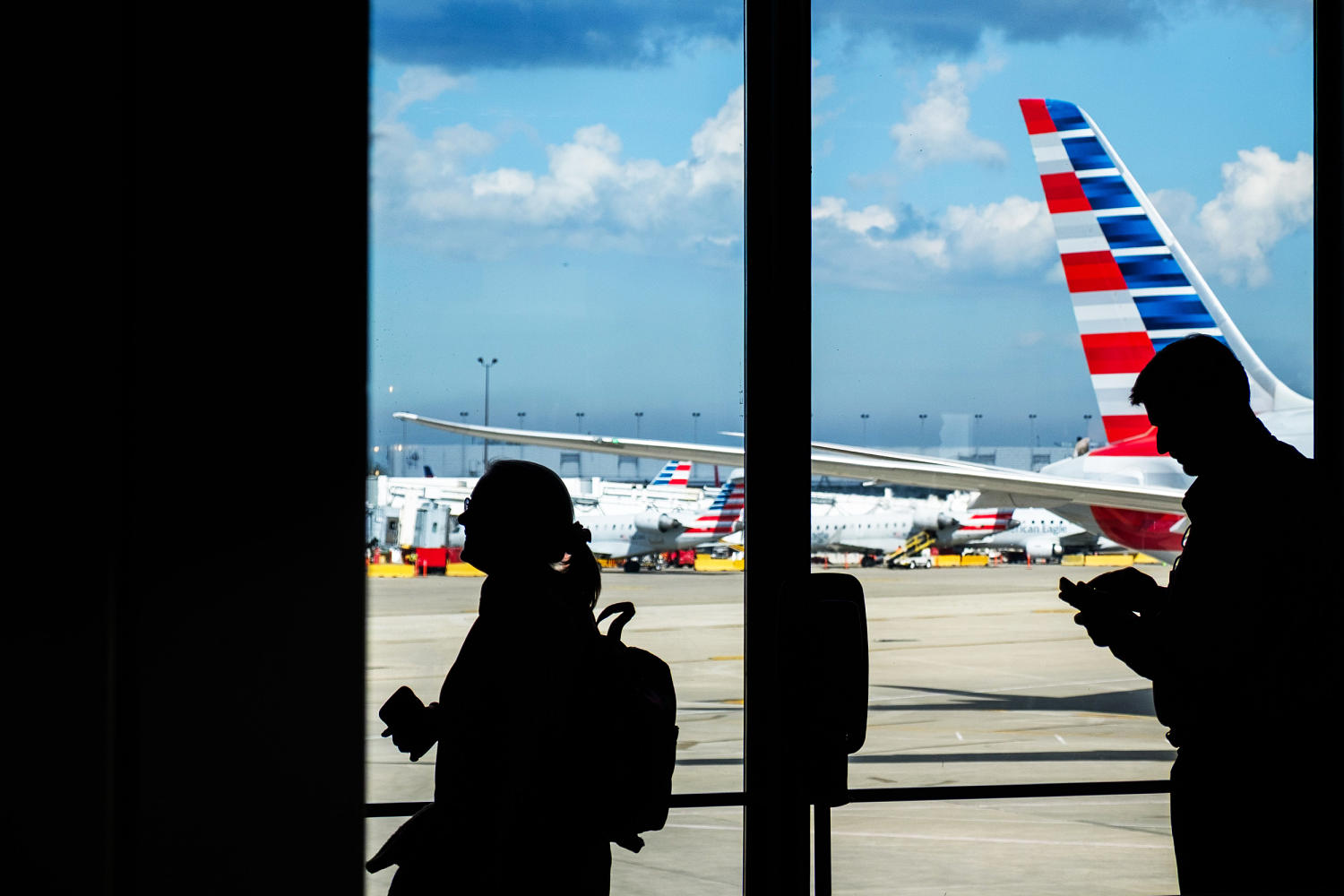
I still remember the exact smell of burnt espresso and floor wax at Gate B14 the morning the departure boards went dead. Around me, three hundred strangers stared upward at glowing rectangles that had suddenly stripped away their destinations, replacing flight numbers and gate assignments with a single, stark phrase in glowing amber letters. Ground stop. Not a local thunderstorm delay, not a mechanical hiccup on a regional commuter jet, not the familiar frustration of a late crew arriving from Chicago. Every runway in the country had just been locked down simultaneously for "reasons of safety."
When authorities issue a nationwide ground stop, the official language is always sterile, clipped, and deliberately opaque. Press releases speak of airspace integrity, radar anomalies, and precautionary protocols. They tell you what happened without telling you what it feels like to be suspended between two lives on a Tuesday morning, clutching a lukewarm paper cup while a hundred thousand tons of aluminum sit frozen on the tarmac outside.
To understand what actually happens when the sky closes, you have to look past the press briefings and watch the people standing beneath the departure screens.
The Invisible Web Above Our Heads
Most of us treat commercial aviation like an elevator. You press a button on your phone, walk through a carpeted tube, sit in a pressurized cabin with a tiny bag of pretzels, and step out three hours later in a different climate. We forget that at any given second during daylight hours, roughly five thousand commercial aircraft are crisscrossing the sky above us, moving at five hundred miles an hour, separated by invisible corridors of math, radio waves, and human vigilance.
Think of the national airspace not as empty sky, but as a high-speed, three-dimensional subway system where the trains cannot stop at red lights. An airplane cannot pull over onto the shoulder when a sensor glitches or a communications relay drops out. Because of that brutal law of physics, aviation operates on an unforgiving binary: either every safety net in the system is verified and intact, or nobody leaves the ground.
Consider a hypothetical scenario to see how fragile that chain really is. Picture Elena, a surgical nurse sitting at Gate C4, three hours away from a kidney transplant procedure in another state where a recipient is already being prepped for anesthesia. Two rows behind her sits Marcus, a twenty-two-year-old Marine on forty-eight hours of emergency leave, trying to reach a hospice bed before morning. Across the aisle, a software engineer is frantically refreshing his laptop because his company's entire server migration depends on him landing before noon.
When the Federal Aviation Administration or a national aviation authority triggers a nationwide ground stop, an invisible hand reaches down and pauses every single one of those stories at once.
Planes already in the air are allowed to land safely at their destinations or nearest suitable airports—controllers never leave aircraft stranded aloft. Everything else, however, is welded to the concrete. Flights pushing back from the gate are ordered to cut their engines. Aircraft queued ten-deep on the taxiway sit idling, burning fuel while pilots wait for updates from dispatchers who know barely more than the passengers in row 24.
Anatomy of a System Failure
Why does an entire nation shut down its airspace all at once?
Historically, full-scale ground stops are extraordinarily rare. The most famous precedent remains September 11, 2001, when controllers pulled more than four thousand planes out of the sky in just over two hours—an unprecedented feat of human coordination born out of unimaginable crisis. Yet in the decades since, the triggers have shifted from physical threats to digital vulnerabilities.
In January 2023, a single corrupted database file in the Notice to Air Missions system—the digital bulletin board that warns pilots of closed runways, broken lights, and icing hazards—forced the first nationwide ground stop in over twenty years. More than ten thousand flights were delayed or canceled before noon. No bomb had exploded. No hurricane had made landfall. One line of bad code had blinded the cockpit to potential hazards, and under aviation's ironclad safety rules, flying blind is never an option.
I remember talking to a veteran air traffic controller months after a similar regional outage, and his hands still tightened around his coffee mug when he described the feeling. When the screens flicker or the backup frequencies hiss with static, controllers do not panic; they revert to grease pencils, plastic flight strips, and sheer memory. Yet they also know that every minute a degraded system stays open multiplies the risk of a catastrophic misunderstanding between a tower and a cockpit.
That is the paradox passengers rarely appreciate while standing in a two-hundred-person line at the customer service desk. The fury you feel when your flight is scrubbed is entirely real—the missed wedding, the lost deposit, the child crying on the terminal carpet because their ears hurt and nobody has eaten since breakfast. Yet that very frustration is the price tag of a safety culture that refuses to gamble with human lives just to keep a schedule intact.
What Happens Inside the Cockpit When the Order Drops
If you want to know how serious a nationwide ground stop is, watch the flight crew, not the gate agents.
Gate agents are trained in hospitality and logistics; their job is to absorb your anger and rebook your itinerary. Pilots and controllers live in a different universe altogether. When a ground stop order comes across the Aircraft Communications Addressing and Reporting System—a silent text message popping up on a small screen between the captain and first officer—the mood on the flight deck changes instantly.
A friend who flies wide-body jets across the Atlantic once explained what that moment feels like. You have just completed forty minutes of pre-flight checklists, calculated fuel burn down to the kilogram, verified wind shear reports, and locked the cockpit door. You are mentally already at thirty-five thousand feet. Then the printer spits out a strip of paper halting all departures indefinitely.
Suddenly, the clock becomes your enemy.
Pilots operate under strict legal duty limits. Every minute spent parked on a taxiway eats into the maximum hours a crew is legally permitted to fly. If the ground stop lasts ninety minutes, the plane might still take off once the sky reopens. If it stretches to two hours and ten minutes, the crew times out, meaning they are legally barred from touching the controls—even if the airspace clears five minutes later. The flight is dead, the passengers must deplane, and an entire aircraft sits useless at the gate until a fresh crew can be flown in from another hub.
Meanwhile, the ripple effects spread outward like cracks across a frozen pond.
An airplane scheduled to fly from London to New York was supposed to become the evening flight from New York to Los Angeles, and then the red-eye back to Boston. Freeze that first leg for three hours, and by dinner time, passengers in California who have never even heard of the morning's safety glitch find themselves stranded in a terminal five time zones away.
The Psychology of Being Stranded
There is a particular kind of helplessness that descends on an airport during a nationwide halt.
In almost every other modern crisis, we have agency. If the highway is blocked, you take a side street. If the power goes out at home, you light candles and check on your neighbors. In a grounded airport, you are trapped inside a heavily policed glass box where information is rationed like water.
Look around the concourse during hour two of a ground stop and you will see human behavior stripped down to its bare wiring.
First comes denial. People keep their coats on, bags slung over one shoulder, hovering near the boarding lane as if standing closer to the jet bridge might somehow persuade the radar systems to reboot faster.
Next comes negotiation. Travelers pull out their phones, frantically booking backup tickets on rival airlines before realizing that rival airlines are grounded too. "Reasons of safety" does not discriminate between first class and basic economy, nor does it care about your frequent flyer status. Everyone sits on the same carpeted floor next to the same overloaded charging outlets.
Finally, if the wait stretches long enough, a strange, quiet solidarity takes over.
During the afternoon I spent trapped at Gate B14, a woman in a tailored business suit ended up sharing her last bag of almonds with a college freshman who had spent his last twelve dollars on a bottle of water. An elderly man taught a restless toddler how to fold paper airplanes out of boarding passes that were no longer valid. When the departure boards finally flickered back to life four hours later, the cheer that rose from the terminal sounded less like celebration and more like collective relief—the exhale of thousands of people who had been forced to remember how much trust they place in strangers every time they step onto a plane.
Navigating the Chaos Without Losing Your Mind
Knowing why the sky closes does not make sleeping on a terminal bench any softer, yet understanding the mechanics behind a ground stop changes how you survive one.
Most travelers make the mistake of joining the physical line at the gate podium the second an announcement echoes overhead. Do not do it. By the time the gate agent finishes explaining the situation to the tenth person in line, every available seat on tomorrow's flights has already been claimed by passengers calling the airline's international customer service lines or using the mobile app.
The moment you hear the words "ground stop" paired with "safety," pull out your phone before you even stand up.
Check whether the halt is a local ground delay program—usually caused by fog, thunderstorms, or runway construction at your destination—or a true nationwide ground stop. If it is nationwide, every flight on every carrier is frozen, which means switching airlines will only put you at the back of a different queue. Instead, look immediately at hotel rooms within ten minutes of the airport. In major hubs, roughly forty thousand travelers will be competing for the same three thousand hotel beds within thirty minutes of a mass cancellation. Booking a refundable room the second the departure board turns red buys you a pillow while everyone else is still arguing at the counter.
Equally important is knowing what airlines owe you—and what they do not.
Under aviation regulations in both the United States and Europe, safety-related ground stops triggered by air traffic control, national security directives, or severe weather are classified as extraordinary circumstances outside the carrier's direct control. While airlines will rebook you on the next available flight at no extra cost, they are rarely required to pay for hotels or meals when the government itself locks the airspace. Knowing that upfront saves you an hour of fruitless anger at an exhausted agent who has no authority to override federal rules.
The Quiet Miracle We Take for Granted
It is easy to mock the bureaucracy of modern air travel—the liquid limits, the cramped legroom, the baffling pricing algorithms, the cryptic announcements delivered over crackling speakers. We complain endlessly about the friction of getting from one place to another until the day the system abruptly stops moving.
Then, in the sudden stillness of a grounded concourse, the scale of the machine becomes visible.
Every single day, millions of human beings climb into pressurized metal tubes and hurtle seven miles above the earth at nearly the speed of sound, trusting an invisible choreography of satellites, software engineers, mechanics, meteorologists, and air traffic controllers to bring them home in one piece. The system works so reliably, day after uninterrupted day, that we mistake a technological miracle for a routine commute.
A nationwide ground stop is the sound of that miracle hitting the brakes rather than risking a single hairline fracture in the armor keeping us alive.
Hours after the amber warnings finally vanished from the screens at Gate B14, I pressed my forehead against the cold cabin window as our jet climbed through a thick ceiling of gray cloud. Below us, dozens of aircraft waited in tidy, patient lines along the taxiways, their wingtip strobes blinking like tiny heartbeats in the dusk, one by one reclaiming the sky.