Silence.
That is the first thing a survivor remembers when the air above a crowded marketplace suddenly tears open, before the heat hits your face and the smell of burning diesel swallows the scent of roasted grain and damp earth.
In late October 2026, more than 150 civilians were killed in a drone strike on the Amiet market in Abyei, the oil-rich, contested borderland between Sudan and South Sudan. Some reports placed the toll even higher across waves of strikes that struck crowded civilian spaces in a matter of days. A dry headline reduces all of that to a figure: a border, a drone, a number. Yet behind every number stood a stall, a bargaining voice, a mother holding a child's hand, a merchant counting coins that were supposed to buy medicine or schoolbooks.
What makes this tragedy so haunting is not only its scale, nor even the disputed geography where two nations pull at the same soil. It is what happens when war stops looking for soldiers and starts hitting the ordinary places where people keep themselves alive.
A Morning That Was Supposed to Feel Ordinary
Note: The following portrait of a market morning is a hypothetical scenario constructed to illustrate documented civilian realities on the ground, rather than an account of a specific named individual.
Picture a market stall at mid-morning under a pale, heavy sky. Call the vendor Amira, though thousands of women across Abyei and Kordofan share her routine. She has laid out sacks of sorghum, salt, and dried okra before the heat peaks. Beside her, her youngest son sits on an overturned crate, tracing shapes in the dust while buyers haggle over prices already stretched thin by inflation and blocked roads.
A market along a contested border is more than a place to trade goods. It is a fragile truce written in commerce. People who disagree on politics, pastures, or sovereignty still need oil, flour, soap, and fuel. Amiet market served as a vital lifeline for food, fuel, and medicine in Abyei. When a strike hits there, it does not merely take lives in an instant; it severs the thread that keeps neighbors fed the next week.
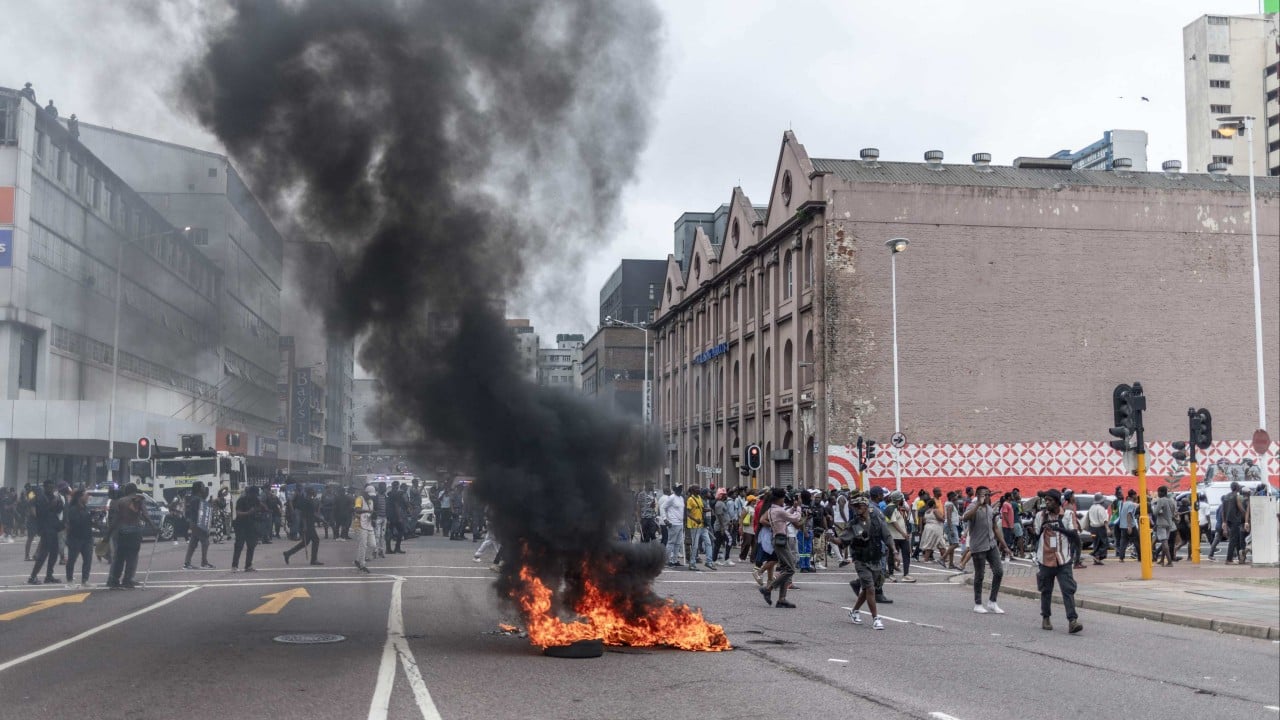
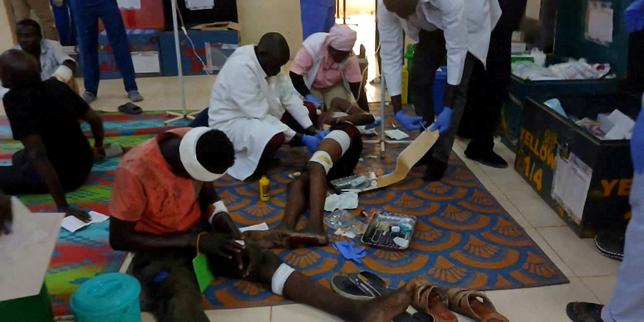
Witnesses to the Abyei attack described multiple heavy explosions that ignited fuel nearby, sending thick flames across the market and forcing bystanders to rush the wounded away on whatever transport could move. Medical teams and peacekeepers scrambled to pull survivors from the wreckage while charred remnants of livelihoods smoldered around them.
Why a Borderland Becomes a Trap
Abyei has carried the weight of unresolved history since South Sudan declared independence in 2011. Jointly administered yet claimed by both sides, sitting over oil wealth and seasonal grazing routes, it has long stood on a fault line. When Sudan's wider civil war—which erupted in April 2023—spilled its fury across regions like Kordofan and toward the southern border, a place already strained by competing claims became dangerously exposed.
Consider what happens next when a border is both a passage for trade and a corridor for war:
- Supply lines blur in the eyes of commanders: Fuel depots, trucks, and market hubs keep everyday life moving, yet belligerents often claim—or use as a pretext—that civilian goods or fuel supplies aid rival forces.
- Displacement concentrates vulnerability: Families fleeing fighting elsewhere gather near markets and transit points where food and aid might still be found, turning busy civilian hubs into mass-casualty zones when explosives fall.
- Accountability dissolves in denial: One side blames the other, officials dispute figures or deny responsibility, and ordinary families are left burying their dead without answers or protection.
I have sat across from people who lost everything not in a dramatic battle between armies, but during a routine errand—stepping out for bread or waiting beside a roadside stall when an explosion turned noon into ash. You never quite shake the sound of sirens and engines overhead afterward. Every hum of a passing motor makes your shoulders rise before your mind catches up. That lingering dread is the hidden tax of modern conflict: even when the smoke clears, safety feels like a rumor.
The Quiet Shift in How This War Is Fought
If you treat a drone strike as just another weapon in an old story, you miss what has changed.
Think of a drone in this conflict like a sharp, silent pen held high above a page. A pilot or operator miles away—or a system guided from afar—can watch a target, strike, and vanish without putting boots on the ground in that street. Monitoring groups and human rights investigators have documented a sharp surge in drone attacks across Sudan over recent years, with civilians bearing the heaviest share of the toll as markets, homes, power stations, and transport routes come under fire.
"Children and civilians are not collateral damage. Even if they aren't targeted directly, they are the ones that suffer the consequences when essential services are targeted."
That observation captures a brutal truth. Even when warring parties insist they are aiming at fuel, logistics, or rival fighters, hitting a crowded market or a fuel point in the middle of civilian life is a choice with predictable human cost. And when foreign weapons, funding, or drone technology feed the escalation from outside the region, local disputes turn into a high-tech grind where ordinary people have no air defense and nowhere to hide.
What Numbers Cannot Hold
We lean on statistics because our minds struggle to hold grief at scale. Over 150 killed in a single market strike. Hundreds dead across days of attacks. Millions displaced since the war began. Those numbers matter—they prove this is no isolated fluke.
Yet a number has no memory. A merchant had a name, a family waiting for his return, a debt he meant to pay off after harvest. A mother had a plan for her children's afternoon. A child had a favorite spot in the shade.
When a market burns on the border between Sudan and South Sudan, the damage echoes far past the blackened stalls. Hunger grows sharper when food and fuel vanish. Trust frays deeper when neighbors watch smoke rise over shared ground. And the rest of the world, often distracted by its own noise, risks treating a devastating human catastrophe as background static.
It does not have to be background static. International bodies, humanitarian workers, and local communities keep sounding the alarm for a simple reason: protecting civilians in markets, clinics, and displacement sites is not an abstract legal nicety. It is the line between war and total abandonment.
At dusk, long after the first sirens fade, someone always walks back toward what is left of the square—looking not for victory, not for borders drawn on a map, but for a familiar voice in the dark.