The sound is not a roar. It is a persistent, lawnmower-engine whine that vibrates in the marrow of your teeth before it ever hits your ears. In Kyiv, in Odesa, in the small, nameless villages where the sunflowers have turned brittle under the weight of a third year of war, that sound has a name. It is the Shahed. It is a slow, methodical bird of prey made of fiberglass and cheap electronics, designed not just to explode, but to exhaust the soul.
Last night, the sky over Ukraine didn't just darken; it screamed.
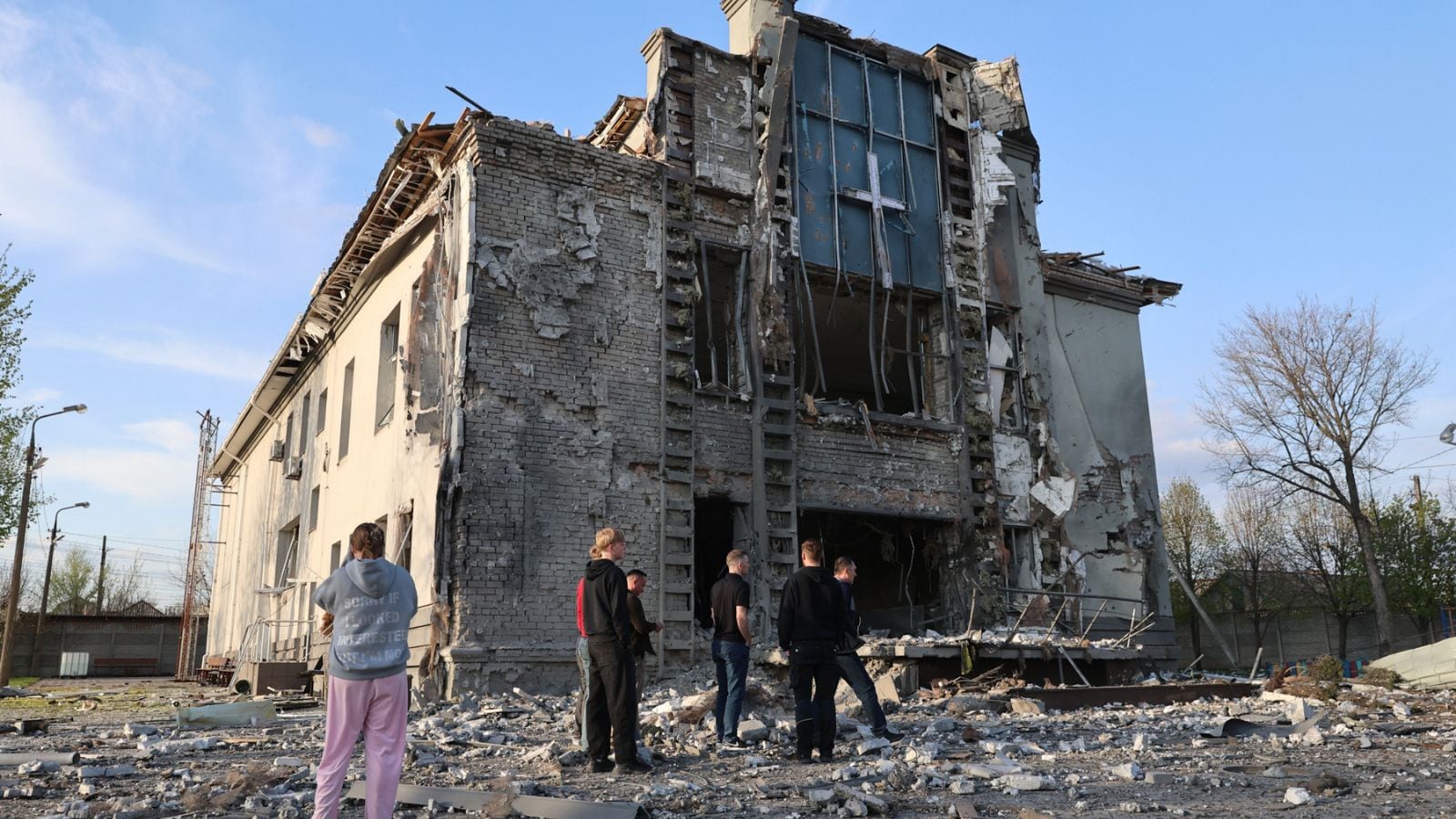
Russia launched one of its most expansive drone campaigns of the year, a swarm of over a hundred loitering munitions that turned the night into a lethal lottery. By the time the sun rose, eighteen people were dead. Numbers are easy to read. They are clean. They fit into spreadsheets and briefings. But eighteen is not a number. Eighteen is a half-finished cup of tea on a kitchen table in an apartment that no longer has a floor. It is a pair of shoes tucked neatly by a door that leads to nothing but a three-story drop into a pile of smoking rubble.
Consider a woman we will call Olena. She is not a statistic. She is a grandmother in a brick house on the outskirts of the city. When the sirens began their low, mournful howl—a sound that has become the heartbeat of Ukrainian nights—she did what millions do. She moved to the corridor. Two walls. That is the rule of survival. One wall to take the blast, the second to catch the shrapnel. She sat on a pile of blankets with a thermos of coffee, listening to the muffled thud-thud-thud of anti-aircraft fire.
The tragedy of this specific escalation lies in its cold, industrial logic. These drones are not precision instruments of war designed to strike hardened military targets. They are instruments of atmospheric terror. They are sent in waves to overwhelm the expensive, sophisticated air defense systems provided by the West. It is a mathematical cruelty: a drone costing $20,000 forces the launch of a missile costing $2 million. And when the math fails, when the battery is overwhelmed or a single drone slips through the net of fire, the cost is paid in flesh.
In this latest strike, the debris didn't just fall on the front lines. It rained down on residential blocks and energy grids. The strategy is transparent: if you cannot break the army, break the mother. If you cannot seize the land, make the land uninhabitable.
But there is a flaw in that logic.
Terror requires the element of surprise to remain effective, yet the people of Ukraine have developed a grim, miraculous callus against the fear. In the wake of eighteen deaths, there was no mass panic. There was the familiar, rhythmic sound of glass being swept into piles. There was the smell of dust and ozone. Neighbors who didn't know each other’s last names three years ago were suddenly passing plywood through jagged window frames.
The world watches these headlines and sees a "conflict." They see a "drone attack." They see a geopolitical chess match between Moscow and the West. From the ground, it looks much smaller and much heavier. It looks like the weight of a hand clutching a flashlight in a cellar. It looks like the frantic scrolling of a Telegram channel to see if the "all clear" has been given so a child can finally go back to sleep.
We often talk about "war fatigue" in the safety of distant capitals. We wonder how long the momentum can be sustained. This phrasing suggests that war is a choice for those underneath the drones. It isn't. You cannot be "tired" of a roof falling on your head; you can only be dead or determined.
The eighteen who were lost last night were not soldiers in a trench. They were people dreaming of Tuesday. They were people who had plans to buy groceries, to fix a leaky faucet, to call a daughter in Poland. Their lives were ended by a machine that costs less than a used car, sent by a command structure that views human life as a rounding error in a long-term strategy of attrition.
The invisible stake here isn't just territory. It is the precedent of the cheap kill. We have entered an era where death is automated and affordable. The "largest drone attack" is a headline today, but it is a blueprint for tomorrow. It signals a shift where the sky itself is weaponized against the mundane act of existing.
As the smoke cleared from the latest impact sites, the rescue crews didn't stop to philosophize. They dug. They moved concrete with their bare hands. They looked for the living among the shattered remnants of the everyday. Underneath a collapsed ceiling in a residential district, they found a cat, covered in white dust but alive. They found a photo album. They found the things that make a life a life.
The drones will come again tonight. The whine of the engines will return, mimicking the sound of a giant, angry insect. The sirens will wail, and the people will move to their corridors, sitting between their two walls, waiting for the math of the sky to decide their fate.
Eighteen empty chairs are tucked under eighteen tables today. The sunflowers are still brittle. The tea is cold. And the world continues to count the drones while the people of Ukraine continue to count the heartbeats of the survivors.