The air in the valley changes long before the first drop hits the windshield. It grows thick, heavy with the scent of wet eucalyptus and dust beaten flat by months of unyielding sun. If you have lived through a California winter when the Pacific decides to empty its lungs over the coast, you know that smell. It is the smell of a countdown.
We talk about weather as if it were a spectator sport. We watch satellite loops on local news broadcasts, tracking swirling masses of white clouds across the blue expanse of the ocean like generals monitoring troop movements. Meteorologists point at thermal maps with laser pointers, tossing around terms like atmospheric rivers and thermal anomalies. But numbers on a screen do not capture the sound of a hillside letting go at three in the morning. They do not capture the way a suburban street transforms into a rushing, muddy river in the span of twenty minutes. You might also find this related coverage useful: António Guterres Faces His Final UN General Assembly Opening Under the Weight of a Fractured World Order.
A super El Niño is not merely a weather pattern. It is a slow-motion collision between the atmosphere and the deep, warm currents of the equatorial Pacific, a massive redistribution of heat that sends shockwaves across global ecosystems. When the sea surface temperatures spike thousands of miles away, the jet stream shifts. It drops its shoulder and aims a firehose of moisture straight at the golden hills of the West Coast.
And California, parched and scarred by years of drought and fire, stands directly in the path. As reported in detailed articles by TIME, the implications are notable.
Consider Elena. She lives in a modest ranch-style home tucked against the foothills of the San Gabriel Mountains, a neighborhood where every backyard fence borders a chaparral-covered slope. To an outsider driving through on a bright autumn afternoon, the landscape looks peaceful, almost serene. The dry brush sways in the breeze. The oaks provide deep, cooling shade.
Elena knows better.
She remembers the winter of ninety-eight. She remembers the sound—a low, concussive rumble that vibrated through the foundation of her house before the mud even reached the driveway. She remembers standing at her kitchen window watching her neighbor’s retaining wall vanish into a churning torrent of brown water and uprooted scrub oak.
When forecasters announce that a ferocious El Niño cycle is locking into place, Elena does not check her phone for memes. She starts clearing the gutters.
Preparing for a meteorological juggernaut of this magnitude requires a fundamental shift in how we think about our environment. We are terrible at imagining disasters until they are soaking our shoes. We build our lives around the assumption of the average, forgetting that nature rarely operates on averages. She operates on extremes.
Here is what it actually takes to weather the storm, stripped of dry administrative checklists and translated into the messy reality of human survival.
First, you have to respect the dirt beneath your feet.
Years of drought bake the soil until it resembles concrete. When torrential rain finally arrives, the parched earth cannot drink fast enough. Water runs off the surface rather than soaking in, turning every slope into a potential slip-and-slide. If you live near burn scars—areas where previous wildfires stripped the mountains bare of vegetation—the risk multiplies exponentially. Without roots to anchor the soil, hillsides liquefy.
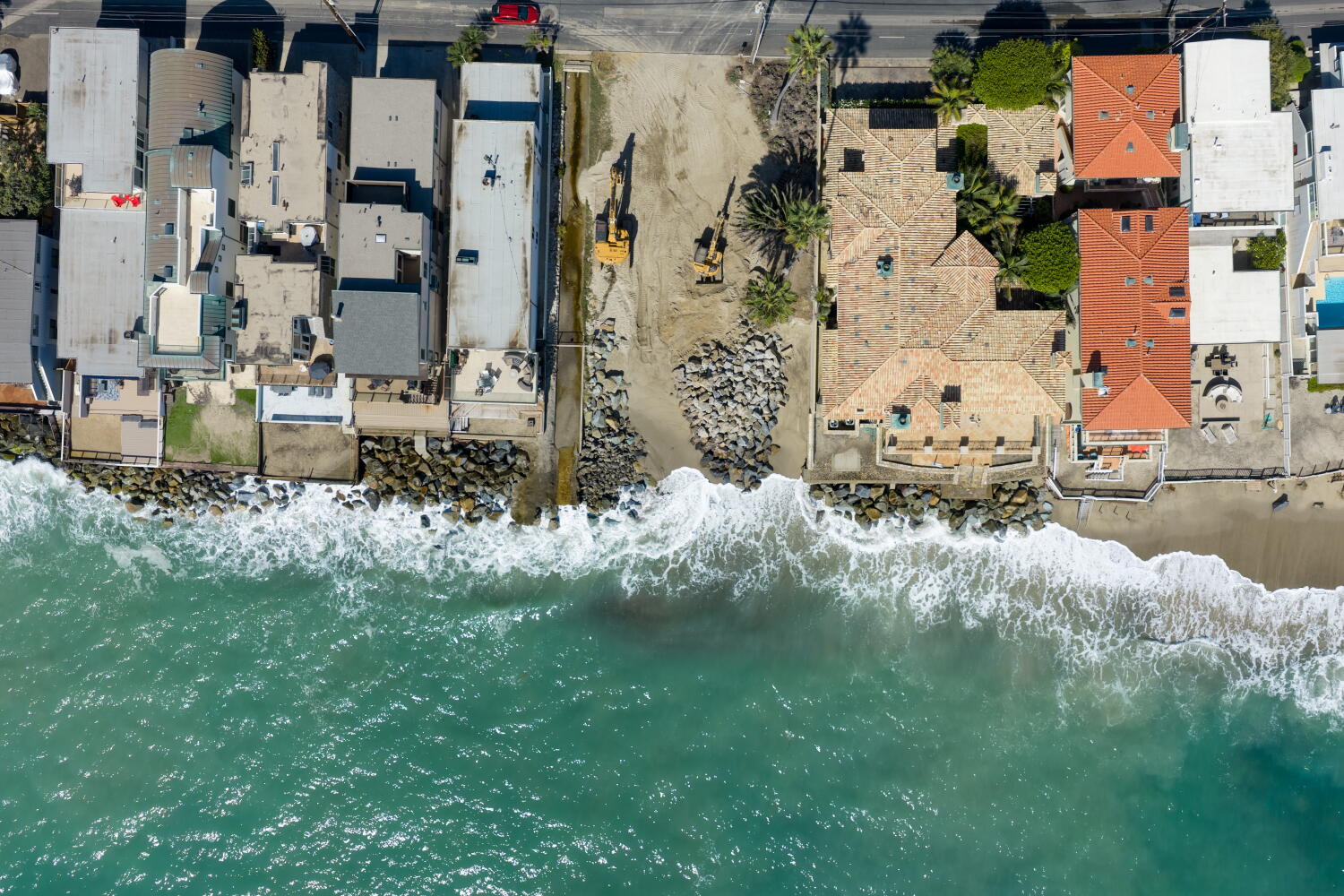
Elena learned this the hard way decades ago. Now, her preparation starts with physics. She installs sandbags not as an afterthought when the flood sirens start wailing, but weeks in advance, carefully interlocking them to divert runoff away from her back doors. She checks the French drains around her foundation, clearing out the accumulated silt and pine needles that block the escape routes of trapped water.
Water always finds the path of least resistance. Your job is to give it somewhere else to go before it chooses your living room.
Second, you secure your overhead canopy.
Trees that have survived years of drought are stressed. Their root systems are compromised, their canopies heavy with deadwood. When saturated ground meets fierce, gale-force winds—the reliable companions of an atmospheric river—shallow-rooted eucalyptus and aging pines become vertical battering rams.
Trimming branches away from power lines and roofs is tedious, unglamorous work. It involves standing on a wobbly ladder with a pole saw, sawdust in your eyes, cursing the cost of landscaping services. But it beats waking up to a hundred-pound limb crashing through your ceiling in the middle of a dark, howling Tuesday night.
Third, you rethink your relationship with electricity and light.
When the power grid fails during a major storm, it rarely goes out for an hour. It goes out for days. Transformers blow under the strain of falling branches or sudden surges. Sub-stations flood.
The modern home is dangerously dependent on the invisible hum of the electrical grid. Without it, we are paralyzed. Refrigerators thaw, sump pumps die, communication channels fracture. True preparedness means operating under the assumption that the lights will go dark.
This means investing in reliable backup power, but it also means understanding the limits of that power. It means having heavy-duty flashlights scattered strategically through the house, not buried in some forgotten junk drawer in the garage. It means testing your portable generator outside well before the storm hits, ensuring you have enough fuel stored safely in approved containers so you are not caught braving flooded roads to hunt for gasoline in the dark.
Fourth, you build an emergency communications lifeline.
Cell towers lose power. Fiber optic lines snap. During the height of a severe storm, the digital veil we wrap ourselves in daily can shred instantly. Families get separated—parents at work, kids at school, teenagers out running errands—and suddenly find themselves unable to call or text.
Before the first bands of heavy rain arrive, establish a family rendezvous point. Agree on an out-of-state contact person whom everyone can call if local lines are jammed. Download offline maps to your phone because GPS signals can stutter and fail when cloud cover is dense and infrastructure is stressed.
Fifth, you secure your perimeter.
Loose patio furniture, potted plants, garbage cans, and trampolines become lethal projectiles in seventy-mile-per-hour gusts. People often underestimate the kinetic energy of wind. A lightweight plastic lounge chair caught in an updraft can smash through a double-paned window with the force of a brick.
Walk your property with a critical eye. Tie down what cannot be moved. Bring the rest inside. Secure the perimeter as if an invisible intruder were coming to test every weak point in your defenses.
Sixth, you manage your water supply and sanitation.
While heavy rain means an abundance of water falling from the sky, municipal water treatment plants can be overwhelmed by runoff contamination or power outages. Keep a reserve of potable water—one gallon per person per day for at least a week. Stock up on non-perishable food that requires minimal preparation, because eating canned beans cold by candlelight builds character, but having a camp stove and extra propane makes it a lot more palatable.
Seventh, you prepare for displacement.
Sometimes, preparation is not about hunkering down. Sometimes, it is about knowing when to leave. Low-lying areas, floodplains, and communities directly below burn zones receive mandatory evacuation orders for a reason. Stubbornness in the face of a flash flood is fatal.
Keep your go-bag by the front door. Pack it with essentials: medications, important documents stored in waterproof sleeves, a change of warm clothes, chargers, and cash. ATMs do not work when the power grid collapses. Plastic cards are useless if the card reader has no internet connection. Cash remains the only universal currency of crisis.
Eighth, you look after the vulnerable.
Disasters expose the frayed edges of our social fabric. The elderly neighbor living down the street whose roof leaks every winter; the single parent juggling three kids while working remotely; the unhoused population huddled under overpasses as the temperature drops and the water rises.
Check on them. Preparation is a community project, whether we want to admit it or not. A neighborhood that communicates and looks out for one another recovers in months; a neighborhood of isolated strangers fractures for years.
Ninth, and perhaps most importantly, you manage the psychological weight of the storm.
Living through prolonged severe weather wears you down. The relentless pounding of rain against the glass, the howling wind that sounds like a freight train passing overhead, the flickering lights—it triggers a primal, ancient anxiety. We are animals wired to fear the dark and the flood.
Accept that you will feel uneasy. Accept that control is an illusion, and that preparation is simply our way of buying a little insurance against chaos.
When the storm finally hits California—when the skies open up and the dry earth is forced to swallow years of thirst in a matter of weeks—the landscape will change. Hillsides will shift. Rivers will swell. Bridges will be tested.
In that moment, standing at the window watching the water rise against the curb, you will not be thinking about statistics or satellite models. You will be thinking about the choices you made yesterday.
The sky is already heavy. The rest is up to you.