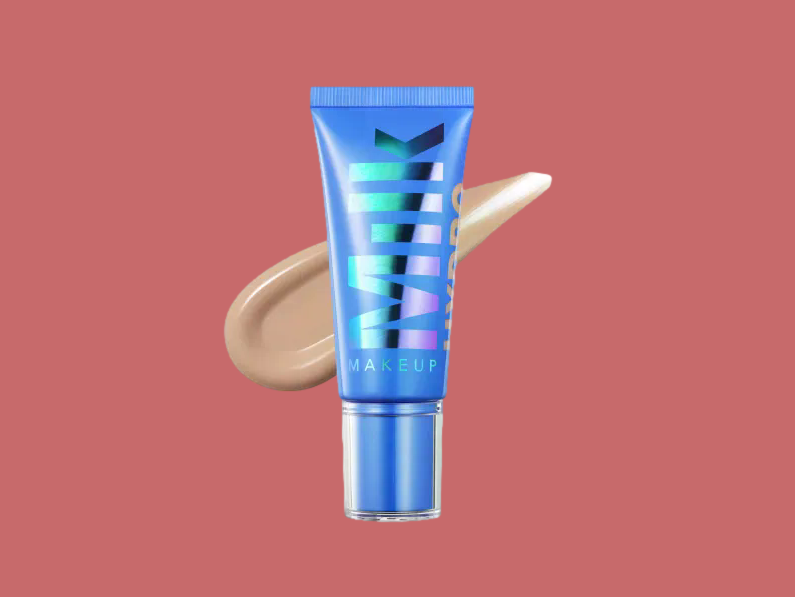
The transition from high-pigment foundations to skin tints represents a fundamental shift in cosmetic engineering from total occlusion to selective light diffusion. Most consumer guides treat skin tints as a monolith of "light coverage," yet the efficacy of these products depends on the precise calibration of pigment load, emollient density, and film-forming polymers relative to the biological requirements of the skin barrier. To select an optimal tint, one must evaluate the product as a chemical suspension designed to interact with a living lipid matrix rather than a static paint applied to a surface.
The utility of a skin tint is defined by its refractive index and its ability to maintain homogenous dispersion across an uneven topographical surface. While traditional foundations rely on a high concentration of titanium dioxide or iron oxides to block light, skin tints utilize lower pigment-to-substrate ratios. This allows a portion of the incident light to pass through the pigment layer, reflect off the epidermis, and return to the eye, creating the optical illusion of depth and vitality.
The Tri-Component Framework of Formulation
Every skin tint functions through the interplay of three distinct phases. Understanding these phases allows for a predictable assessment of how a product will perform over a twelve-hour wear cycle.
- The Pigment Phase: This consists of mineral oxides suspended in the formula. In a skin tint, the particle size is often micronized to prevent "caking," which occurs when pigments aggregate in the skin’s sulci (fine lines).
- The Vehicle Phase: This is the liquid medium, typically water, silicone (cyclopentasiloxane), or a botanical oil. The vehicle dictates the initial spreadability and the "play time" before the product sets.
- The Film-Former Phase: These are the polymers or waxes that remain after the volatile components of the vehicle evaporate. They lock the pigment in place. A failure in this phase leads to "migration," where the tint pools in pores or dry patches.
Optimizing for Sebum Production and Lipid Density
The primary cause of product failure is a mismatch between the tint’s vehicle phase and the user's natural sebum production. Skin types are not just aesthetic descriptions; they are biological states defined by the rate of lipid secretion and the integrity of the stratum corneum.
Hyperactive Lipid Environments (Oily Skin)
For individuals with high sebum output, the introduction of an oil-based skin tint creates a destabilized emulsion. As the skin secretes natural oils, it dissolves the film-formers in the tint, leading to structural collapse.
The strategic requirement for this demographic is a volatile-silicone or water-based suspension with "self-setting" properties. These formulas utilize ingredients like silica or dimethicone crosspolymers to adsorb excess lipids. The objective is not to stop oil production—which is biologically impossible via topical pigment—but to ensure the pigment remains suspended above the oil rather than mixing with it. If the formula contains high concentrations of oleic acid or heavy esters, the result is a refractive mess that emphasizes texture rather than blurring it.
Compromised Barrier and Transepidermal Water Loss (Dry Skin)
Dry skin suffers from a lack of intercellular lipids, leading to a "lifting" of the skin cells (corneocytes). A water-heavy tint applied to dry skin will often suffer from rapid evaporation, where the skin literally sucks the moisture out of the product, leaving the pigment stranded and patchy.
The solution is an emollient-dense vehicle that utilizes occlusives like squalane or ceramides. These ingredients mimic the skin’s natural lipid barrier, filling the gaps between corneocytes and providing a smooth "leveling" effect. The presence of humectants, such as low-molecular-weight hyaluronic acid or glycerin, serves a secondary function: they pull moisture into the upper layers of the skin to prevent the "crinkling" effect that occurs when a tint dries down too aggressively.
The Mechanics of Pigment Migration and Oxidation
A common failure point in low-cost or poorly formulated tints is oxidation—the process where the tint turns orange or darkens several shades after an hour of wear. This is a chemical reaction between the metal oxides in the pigment and the acidity (pH) of the skin’s acid mantle, often catalyzed by UV exposure.
Higher-tier formulations mitigate this through pigment coating. By wrapping iron oxide particles in lecithin, amino acids, or alkyl silanes, chemists prevent the pigment from directly touching the skin's oils and acids. This maintains color fidelity. When analyzing a product, the presence of "triethoxycaprylylsilane" or "stearic acid" near the pigment names in the ingredient list suggests a coated, stable pigment system.
Structural Analysis of Top-Tier Formulations
To move beyond vague "best of" lists, we must categorize products by their dominant chemical strategy.
The Serum-Hybrid Strategy
These products are characterized by a high percentage of active skincare ingredients, where the pigment is almost an afterthought.
- Mechanism: High concentration of niacinamide or vitamin C derivatives in a water-thin base.
- Best Use Case: Users with minimal discoloration who prioritize long-term skin health over immediate coverage.
- Limitation: Often lacks the polymer strength to stay in place on oily skin; requires a "setting" step.
The Volatile Silicone Strategy
These are the "water-like" tints that feel weightless and dry down quickly.
- Mechanism: Use of cyclopentasiloxane or isododecane as the primary vehicle. These fluids evaporate at skin temperature, leaving a thin, durable film of pigment.
- Best Use Case: Combination skin and humid environments where sweat-resistance is necessary.
- Limitation: Can be dehydrating for very dry skin types as the evaporation process can pull moisture from the skin.
The Mineral Shield Strategy (SPF Tints)
Tints that prioritize high-concentration zinc oxide or titanium dioxide (SPF 30+).
- Mechanism: Physical UV filters serve a dual purpose as both sun protection and the primary pigment.
- Best Use Case: Daytime wear for individuals with sensitivity to chemical sunscreens.
- Limitation: Mineral filters are inherently "white" or "chalky." Achieving a deep skin tone in this category requires sophisticated iron oxide blending to avoid an ashy cast.
Quantifying "Coverage" and "Finish"
The terms "coverage" and "finish" are often used subjectively, but they can be quantified through the lens of light physics.
Coverage is the opacity of the film. This is determined by the "extender pigments" like talc, mica, or kaolin. A high-coverage tint increases the opacity, which reduces the amount of "internal reflection" from the skin.
Finish is the specular reflection of light off the surface.
- A Dewy Finish occurs when the surface of the tint remains "wet" or lipid-rich, causing light to reflect in a concentrated, mirror-like fashion.
- A Matte Finish occurs when the surface is microscopically rough (usually due to silica or starch particles), scattering light in multiple directions.
- A Satin Finish is the middle ground, where the film-formers create a smooth, but not oily, surface that mimics the natural sheen of healthy skin.
The Interaction Between Particle Size and Pore Visibility
A frequent complaint is that skin tints "sink into pores." This is a function of particle size and surface tension. If the pigment particles are too large, or if the formula lacks sufficient "slip" (surface tension reducers like dimethicone), the product will bridge over the pore opening and eventually collapse into it.
To avoid this, look for formulas that utilize crosspolymers. These molecules act like a flexible mesh over the skin, spanning the gaps of pores and fine lines rather than falling into them. This creates a "blurring" effect that is fundamentally different from "covering." Coverage hides the color of the pore; blurring changes the way light hits the indentation of the pore.
Critical Evaluation of Common Ingredients
The efficacy of a skin tint is often dictated by the "bottom half" of the ingredient list—the stabilizers and preservatives that keep the suspension from separating.
- Alcohol Denat: Often used in tints for oily skin to speed up drying time. While effective for a matte finish, it can trigger "rebound oiliness" if used daily on sensitive skin.
- Caprylic/Capric Triglyceride: A derivative of coconut oil that provides a silky feel without the comedogenic (pore-clogging) risks of raw coconut oil. This is a superior emollient for dry-to-normal skin tints.
- Polyethylene Glycol (PEGs): Often vilified in "clean beauty" circles, these are essential emulsifiers that ensure the oil and water phases don't separate. Without them, the tint would require vigorous shaking and would likely apply unevenly.
Failure Points in Application Methodology
Even the most sophisticated formula will fail if the application method disrupts the film-forming process.
Applying an oil-based skin tint over a water-based moisturizer creates an immediate "pilling" effect. This is because the water-based layer has not fully absorbed, and the oils in the tint are unable to bond with the skin. The result is a fragmented film that slides across the surface.
The optimal application strategy involves matching the "base" of your skincare with the "base" of your tint. If your moisturizer is heavy in silicones, use a silicone-based tint. If your skincare is strictly water and humectant-based, a water-weight tint will integrate more seamlessly. Furthermore, the use of fingers versus a brush changes the thermal energy applied to the product. Warmth from the hands can help "melt" waxes and oils for a more natural integration, whereas a brush provides a more uniform, albeit thinner, distribution of pigment particles.
Strategic Selection Matrix
To select a skin tint with surgical precision, ignore the marketing claims and analyze the first five ingredients.
- Water, Glycerin, Squalane: This is a hydrating, emollient-heavy formula. It will not "set" on its own. Best for dry skin or "glass skin" aesthetics. Requires a setting powder if longevity is the goal.
- Cyclopentasiloxane, Water, Dimethicone: This is a classic silicone-based suspension. It will be "long-wear" and provide a smoothing effect on texture. Best for combination to oily skin.
- Water, Zinc Oxide, Butyloctyl Salicylate: This is a mineral-first formulation. It will feel heavier and may have a tackier finish. Best for those requiring integrated sun protection.
The future of dermal aesthetics lies in the miniaturization of pigment and the advancement of "smart" polymers that can respond to changes in skin temperature and humidity. Until these technologies are fully realized, the most effective strategy remains the alignment of formula chemistry with the user's specific lipid profile and the environmental conditions of the wear cycle. Avoid "all-in-one" promises and instead prioritize formulas that address the specific bottleneck of your skin—be it hydration, oil control, or texture blurring. Use the chemical composition as your primary guide, treating the brand name and marketing copy as secondary data points.