Fluorescent light hums. It is the sound of a Tuesday that feels like every other Tuesday, stretching endlessly across linoleum floors and the quiet, frantic rhythm of hospital corridors. Somewhere down the hall, a monitor beeps a steady, indifferent heartbeat. For the people who inhabit these spaces, shifts are measured in aching feet, cold cups of coffee, and the heavy weight of human fragility.
Then comes the exit. The transition from the sterile air of the medical ward into the damp, fading afternoon. For an alternative look, read: this related article.
It was on one of those ordinary afternoons that an anonymous hospital worker walked into a Goodwill store.
Air conditioning rattled overhead. Racks of secondhand sweaters crowded the aisles, smelling of cedar and forgotten seasons. Plastic bins held old paperbacks, mismatched mugs, and the stray debris of domestic life. It was a space designed for quiet sorting, a graveyard for things discarded. Related insight regarding this has been shared by Apartment Therapy.
Yet, buried among the clutter, something caught the eye.
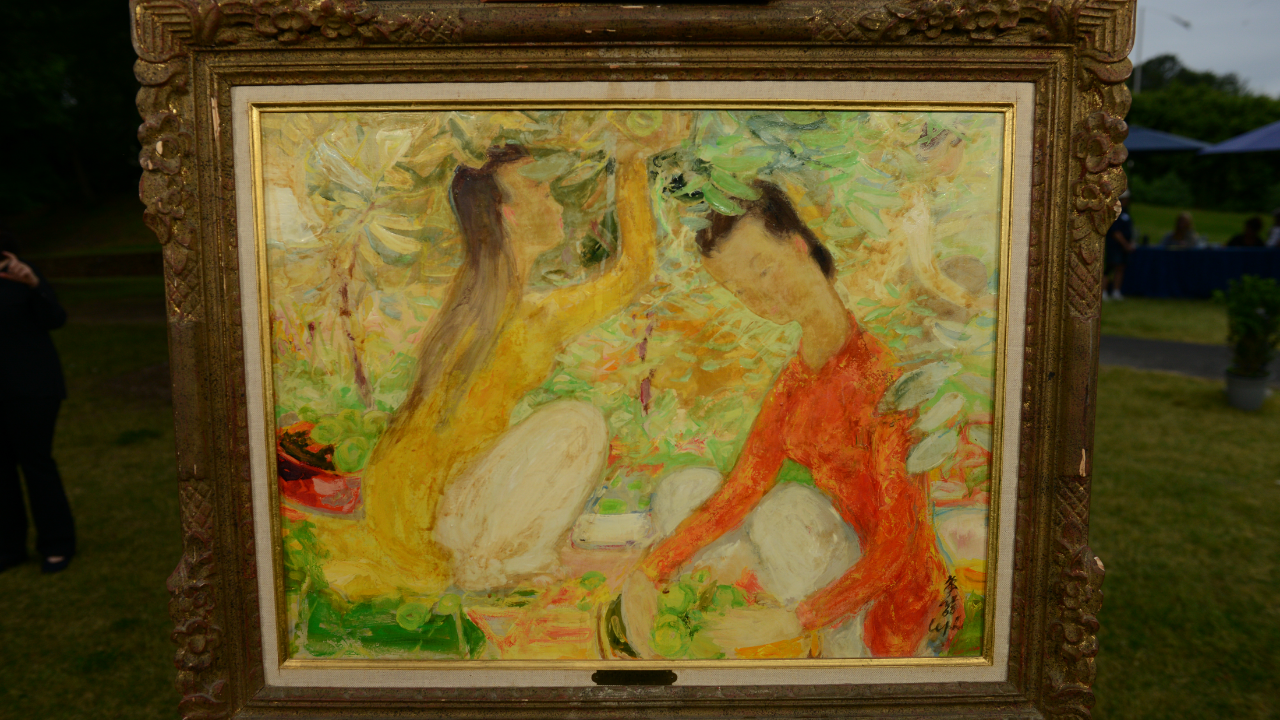
A frame. Just wood and glass, battered by transit and time, holding a piece of canvas that shouldn't have been there. It cost fifteen dollars and ninety-nine cents. To the casual eye, it was just another thrift store oil painting, perhaps a Sunday afternoon hobbyist's amateur attempt at capturing a misty landscape or a floral arrangement. But intuition is a strange instrument. Sometimes, amid the noise of the world, it plays a single, clear note.
The buyer didn't know it yet, but they were holding a key. A key that would eventually unlock an auction house in New Hampshire, setting off a chain reaction of astonishment that would stretch all the way back to Vietnam, Paris, and the quiet genius of an artist named Lê Phổ.
Let us be precise about the artifact.
What the hospital worker pulled from the thrift store rack was not a common souvenir. It was an authentic silk painting by Lê Phổ, one of the most celebrated and commercially significant Vietnamese-born artists of the twentieth century. Born in 1907, Phổ studied at the École des Beaux-Arts in Hanoi before moving to Paris in 1937. He bridged two worlds, blending the delicate, meditative traditions of Vietnamese silk painting with the lush, expressive color palettes of French Impressionism. His works capture a nostalgic, romanticized vision of his homeland—swaying bamboo, quiet courtyards, elegant women draped in traditional áo dài, bathed in golden light.
Originals by Lê Phổ do not linger in obscurity. They are fiercely contested by international collectors, museum curators, and investors who recognize the historical gravity of the École de Paris generation. When authentication experts finally examined the Goodwill find, they confirmed its pedigree. This particular piece, humble in its thrift store frame, was projected to fetch between twenty thousand and eighty thousand dollars at auction.
Eighty thousand dollars.
For a hospital worker, that sum is not merely money. It is breathing room. It is the eradication of debt, the security of a child's education, the quiet luxury of sleeping through the night without calculating tomorrow's grocery bill.
How does a masterpiece end up in a bin of discarded goods?
It happens because art, much like life, loses its context when it travels. A family member moves away, a house is cleared out by estate liquidators who cannot read a signature, or a donation box is filled in a hurry during a moment of grief or transition. Valuables are stripped of their stories. To an uninitiated sorter at a donation center, a signed silk painting from the 1930s looks remarkably like a mass-produced print bought at a department store in 1984.
Value is often invisible. That is the truth we spend our lives forgetting. We look at surfaces. We judge the price tag attached to an object by the venue in which we find it. If it rests on velvet in a Mayfair gallery, we whisper. If it leans against a plastic crate next to broken toasters, we dismiss it.
Consider what happens next in the lifecycle of such a discovery.
The initial rush of adrenaline gives way to a surreal disbelief. You take the frame off the wall. You run your fingers over the signature in the corner, small and deliberate. You search the name online. The screen lights up with museum catalogs, gallery exhibitions, and six-figure auction results. Your hands shake. The ordinary world suddenly looks entirely different, as if a veil has been pulled back to reveal the hidden machinery of fortune.
When the painting went to auction via John McInnis Auctioneers, the bidding reflected the fierce appetite for Phổ's work. The final hammer price validated the gamble taken by someone who simply trusted their aesthetic sense in a fluorescent-lit thrift store aisle.
Stories like this capture our collective imagination because they are modern fairy tales. They offer a rare, intoxicating counter-narrative to a world that feels increasingly rigid, where social mobility is locked behind high walls and every financial gain requires an algorithm or an inheritance.
We love the thrift store miracle because it suggests that serendipity is still possible. It tells us that beauty and worth are scattered carelessly across the earth, waiting for someone to pay attention.
The hospital worker returned to work, presumably. The shifts continued. The beeping monitors did not change their rhythm. But the landscape of their life had shifted permanently, altered by sixteen dollars and a brushstroke laid down on silk nearly a century ago in a studio across the ocean.
Pay attention to what you pass by. The world is full of forgotten treasures, buried just beneath the surface of the mundane, waiting for the one person willing to look twice.