The coffee in the chipped enamel mug was still warm when the glass shattered. Not with a clean, cinematic snap, but with a dull, heavy groan, as if the air itself had hardened into lead and shoved its way through the window frame.
In Zaporizhzhia, you learn to read the silence before the sound. The silence is never empty. It is a charged, electric holding of breath. You listen for the distant, guttural cough of an artillery piece miles away, calculate the arc in the pit of your stomach, and decide whether to roll off the mattress onto the cold linoleum floor or stay put and curse the fate that brought you to another sunrise.
This morning, the calculation came too late.
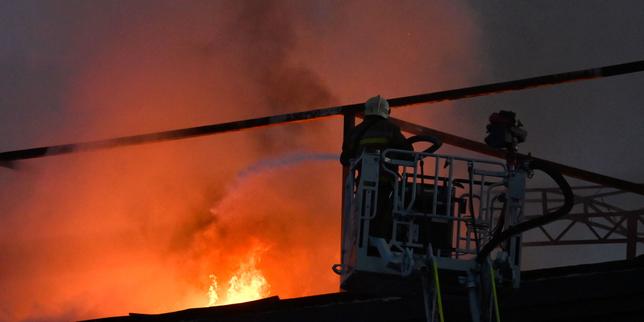
According to the local military administration, another Russian strike has torn through the city, leaving two more bodies pulled from the wreckage of what used to be a quiet neighborhood. Two lives reduced to administrative bullet points in an afternoon briefing. But statistics do not bleed. Numbers do not choke on the plaster dust that settles over a child’s abandoned toy truck, turning everything the uniform gray of an unwashed shroud.
Consider the geometry of survival in a city that sits in the crosshairs of an empire's ambition.
Zaporizhzhia is not just a collection of coordinates on a general's map. It is a sprawling organism of concrete apartment blocks, weeping willow trees, and corner kiosks where old women still sell sour cherries from battered plastic buckets. It is a place where people planted tomatoes in April, fully knowing they might never taste the harvest, driven by an obstinate, infuriating human hope that refuses to yield to the calendar of war.
When the sirens begin their metallic wail, they do not sound like modern technology. They sound like the ghosts of old sirens, resurrected from cold war archives to haunt a new century. They rise in pitch until they scrape against the insides of your skull. You grab your jacket. You grab the cat. You move toward the stairwell, where neighbors in mismatched slippers nod to each other with tired, hollow eyes. We are all ghosts practicing for our roles, the nod seems to say. Not yet. Not today.
Except today, it was someone.
The strike hit just after dawn, that fragile hour when the morning light tries to soften the jagged edges of a broken world. The explosion didn't just destroy walls; it rewrote the history of a street in a fraction of a second. A kitchen table, laden with yesterday's bread and a half-empty jar of honey, now hangs suspended over a ten-foot drop where the floor used to be. The sky pours in through the gash in the ceiling, indifferent to the domestic ruin beneath it.
We talk about geopolitics in conference rooms thousands of miles away. We parse the syntax of ceasefires and debate the logistics of supply lines as if we were moving pieces on a mahogany chessboard. We use words like escalation and defense, terms that sanitize the raw, jagged reality of what happens when a high-explosive warhead meets a living room wall.
Drop the abstraction.
Imagine standing in that kitchen. Imagine the smell of cordite mixing with the familiar, comforting scent of stale chicory coffee. Imagine the absolute stillness that follows the blast, a silence so profound you can hear the individual grains of pulverized concrete whispering as they settle onto your shoes.
That is where the war actually lives. Not in the maps flashed across cable news networks, but in the frantic, trembling hands of a rescue worker trying to clear heavy timber with a crowbar while shouting a name into the smoke, praying for an answer that doesn't come.
The two victims whose names have not yet made the international headlines were ordinary people. They were not generals. They were not politicians holding press conferences behind sandbags. They were people who woke up, checked the weather, wondered if the bakery down the street was still open, and then ran out of time.
That is the quiet tragedy of Zaporizhzhia. It is not just the destruction of brick and mortar; it is the systematic erosion of tomorrow. Every time a roof collapses under the weight of an incoming shell, a future is amputated. A conversation is left half-finished. A recipe is lost.
And yet, the survivors sweep the glass.
Go down to the courtyard an hour after the smoke clears. You will see a man with a broom, his face caked in gray soot, methodically sweeping shards of safety glass off the concrete walkway. He is not weeping. He is not screaming at the sky. He is just sweeping, because the glass is there, and the walkway needs to be cleared, and what else is a man supposed to do when his world has been cracked open?
This resilience is often praised by distant observers as heroism. But ask the people holding the brooms, and they will tell you it is simply gravity. When you have nowhere else to fall, you stand up, pick up the handle, and push the sharp edges away from your doorstep, waiting for the next quiet moment before the siren starts again.