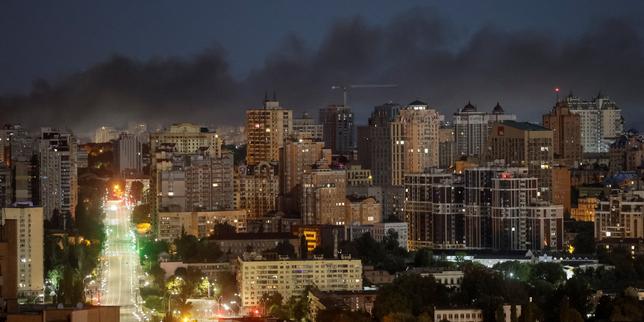
The coffee in the chipped ceramic mug was still hot when the first concussion shook the windowpane.
In Kyiv, the dawn does not always arrive with light. Sometimes it comes with the deep, flat thud of an interception high above the clouds, a sound that vibrates in the chest long before it registers in the ear. Maria did not drop her mug. Two years of air raid sirens have trained the muscle memory of millions. Instead, she walked to the hallway, away from the glass, and sat on the floor with her cat pressed tight against her knee.
Across the country, the coordinates were shifting again.
Lviv, far to the west, where people once thought the mountains and distance might buy a fragile peace, woke to the screech of incoming missiles slicing through the morning mist. Kryvy Rih, an industrial heartland where steel is forged and the earth is carved out for iron ore, caught the brunt of another salvo. The objective on the military maps was infrastructure, power nodes, supply lines. The reality on the ground was simpler and more brutal: civilians waiting for buses, bakers pulling bread from ovens that suddenly went cold, children learning geography from the shelter of concrete basements.
We talk about war in the macro. We quote tonnage, trajectory, and interception rates. We draw arrows on digital maps and debate the geopolitics of artillery reserves. But the true weight of a bombardment is measured in micro-moments. It is measured in the thirty seconds it takes to decide whether to run to the cellar or stay under the blanket. It is measured in the way a grandmother in Lviv packs a single small bag with her medication, her passport, and a silver spoon that survived her parents' generation.
Consider what happens when the power grid fails in Kryvy Rih. The water pumps stop. The elevators freeze between floors. Neon signs wink out, leaving only the amber glow of emergency lanterns in pharmacy windows. In these quiet, dark intervals, the calculus of survival changes. People become neighbors in a way that modern comfort rarely allows. They share thermoses of tea on stairwells. They translate the radio reports for the elderly woman in apartment four who can no longer see the small print on her phone screen.
This is the invisible architecture of resilience. It is not made of titanium or reinforced concrete. It is made of stubbornness.
When the strikes hit Kyiv, the municipal workers did not wait for the smoke to clear before they began patching the asphalt craters left behind by ballistic missiles. By noon, the rubble was swept aside, orange cones marked the hazards, and flower vendors on the corner were back selling tulips wrapped in damp newspaper. It is a terrifying normalcy, born of necessity. You cannot cower forever. If you cower forever, the silence wins.
Yet behind the resilience lies a profound, exhausting fatigue. The human nervous system is not designed to live permanently in the red zone. Adrenaline is a poor substitute for sleep. In the western reaches of Lviv, thousands of displaced families who fled the eastern front months ago found themselves diving for cover once more, realizing that safety in this conflict is not a geographic location; it is merely a matter of timing.
The sirens wailed for hours. The anti-aircraft batteries barked their sharp, metallic defiance into the blue sky.
And then, slowly, the all-clear sounded.
Maria stood up from the hallway floor. She set her cold coffee on the kitchen counter, looked at the unbroken pane of her living room window, and picked up her phone to text her son three words: All is well.
Outside, the trolleybuses began to roll again.