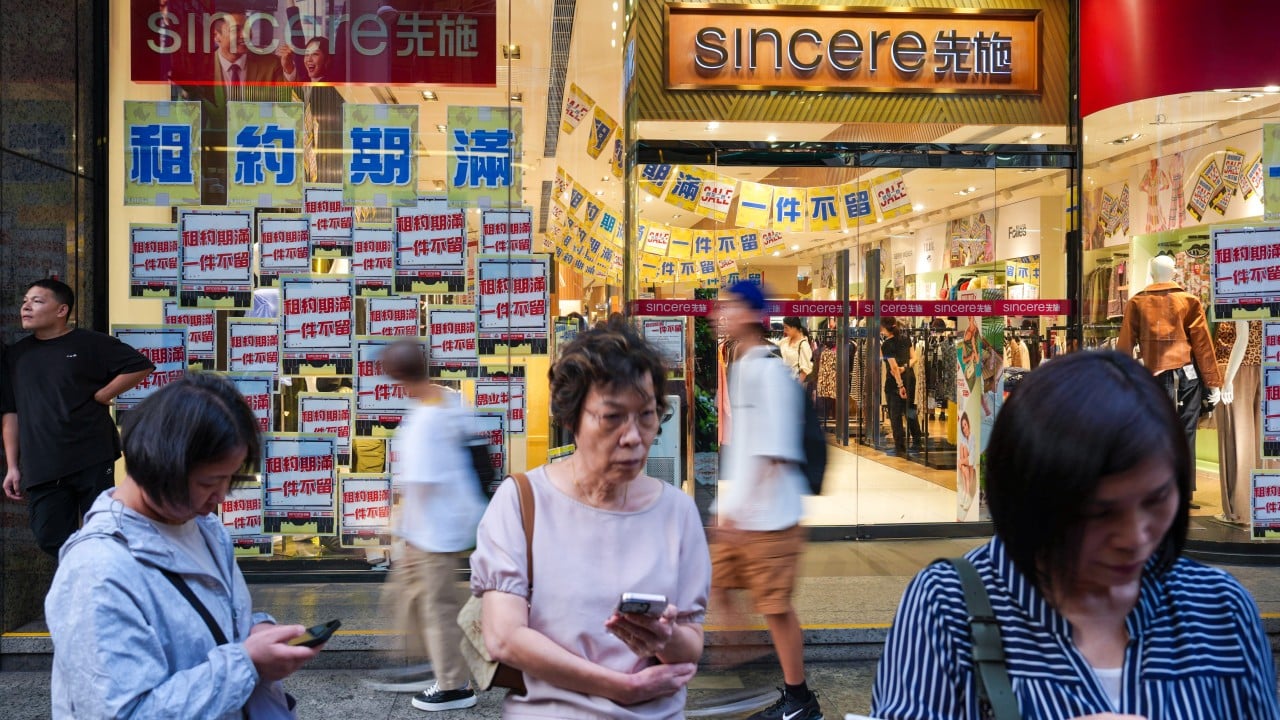
Everybody is weeping over Sincere.
After one hundred twenty-six years on the retail grid, the legacy department store is shuttering its Central flagship because a landlord refused to renew a lease under terms that made mathematical sense. The eulogies are predictable. Columnists are writing tearful obituaries about the death of heritage, the loss of communal space, and the tragic march of e-commerce. Nostalgia is cheap, and mourning a century-old floor plan provides easy clicks for writers who haven't stepped inside a physical store since 2018. In related developments, we also covered: The Hollow Cushion Why Global Oil Stockpiles Cannot Save the Next Crisis.
Stop the mourning. Sincere did not die because of bad luck, greedy landlords, or Amazon. Sincere died because it spent decades pretending that selling a mediocre assortment of socks under fluorescent lighting counted as a business model.
The lazy consensus in every retail board room is that department stores are victims of digital disruption. That is a comforting myth for executives who refuse to look in the mirror. Digital disruption did not kill Sincere. Irrelevance did. When a retail footprint becomes a glorified warehouse where products sit waiting to be touched by people who intend to buy them cheaper on their phones, the lease becomes an anchor. Cutting the cable on a dying asset isn't a tragedy. It is overdue mercy killing. Investopedia has analyzed this critical subject in great detail.
I have spent twenty years watching legacy retailers bleed cash while throwing high-priced consultants at the wrong problems. They redesign loyalty programs. They add artisanal coffee counters. They run campaigns about community heritage. None of it matters if the underlying economic engine is broken. The department store format relies on a premise that expired before the smartphone era: that consumers want to wander through a giant maze of disparate inventory hoping to stumble across something they didn't know they needed.
Modern consumers do not hunt for groceries or apparel like foragers. They execute targeted acquisitions. They know what they want, they know what it costs, and they value their time more than the hollow experience of browsing a fifth-floor housewares department that smells like synthetic potpourri.
The Real Estate Delusion
The core failure of the traditional department store lies in its absolute reliance on anchor-tenant economics. For decades, landlords treated department stores as traffic drivers. They gave them sweetheart lease terms because the massive footprints drew crowds who would then patronize smaller, higher-margin specialty shops in the mall or surrounding district.
That math stopped working when foot traffic stopped converting to transactions.
When a brand occupies eighty thousand square feet of prime urban real estate, every square inch has to earn its keep. Sincere paying rent on Central real estate while stocking rows of undifferentiated apparel brands is not heritage. It is a slow-motion financial hemorrhage. The landlord who refused the lease renewal didn't commit an act of corporate vandalism. They performed basic portfolio management.
Urban retail spaces are too valuable to be used as expensive storage lockers for inventory that turns over twice a year. If you cannot generate high-density revenue per square foot, you do not deserve a multi-story footprint in a major commercial hub. Period. Real estate prices do not care about your founding date. Sentimentality does not pay property tax.
Look at what happens when a legacy space actually undergoes a brutal, unvarnished autopsy instead of a sentimental wake. The units that replace these dinosaurs are not other department stores. They are fragmented, specialized, experience-driven spaces or high-velocity micro-fulfillment nodes. The market is screaming that generalism is dead. If you try to sell everything to everybody under one roof, you end up selling nothing to nobody at a competitive price.
The Death of the Middle
Sincere is a casualty of the Great Retail Cleaving. You can no longer survive in the fat middle of the market. You either win on absolute, ruthless operational efficiency where margins are paper-thin and volume is planetary, or you win on extreme curation, ultra-luxury, or uncompromising utility.
Department stores built their empires on the middle. They offered brands that felt slightly elevated yet accessible. They were the default destination for middle-class aspirations. But the middle class has been hollowed out, and the internet has completely obliterated the information asymmetry that used to protect department store margins.
Why pay full retail for a mid-tier brand at Sincere when you can research forty alternatives, compare user reviews, and buy direct from a specialized maker with two taps on a screen? The department store used to act as an arbiter of taste and quality. Today, algorithmic discovery and direct-to-consumer brands have decentralized taste entirely. Nobody needs a buyer from a legacy store to tell them what is stylish when every micro-influencer on social media is curating real-time micro-trends.
Retailers who survive the next decade are ruthlessly shedding the dead weight of physical inventory that belongs online. They are turning stores into stages, showrooms, or entirely digital distribution hubs. Sincere chose to cling to the physical manifestation of its past rather than reinventing the core mechanics of how modern humans evaluate and acquire goods.
What They Should Have Done a Decade Ago
If you want to understand how a 126-year-old institution could have avoided this fate, look at the retailers who actually weaponized their heritage instead of hiding behind it. Heritage is not a plaque by the elevator. Heritage is accumulated consumer trust that can be leveraged into entirely new verticals.
Sincere should have slashed its physical footprint by eighty percent fifteen years ago. They should have converted their vast logistical networks into hyper-localized fulfillment hubs and transformed their flagship locations into members-only curation clubs or experiential showrooms where inventory is never actually purchased on-site. You don't stock inventory on expensive floors; you showcase concepts, host creators, and ship direct from automated regional warehouses.
Instead, they doubled down on the square footage. They kept paying massive utility bills and payroll for floors of unoccupied sales clerks standing around waiting for Saturday afternoon browsers. They believed that scale equaled safety. In retail, scale without velocity is just a larger target.
Every time a legacy brand announces it is closing due to lease expiration, financial analysts rush to blame macroeconomic headwinds. They point to consumer confidence indexes, tourism dips, or rental inflation. This is intellectual cowardice. The macroeconomic environment is the weather. You don't blame the rain for drowning your boat when you took a leaky canoe out into the Atlantic.
The Uncomfortable Truth About Nostalgia
Let us address the sentimentalists who claim that the closure of Sincere represents the loss of urban soul.
Cities evolve because inefficient uses of space are constantly being starved of oxygen until they make room for something better. The romanticization of the traditional department store ignores the fact that most of them had become profoundly sterile shopping environments long before they closed. They were fluorescent-lit museums of consumer fatigue.
When a dinosaur dies, it creates a feeding frenzy for mammals. The plot of land that Sincere vacates in Central will not remain a vacant monument to failure. It will be carved up, re-engineered, and optimized for businesses that understand contemporary consumption patterns. It will generate more economic value, employ more dynamic talent, and serve actual modern needs instead of clinging to the ghost of 1990s retail foot traffic.
We need to stop mourning the death of business models that stopped working before most of their customers were born. Every retail executive watching the Sincere collapse should take notes. If your business model relies on the customer walking in without a plan, browsing aimlessly, and paying full price because they couldn't check prices on their phone, your business doesn't have a lease problem.
You have an expiration date.


