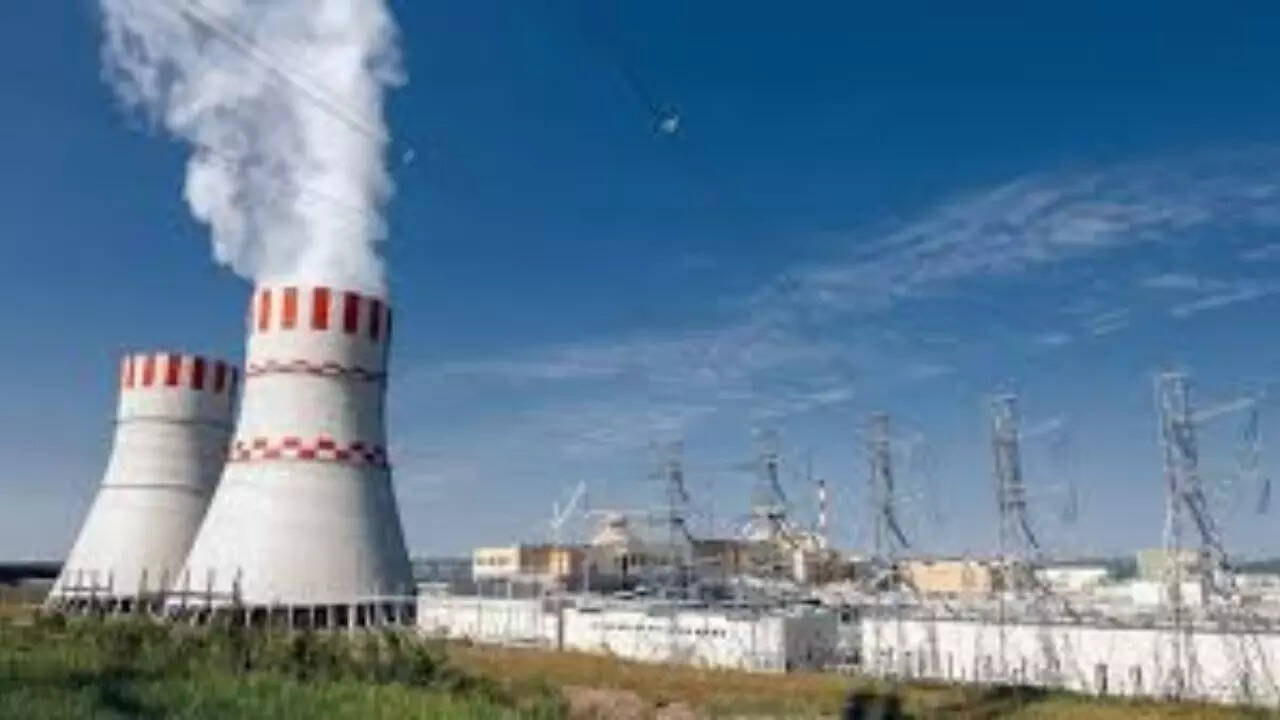
The tea in Sinop is served in small, tulip-shaped glasses, so hot it stings the fingertips. Outside the window of a small cafe overlooking the Black Sea, the water is a bruised shade of grey. For decades, the people here have looked at this horizon and seen a mystery. They have heard the whispers of "the project" since the 1970s. It is a ghost that haunts the Turkish energy ministry, a promise of power that always seems to be retreating just as the nation reaches for it.
But the ghost is suddenly gaining mass.
Turkey is no longer just dreaming of a nuclear future. It is shopping for one. The nation is currently locked in high-stakes, quiet negotiations with a quartet of global titans: South Korea, Canada, China, and Russia. This isn't just about electricity. It is about the fundamental survival of a sprawling, industrializing nation that is tired of being at the mercy of volatile natural gas prices and the shifting winds of geopolitics.
Imagine a manufacturer in Bursa. Let’s call him Ahmet. He runs a textile factory that has been in his family for three generations. Every time a pipeline in the East is throttled or a global conflict spikes the price of Brent crude, Ahmet’s margins vanish. He isn't thinking about carbon isotopes or pressurized water reactors. He is thinking about the hum of his looms. When the grid fluctuates, the looms stutter. When the bill arrives, it carries the weight of a currency that struggles against the dollar. For Ahmet, nuclear energy isn't a scientific marvel. It is a shield.
The Architect's Dilemma
Building a nuclear plant is not like building a bridge or a skyscraper. It is a marriage that lasts a century. You choose a partner, and you are bound to their technology, their enriched uranium, and their engineers for the next eighty years.
Currently, the Akkuyu plant on the Mediterranean coast is the first child of this ambition. It is a Russian-built behemoth, a $20 billion symbol of what happens when Turkey decides to stop waiting. But Ankara knows the danger of putting all its eggs in one basket. Reliance on a single source is a strategic knot that no modern state wants to tie.
So, the officials are traveling. They are sitting in boardrooms in Seoul, discussing the Korean Electric Power Corp (KEPCO) and their reputation for finishing projects on time—a rarity in the nuclear world. They are talking to the Canadians about their CANDU reactors, which offer a different flavor of technology that doesn't require the same heavy enrichment processes. They are weighing the sheer scale of China’s industrial might, which could potentially pave the way for a third or even fourth plant in Thrace.
This is a geopolitical chess match played with uranium. Turkey wants to be more than just a bridge between East and West. It wants to be a powerhouse. To do that, it needs 20,000 megawatts of nuclear capacity by the year 2050. That is a staggering number. It represents nearly a quarter of the country’s current total installed capacity.
The Weight of the Invisible
There is a specific kind of silence that exists inside a containment dome. It is a heavy, artificial quiet. It represents the ultimate human hubris and the ultimate human achievement: the ability to bottle a star.
For the average citizen in Istanbul or Ankara, the "nuclear deal" is a headline that competes with inflation and football scores. But the stakes are invisible until they aren't. We feel them when the air in the cities becomes thick with the smog of coal-fired plants during a stagnant winter. We feel them when the "Made in Turkey" tag becomes too expensive to compete in European markets because the energy input cost is double that of a neighbor.
The transition to nuclear is often framed as a technical necessity, but it is actually a psychological one. It is about the transition from a nation that consumes the world's resources to one that masters them.
Critics point to the risks. They remember Chernobyl; they watched Fukushima. Those fears are real, etched into the collective memory like a scar. But the Turkish government is betting that the fear of darkness is greater than the fear of the atom. They are betting that a country of 85 million people cannot run on hope and solar panels alone.
The Korean Calculation
South Korea is the dark horse in this race. Their APR-1400 reactor design is the shiny new toy of the nuclear world. They proved they could export it when they built the Barakah plant in the United Arab Emirates—in the middle of a desert, through sandstorms and heat that would melt lesser resolve.
For Turkey, the South Korean deal represents a path to modernization that feels "Western" in its efficiency but "Eastern" in its partnership. The negotiations for the Sinop site—the very place where the tea is hot and the sea is grey—are centered on this Korean potential.
But Canada remains in the wings. The Canadian approach is different. It’s about modularity and a different kind of fuel cycle. It’s the "sensible" option for a nation that wants to diversify its technical portfolio.
Then there is China. To walk through a Chinese-built infrastructure project is to witness the sheer force of will. They don't just build plants; they build ecosystems. A deal with China for the Thrace region would likely come with financing packages that are hard to refuse, tying the two ends of the ancient Silk Road together with high-voltage wires.
The Cost of Cold Facts
We often talk about these deals in terms of "units" and "gigawatts." We use words like "bilateral" and "memorandum of understanding." These are cold words. They hide the sweat of the laborers who will pour the specialized concrete. They hide the late-night arguments of diplomats in Geneva or New York.
Consider the "invisible" workers. The Turkish engineers currently training in Russia or South Korea. These are young men and women who left their villages to learn the language of the atom. They are the pioneers of a new class. When they return, they won't just be operating machinery. They will be the custodians of a force that can power a city or level it.
That responsibility is the true "human element." It is the burden of knowledge.
The push for multiple deals is a frantic attempt to buy time. Turkey is growing faster than its infrastructure can breathe. Every new shopping mall in Izmir, every new electric car charging station in Antalya, and every new data center in the outskirts of the capital is a new mouth to feed.
The Black Sea Ghost
Back in Sinop, the wind picks up. The locals talk about how the weather has changed over the years. They wonder if the plant will finally happen or if it will remain a talking point for another generation of politicians.
There is an inherent vulnerability in admitting that you cannot power your own future. It is a confession of dependency. By engaging with four different global powers at once, Turkey is trying to turn that dependency into a competition. They are making the giants dance for the right to light up the Anatolian heart.
The negotiation tables are covered in maps and technical specifications, but the real conversation is about the next fifty years. It is about whether a child born today in a village near the Syrian border will grow up in a country that flickers or a country that glows.
The transition is messy. It is expensive. It is fraught with political landmines that could detonate with a single change in a foreign capital. But the alternative is a slow slide into irrelevance, a future where the looms stop turning because the price of a spark became too high to pay.
The deals are being written in ink, but they are fueled by a primal human need: the refusal to be left in the dark.
A single lightbulb in a farmhouse near the Taurus Mountains doesn't care if its electrons were birthed by Russian technology or Korean engineering. It only cares that when the switch is flipped, the darkness retreats. Turkey is currently deciding who gets to hold the switch.
The tea in the glass is cold now. The sea is still grey. But somewhere in a basement in Ankara, a group of people is looking at a blueprint that might finally turn the ghost of Sinop into a sun.