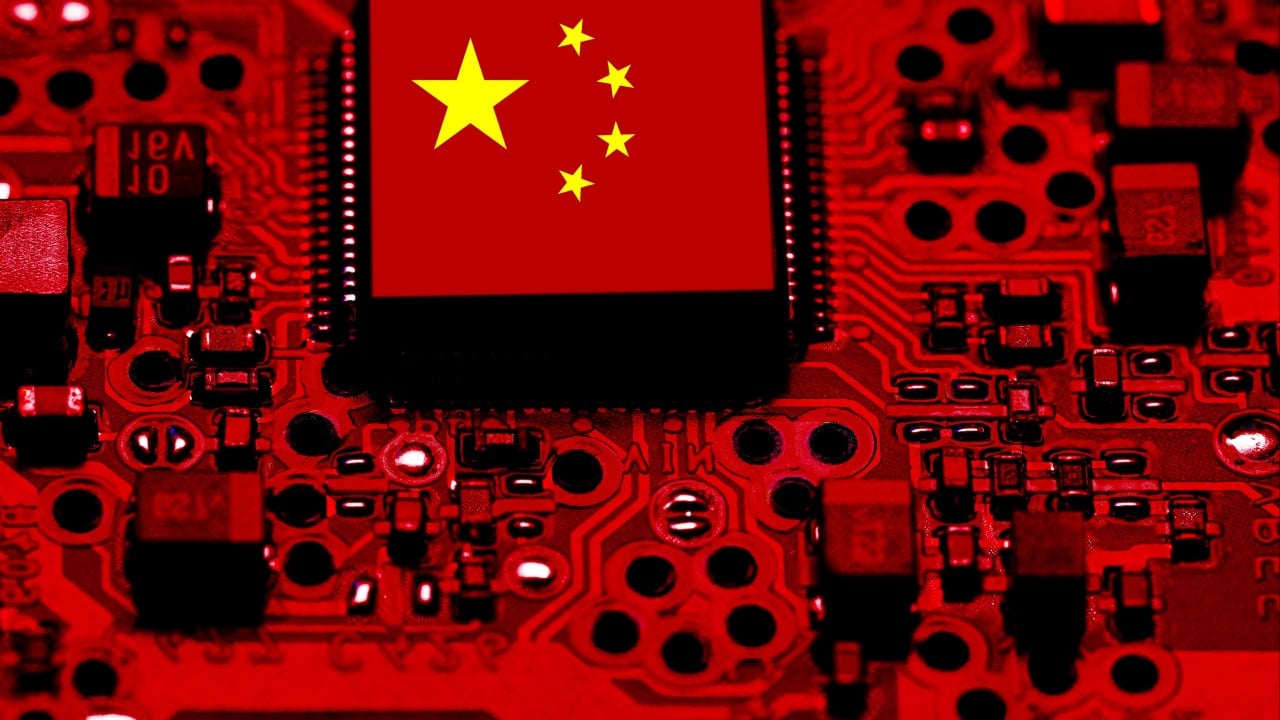
Washington is focused on stopping advanced microchips from reaching Beijing. Yet, while politicians debate export controls and hardware blockades, Chinese artificial intelligence models are quietly embedding themselves inside American software. This isn't a future threat; it is an active market reality. American developers, startups, and enterprises are actively integrating Chinese open-source large language models because these models are often cheaper, faster, and occasionally more capable than their Silicon Valley counterparts. The decoupling of the American and Chinese tech ecosystems is failing where it matters most: the software layer.
The Open Source Trojan Horse
National security rhetoric suggests a hard wall divides the American and Chinese technology sectors. The reality on the ground is highly porous. When companies like Alibaba, Tencent, and DeepSeek release powerful open-source models, they do not stop at the Chinese border. They are uploaded to global repositories like Hugging Face, where any engineer in San Francisco, Austin, or New York can download them with a single line of code.
This is not a matter of corporate espionage. It is standard engineering efficiency.
Building a modern AI application requires vast amounts of computing power. For a cash-strapped startup, using a proprietary American API can become prohibitively expensive as user volume grows. If an open-source model developed in Beijing offers comparable performance at a fraction of the operational cost, the commercial choice is obvious. Engineers prioritize performance per dollar over geopolitical alignment.
Consider a hypothetical scenario where an e-commerce platform needs to automate its customer service routing. The developers could pay premium rates to use the latest closed-source Western models. Alternatively, they could download a highly optimized Chinese open-source model, fine-tune it on their own servers, and run it for a tenth of the cost. In the competitive arena of software development, cost-efficiency almost always wins.
Why Chinese Models Are Winning the Efficiency War
The success of Chinese AI within American borders stems from a fundamental shift in how these systems are built. For years, the prevailing belief in Silicon Valley was that bigger meant better. The goal was to train larger models with more parameters, requiring massive data centers and unprecedented amounts of electricity.
Chinese tech firms faced a different reality. Hampered by US chip restrictions, they could not simply throw infinite hardware at the problem. They had to innovate at the algorithmic level.
Instead of building massive, unwieldy systems, Chinese engineers focused heavily on optimization. They perfected techniques that allowed smaller models to achieve the reasoning capabilities of systems twice their size. They pioneered advancements in Mixture of Experts architectures, where only specific parts of a model activate for a given task, drastically cutting down the required computing power during deployment.
When these highly optimized models are released to the global developer community, they are highly attractive. They run faster. They require less memory. They allow American companies to lower their cloud computing bills significantly. Washington’s chip bans were designed to slow Chinese AI progress, but instead, they forced Chinese firms to build leaner, more efficient software that is now outcompeting American models on a cost-per-token basis.
The Blind Spot in American Policy
U.S. regulators remain fixated on the physical supply chain. They track ASML lithography machines, restrict Nvidia graphic processing units, and monitor data center construction. This hardware-centric approach misses the fluid nature of software.
You cannot easily embargo a file that weighs a few gigabytes and exists on thousands of servers worldwide.
The Hidden Risks for American Enterprise
Relying on foreign AI architecture brings distinct operational hazards that many corporate boards are completely ignoring. The most immediate risk is not overt sabotage or state-sponsored backdoors. It is the subtle bias embedded in the training data.
AI models reflect the digital environments where they were raised. A model trained heavily on data curated within the regulatory frameworks and cultural boundaries of the Chinese internet will possess a different baseline understanding of the world compared to one trained on Western data. When applied to American business use cases, this can manifest as strange anomalies in content moderation, sentiment analysis, or automated legal reviews.
There is also the problem of long-term dependency. If an American tech company builds its core infrastructure around a specific foreign open-source architecture, it becomes dependent on that ecosystem for updates, bug fixes, and security patches. If geopolitical tensions escalate to the point where open-source repositories are geoblocked or fractured, American businesses could find themselves stranded with unmaintainable code.
The Illusion of Decoupling
The political narrative of two separate technological spheres is a fiction. The underlying fabric of the modern AI boom is fundamentally international.
American researchers regularly publish papers that Chinese firms use to refine their algorithms. Conversely, Chinese engineers contribute massive amounts of code to the open-source tools that power Silicon Valley. Trying to separate these two ecosystems is like trying to remove a specific ingredient from a baked cake. The integration is already complete.
Companies that want to survive cannot afford to ignore the global marketplace of code. They must establish strict vetting processes. Every external model brought into a corporate network needs rigorous auditing to ensure it handles data safely and aligns with local compliance laws. Relying blindly on open-source code without understanding its origins is no longer an option.
The true competitive edge will not belong to the country that builds the biggest data centers or passes the strictest export bans. It will belong to the organizations that know how to orchestrate these diverse, global tools securely and efficiently, regardless of where the code was written.