Midnight in Victoria Harbour smells of diesel, wet granite, and old money.
Across the dark water, the skyscrapers of Central pierce the low-hanging clouds like rows of sharpened obsidian. Inside those towers, in carpeted glass chambers shielded from the hum of the city, men and women in charcoal suits are arguing over billions of dollars. They are not talking about tariffs, or shipping lanes, or tax loopholes. They are talking about clauses. Specifically, the tiny, binding sentences at the bottom of multinational contracts that decide where global commerce goes when it breaks.
For generations, that journey led straight to London.
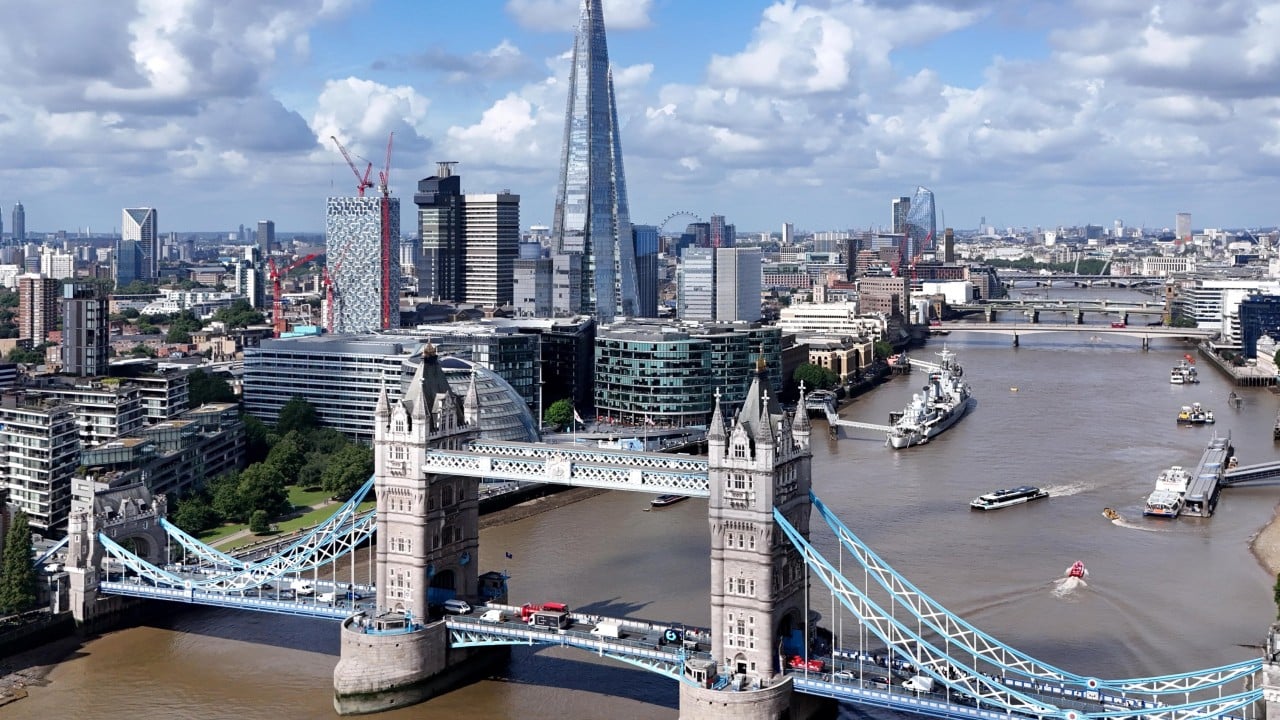
If a Russian oil conglomerate quarreled with a Brazilian mining titan over a collapsed pipeline, their lawyers booked flights to the banks of the River Thames. They walked into wood-paneled courtrooms governed by centuries of English common law, trusting a wigged judge or an international arbitrator to settle the score. London was the undisputed capital of global commercial dispute resolution. It was a cathedral of contracts.
But geography is stubborn. And money is nomadic.
Today, the center of gravity in international law is shifting eastward, pulled by the immense economic gravity of Asia and the calculated, relentless ambition of Hong Kong. According to recent warnings from the head of the Hong Kong Bar Association, this city is on a collision course to potentially eclipse London within a decade.
To understand why this matters—why a boardroom fight over a delayed cargo ship in the South China Sea could rewrite the rules of global finance—we have to look past the cold statistics and into the human machinery of arbitration.
Consider Arthur Pendelton.
Arthur is a fictitious name, but he represents a very real type. He is a British-trained arbitrator with salt-and-pepper hair, twenty-five years of experience under his belt, and a permanent slight slouch from decades of hunching over heavy case files in Chancery Lane. When I spoke to Arthur last year over a pint of lukewarm bitter in a London pub—a conversation that stays with me whenever global trade comes up—he looked tired.
"We used to take it for granted," he told me, staring into his glass. "People came to London because they knew the rules, they trusted the courts not to interfere, and the machinery just worked. But lately? Clients don't want to fly fourteen hours across the globe just to have a dispute heard in a time zone that feels alien to their operations. The action has moved. The capital has moved. And the arbitrations are following the money."
The money, of course, is in Asia.
Look at the numbers behind the shift. As trade corridors reorganize around the Belt and Road Initiative, and as regional commerce between ASEAN nations, mainland China, and the broader global south explodes, trillions of dollars cross borders every single year. When those transactions sour—when a joint venture in Shenzhen hits a wall, or an infrastructure project in Jakarta faces a multi-million-dollar breach of contract—the parties need a neutral, sophisticated forum to untangle the mess.
Historically, sending that dispute to London was the default setting. But logistically, it is increasingly absurd. Why fly witnesses from Singapore, Tokyo, and Beijing to a damp courtroom in England when a world-class alternative exists right in the backyard of the transaction?
Hong Kong possesses a unique superpower in this silent war: the principle of "One Country, Two Systems."
It is a phrase tossed around so often in geopolitical news that it has lost its texture. But to a corporate lawyer, it is the holy grail. It means that Hong Kong maintains its own independent judiciary, rooted in the English common law tradition that global investors know and trust, while enjoying a unique legal arrangement with mainland China that allows arbitral awards issued in Hong Kong to be enforced across the border with a speed and reliability that no other foreign jurisdiction can match.
Think about that for a moment. If you are an American tech firm or a European manufacturing giant doing business with a state-owned enterprise in mainland China, your greatest nightmare is winning a legal judgment that you can never actually collect because the local courts refuse to honor it. Hong Kong bridges that chasm. It speaks the language of international commerce, yet it holds the keys to the Chinese mainland.
That institutional advantage is not an accident of history; it is the result of decades of careful legal engineering.
The Hong Kong International Arbitration Centre, or HKIAO, has steadily modernized its rules to outpace its European rivals. They introduced expedited procedures, virtual hearing setups that put traditional courtrooms to shame, and a panel of arbitrators drawn from every corner of the globe. They realized early on that modern arbitration is not just about being fair; it is about being fast, flexible, and culturally fluent.
Yet, stepping into this arena is not for the faint of heart.
When you sit across a hearing table in Admiralty Centre, watching two legal teams dissect a multi-jurisdictional supply chain failure, you realize you are watching modern geopolitics played out in slow motion. The tension in the room is palpable. Millions of dollars hang on the interpretation of a single comma in an indemnity clause. The lawyers do not raise their voices; they don't need to. Their deadpan delivery is far more terrifying. Every sentence is a calculated strike, designed to convince a panel of three neutral experts that their client's interpretation of reality is the only one grounded in commercial sense.
And this is where the human element collides with the grand narrative of trade supremacy.
London is not surrendering without a fight. The English legal establishment has deep roots, unmatched prestige, and an institutional resilience built over centuries of empire and global commerce. British judges and barristers view their common law heritage not merely as a profession, but as a public trust. They are leaning into their reputation for absolute impartiality and judicial independence, framing themselves as the ultimate safe harbor in an increasingly volatile world.
When political winds blow cold, London points to its centuries-long track record of insulation from executive interference. That is its shield.
Hong Kong, meanwhile, points to its proximity, its efficiency, and its unrivaled access to the world's most dynamic economic engine. That is its sword.
The race between these two legal titans is more than a turf war between law firms and arbitration centers. It is a referendum on where the future of international trade will be anchored. Will it remain tied to the traditional Western centers of gravity, or will it pivot permanently toward the dynamic, fast-evolving markets of the East?
As the decade ticks down, every new contract signed in Singapore, Shanghai, London, and Hong Kong casts a vote. Every time a corporate general counsel drafts a dispute resolution clause on a flight over the Pacific, the balance shifts.
Back in Victoria Harbour, the night shift workers on the container ships are still loading steel boxes bound for Rotterdam, Los Angeles, and Dubai. They do not care about common law, jurisdiction, or arbitration rules. They only care that the cargo moves. But down below, in the quiet, air-conditioned towers of the city, the invisible architects of global commerce are drawing the lines that will govern tomorrow's empires.
The gavel is changing hands. And the echo is already traveling around the world.