The room where a human being breaks is rarely as cinematic as we imagine. It is usually a small, windowless space. It smells of old sweat, cleaning chemicals, and the sharp, metallic tang of fear. In these spaces, time does not move in minutes or hours. It moves in the rhythm of footsteps approaching a door.
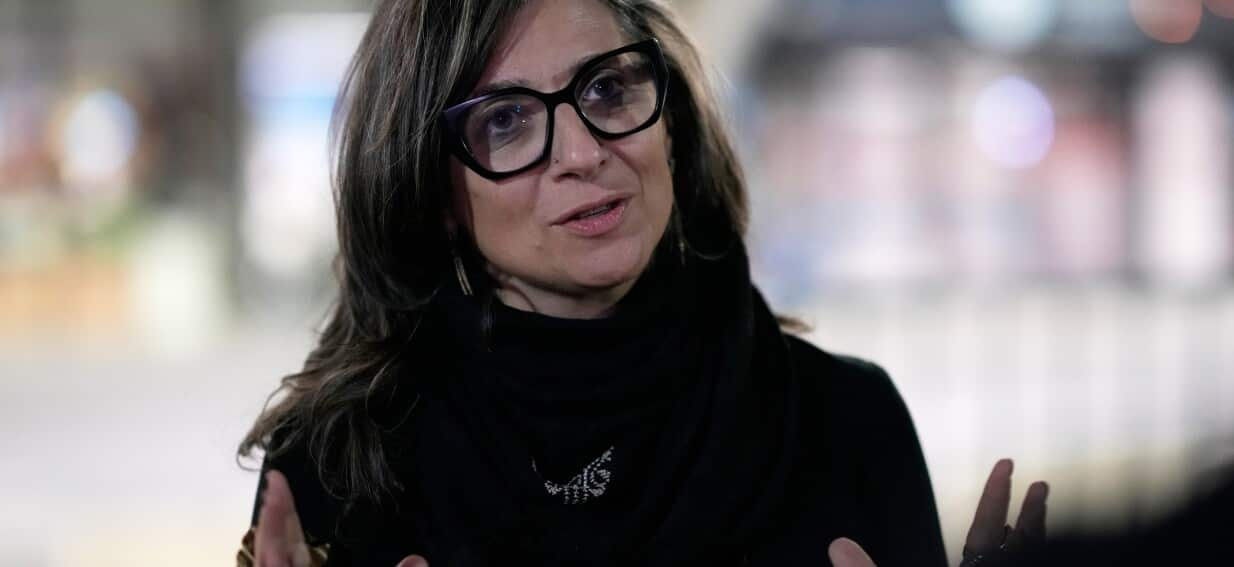
When Francesca Albanese, the United Nations Special Rapporteur, stood before the cameras recently, she wasn’t just delivering a report. She was attempting to describe the architecture of a black hole. Her words—chilled by the gravity of her findings—pointed toward a terrifying reality: the international community has not just looked away from the systematic abuse of Palestinians; it has effectively issued a license for it to continue.
We often think of human rights as a shield. A sturdy, universal barrier that stands between a person’s ribs and the boot of an unchecked state. But shields only work if the people standing around the circle agree to hold them up. When the world lowers the shield, the space that remains is not a vacuum. It is a laboratory.
The Anatomy of the Unseen
Imagine a man named Hamza. He is a hypothetical composite of the thousands of stories filtered through legal briefs and human rights dispatches. Hamza is not a soldier. He is a father from Gaza, or perhaps a student from the West Bank. One night, the door to his world vanishes. He is taken.
For weeks, Hamza exists in a "legal twilight." This is a term used by scholars to describe the suspension of habeas corpus, but for Hamza, it is simpler. It is the absence of a face. He sees only masks or the floor. He is subjected to "stress positions"—a clinical euphemism for forcing the human body to become its own instrument of torture.
To understand the scale of what Albanese is reporting, one must understand the biology of prolonged stress. When a person is deprived of sleep for days, the brain begins to eat itself. The prefrontal cortex—the part of you that remembers your daughter’s middle name or the way the sea looks in the morning—shuts down. You become a collection of raw nerves and screaming muscles.
Albanese argues that this isn't an accidental byproduct of war. It is a system. Since 1967, over 800,000 Palestinians have passed through Israeli detention. That is not a statistic; it is a generational trauma. It is the systematic dismantling of a civilian population’s psyche.
The License to Operate
Why does this happen in the light of day? Why do the high-definition cameras of the 21st century seem to glitch when pointed at these specific interrogation rooms?
The answer lies in the "licence" Albanese describes. In the theater of international relations, words are currency. When powerful nations use terms like "security necessity" or "exceptional circumstances," they are essentially printing "Get Out of Jail Free" cards. They create a "state of exception" where the rules we all agreed upon in the wake of the mid-20th century’s horrors simply cease to apply.
It is a slow erosion. First, you define the target as something less than a citizen. Then, you define the interrogation as something less than torture. Finally, you define the silence of the neighbors as consent.
Consider the physical reality of the "Schack" or the "Banana" position. These are techniques documented by human rights groups where prisoners are bound in ways that stretch the spine to the point of permanent damage. If this happened in a basement in London or a warehouse in New York, the world would scream. But because it happens under the banner of a "security screening" in a territory the world has decided to forget, the scream is muffled by a thick layer of geopolitical interests.
The Invisible Stakes
We tend to think that torture is about getting information. It rarely is. Veterans of the intelligence community and psychological experts have known for decades that information gained through pain is notoriously unreliable. A man will admit to being the Queen of England if you pull his fingernails back far enough.
The real goal is different. It is the destruction of agency.
When you torture a person, you aren't just hurting them. You are sending a message to their family, their village, and their children. You are telling them that their body is not their own. You are proving that the international laws they read about in school are fairy tales. You are breaking the social contract.
Albanese’s report highlights that this "licence" isn't just about the physical acts. It’s about the legal framework that protects the actors. In the Israeli military court system, the conviction rate for Palestinians is famously near 99 percent. It is a conveyor belt. When the judge, the prosecutor, and the guard all wear the same uniform, the concept of "justice" becomes a cruel joke told in a language the defendant often doesn't fully understand.
The Mirror of the World
There is a profound discomfort in acknowledging this. It’s easier to view the Israeli-Palestinian conflict as an eternal, unsolvable religious feud. It’s easier to look at the rubble of Gaza and see only a military objective.
But if we accept Albanese’s premise, we have to look in the mirror. If one state is allowed to categorize an entire ethnicity as "incipient threats" who do not deserve the protection of the Geneva Conventions, then the Conventions themselves are dead. They aren't universal laws; they are luxury goods, available only to those with the right passport or the right allies.
The "invisible stakes" are our own futures. When we allow a "licence to torture" to be issued in one corner of the globe, we are validating the blueprint for every other autocrat and security state watching from the sidelines. We are telling the world that human rights are negotiable.
The Cost of the Turn
Behind the high-level UN debates and the fiery rhetoric of rapporteurs, there are the quiet consequences.
There is the young boy who watches his father return from detention as a shadow. There is the woman who cannot sleep because the sound of a truck engine reminds her of the night they came. There is the doctor who has to treat injuries that shouldn't exist in a civilized world.
This is the human element that the "dry facts" often miss. We talk about "breaches of international law" as if we are talking about a broken lease or a parking ticket. We aren't. We are talking about the deliberate, calculated infliction of agony on a captive population.
The tragedy of the "licence" is that it is self-perpetuating. Violence begets trauma, and trauma is the most fertile soil for more violence. By refusing to hold the line on torture, the world isn't making anyone safer. It is merely ensuring that the fire has enough fuel to burn for another fifty years.
Francesca Albanese isn't just asking for a change in policy. She is asking for a return to reality. She is reminding us that beneath the maps, the borders, and the security oratory, there is a human nervous system that feels pain exactly the same way yours does.
The watchtower is crowded with those who see what is happening. They have the binoculars. They have the lights. They have the microphones. But until they choose to speak with a voice that cannot be ignored, the small, windowless rooms will stay dark. And the footsteps will keep coming.
The license is still valid. The ink is still wet. The only question that remains is who among us is willing to tear it up.
The sun sets over the Mediterranean, casting long, distorted shadows across the concrete walls of the detention centers. Inside, someone is waiting for the lights to flicker. They are waiting for a world that promised "never again" to remember that "never" starts today.