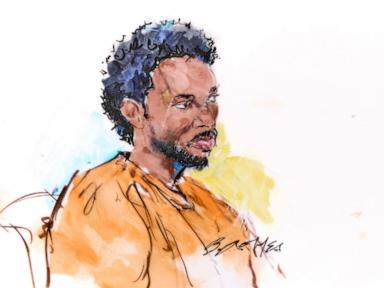
The courtroom floor doesn’t care about fame. It is a cold, indifferent surface that has felt the weight of a thousand tragedies, yet today it feels heavier. People are squeezed into the wooden benches, their breaths held tight. They aren't just here for a trial. They are here because the world they thought they knew—the one filtered through lo-fi beats and viral romanticism—has fractured into a jagged, unrecognizable mess.
At the center of the room sits David Burke. To the internet, he is D4vd, the melancholic voice behind "Here With Me," a young artist who built an empire on the delicate architecture of teenage heartbreak. But the prosecution isn't interested in his Spotify monthly listeners. They are looking at a man they say traded his soul to protect a brand. Across from him, in the hollowed-out hearts of a grieving family, is the ghost of Celeste Rivas Hernandez. She was fourteen.
Fourteen.
It is an age of transition, of braces and notebooks and the first, stumbling steps toward self-discovery. It is not an age meant for a permanent, violent end in a wooded area in Houston.
The Weight of a Secret
Ambition is a quiet poison. It starts as a flicker—a desire to be heard, to be seen—and for David Burke, that flicker became a sun. He was the homegrown success story, the kid who recorded hits in his sister’s closet on an iPhone. That narrative is powerful. It is profitable. But prosecutors argue that beneath the indie-pop veneer lay a desperate need to control the environment around him.
The state’s case is built on a foundation of silence. They allege that Celeste Rivas Hernandez knew something that could have dismantled the carefully curated image of the rising star. We often think of "silencing" as a metaphor used in corporate boardrooms or political scandals. In this courtroom, the word has been stripped of its figurative grace. Here, silencing means a knife. It means the cessation of a heartbeat.
The prosecution describes a scene of calculated brutality. They claim Burke lured the young girl to a secluded spot under the guise of a meeting, only to turn on her with a level of violence that defies the gentle persona he projected to millions. The motive they presented was as old as time: fear. Fear that a fourteen-year-old girl held the power to end a career before it reached its peak.
Consider the terrifying math of that moment. On one side, the potential of a multi-million dollar career, world tours, and a legacy. On the other, the life of a child. If the prosecution is right, David Burke looked at those two things and decided the child was the lesser value.
The Invisible Stakes
When we consume celebrity culture, we often forget that these figures are not just pixels on a screen or voices in our headphones. They are humans capable of the same darkness that resides in the fringes of any society. This trial is a jarring reminder that the "relatable" artist is a construction.
The defense, of course, paints a different picture. They speak of a young man caught in a whirlwind, a victim of circumstance, or perhaps a case of mistaken identity and a rush to judgment by law enforcement hungry for a high-profile win. They want the jury to see the boy who wrote love songs, not the man accused of a massacre.
But the evidence presented by the state is a trail of breadcrumbs made of digital footprints and physical remnants. There are the text messages—chilling in their mundane nature—leading up to the encounter. There is the forensic data from cell towers that places phones in proximity at the worst possible times.
It is a slow, agonizing process to watch a life be reconstructed through data points. Each piece of evidence is a shovel of dirt being moved, either uncovering the truth or burying a reputation forever. The jurors sit in a row, their faces masks of concentration, trying to reconcile the image of the artist with the testimony of the coroner.
A Narrative of Two Worlds
To understand the impact of this case, you have to look at the two worlds that collided on that fateful day.
World one is the world of the digital elite. It is fast-paced, high-stakes, and obsessed with "vibe." In this world, problems are solved by PR teams, and scandals are buried under new releases. It is a world where David Burke was a king in the making.
World two is the world of Celeste Rivas Hernandez. It is a world of middle school hallways, family dinners, and the intense, sometimes overwhelming emotions of early adolescence. It is a world where a secret feels like the weight of the universe, and a meeting with a famous acquaintance feels like a brush with destiny.
When world one decides that world two is a threat, the result is rarely anything other than catastrophic.
The tragedy of Celeste is not just in her death, but in the theft of her future. She becomes a "victim" in the eyes of the law, a "case file" in the hands of the media. But her mother’s tears in the front row remind everyone that she was a person who laughed, who had a favorite color, who probably sang along to the very songs that now feel like a haunting.
The Echo in the Chamber
The music industry is watching this trial with a bated, nervous breath. If a star of this magnitude is convicted of such a heinous crime, the ripples will change how labels vet their talent and how fans consume "emotional" music. There is a deep, unsettling irony in the possibility that the pain Burke sang about was nothing compared to the pain he allegedly inflicted.
As the trial progresses, the "indie-darling" image is being stripped away, layer by layer. What remains is a stark look at the lengths a human being might go to when they feel cornered. It’s a study in the fragility of success. One moment you are on a stage with thousands of people screaming your name; the next, you are in a jumpsuit, listening to a prosecutor describe the way blood spatters on dry leaves.
There are no winners here. Even if an acquittal is reached, the stain of the accusation and the reality of a dead child will linger over everyone involved. If a conviction is handed down, a young talent will spend the rest of his life behind bars, and a family will be left with a hole in their lives that no amount of "justice" can truly fill.
The testimony continues tomorrow. More witnesses will take the stand. More photos will be entered into evidence—photos that the public will never see, but that will haunt the dreams of those in the room.
In the quiet moments of the recess, you can almost hear the ghost of a melody. It’s not one of the hits. It’s the sound of a girl’s voice, a voice that was supposed to have decades left to find its own song, now replaced by the rhythmic, heavy gavel of a judge.
The sun sets over the Houston skyline, casting long, distorted shadows over the courthouse. Inside, the lights stay on late. The lawyers prep. The family prays. And David Burke waits in a cell, far removed from the lights of the stage, facing the reality that some secrets are too heavy for any man to carry, no matter how beautiful his voice might be.
A single, discarded sneaker sits in an evidence locker, a mute witness to a struggle that ended in the dark.