The sound of a ceasefire is not a cheer. It is a sharp, ringing silence that makes your ears ache after months of thunder. In Beirut, that silence arrived like a held breath. For the first time in weeks, the sky was just a sky—not a canvas for the grey streaks of missiles or the low, predatory hum of drones. People stepped onto their balconies, squinting at a sun they had spent months hiding from, wondering if the air was finally safe to breathe.
But peace is a heavy word. It implies a resolution, a closing of a chapter. What Lebanon has today is something far more fragile and jagged. It is a pause.
The Ghost in the Rubble
Consider a baker in the southern suburbs, a man we will call Elias. He returns to his street to find his shop is no longer a shop; it is a skeleton of concrete and twisted rebar. He doesn't look for his oven first. He looks for the small, familiar things—a chipped ceramic mug, a faded photograph, the specific shade of blue on a doorframe that told him he was home.
This is the human scale of a geopolitical event. While diplomats in polished rooms talk about "demilitarized zones" and "buffer strips," Elias is wondering how to scrub the scent of cordite out of his remaining clothes. The facts tell us that thousands of buildings have been leveled. The narrative tells us that those buildings were containers for lives, and when they fall, the history of those families spills into the street like dust.
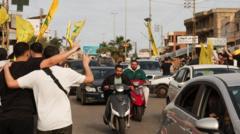
The respite is real. The immediate threat of an airstrike has evaporated, allowing thousands of displaced families to jam their belongings into cars and head south. They are driven by a desperate, illogical hope that their front door might still be standing. But as the traffic snakes toward the Litani River, the celebratory honking of horns is tempered by a cold reality: the land they are returning to is a graveyard of infrastructure.
The Arithmetic of Survival
The numbers are easy to track, but difficult to digest. International monitors estimate the damage to Lebanon’s physical assets in the billions. Yet, money is a secondary concern when the ground itself is a hazard.
The ceasefire terms demand that armed groups move north of the Litani River, leaving a vacuum for the Lebanese Armed Forces to fill. On paper, this is a logical transition of power. In practice, it is a logistical nightmare. The Lebanese army, cash-strapped and overstretched, is being asked to police a region where the very soil is seeded with unexploded ordnance.
Every year of conflict adds a new layer of danger to the earth. Farmers who return to their olive groves aren't just looking at a lost harvest; they are looking at a minefield. A single metal cylinder hidden in the tall grass can turn a homecoming into a funeral. This isn't a hypothetical risk. It is the persistent, invisible tax on peace that rural communities pay long after the generals have signed their papers.
The stakes are not just about who carries a rifle in the streets. They are about the basic mechanics of a functioning state. If the water pipes are shattered and the electrical grid is a web of melted copper, "peace" becomes a synonym for "survival in the dark."
The Weight of the Watchers
A ceasefire is only as strong as the people who enforce it. In this case, the burden falls on a mix of local troops and international peacekeepers. This is where the complexity deepens. Trust in Lebanon is a scarce commodity, fractured by decades of internal strife and external pressure.
The "obstacles to peace" mentioned in news briefs are actually deeply rooted psychological barriers. How do you convince a population that has seen a dozen ceasefires crumble that this one is different? How do the monitors distinguish between a civilian returning to his farm and a combatant moving a crate of supplies? The margin for error is microscopic. One nervous soldier, one misinterpreted movement, and the cycle resets.
We often think of peace as a solid structure, but it is more like a high-wire act performed in a windstorm. Every actor involved—Israel, the Lebanese government, the armed factions, and the international community—is balancing their own survival against the collective need for stability.
The Economy of Despair
Even if the guns stay silent, Lebanon is fighting a second war against its own bankruptcy. The currency is a ghost of its former value. Savings have vanished into the void of a banking crisis that predates the recent bombs. For a country already on its knees, the cost of reconstruction is a mountain that looks impossible to climb.
When a city is rebuilt, who pays? In the past, Gulf states or international donors might have rushed in with open checkbooks. Today, the world is fatigued. There are other wars, other crises, other headlines. Lebanon risks becoming a "frozen conflict"—a place where the violence has stopped but the life hasn't quite started again.
This economic paralysis is the most potent threat to the current calm. A young man with no job, no home, and no future is the most fertile ground for radicalization. If the "peace" doesn't bring bread, electricity, and dignity, it won't last long. It will be seen as a tactical retreat rather than a genuine turn toward a new era.
The Long Road South
The image that lingers is not of the politicians shaking hands, but of the cars.
They are piled high with mattresses, plastic chairs, and suitcases tied down with fraying rope. Some cars have windows replaced with plastic sheeting. They move slowly, a river of human longing flowing back toward the border. These people know the risks. They know the peace is fragile. They know their homes might be piles of grey dust.
But they go anyway.
They go because the human spirit is pathologically optimistic. We are hardwired to return to the place where we belong, even if that place is broken. The "respite" provided by the ceasefire is not just a break from the bombs; it is a window of time for people to try and remember who they were before the world turned into a target.
The real work doesn't happen in the negotiation rooms. It happens when a mother tries to find a clean spot on a ruined floor to lay her child down to sleep. It happens when a teacher tries to find a chalkboard in a roofless school. It happens in the slow, agonizing process of proving that life can be more than just a series of interruptions.
The silence in Lebanon right now is a gift, but it is a borrowed one. The interest on that loan is paid in vigilance, in the difficult compromise of sovereignty, and in the painful reconstruction of trust. As the sun sets over the Mediterranean, the lights in Beirut flicker—some from repairs, some from instability. The city waits to see if the morning will bring the sound of birds or the return of the thunder.