The air in the room was too still. That is the thing parents remember first about the sickness before it claims a name, before the charts and the monitors crowd the edges of perception. It is the terrible, heavy stillness.
Outside, Pennsylvania was slipping into the quiet chill of late season, but inside, a small bedroom held a breathing rhythm that felt fragile enough to break. A fever does not announce itself with thunder. It creeps in through the breath, a dry, rhythmic hitch that sounds deceptively ordinary. Until it does not.
We talk about outbreaks in clean, clinical rows of data. We speak of vectors, transmission rates, and statistical anomalies as if human biology were governed by spreadsheet logic. But numbers do not capture the sound of a mother counting the seconds between her child's breaths in the dark of 3:00 AM. They do not measure the weight of an empty crib or the echoing silence in a hallway where tiny shoes sit unlaced, exactly where they were kicked off hours before the ambulance arrived.
In the span of a single grim reporting cycle, a localized measles outbreak in Pennsylvania crossed the line from a public health warning into an unmitigated tragedy. Two young lives extinguished. Two families cast into an abrupt, agonizing twilight. One of those lives belonged to a little girl whose future had been measured entirely in milestones yet to reach—first loose teeth, first day of school, first heartbreak, first triumph. Instead, her story ended in a hospital ward, beneath harsh fluorescent lights that offered no comfort against the sudden, violent retreat of life.
To understand how we arrived here, we have to look past the bureaucratic language of public health bulletins. Measles is not a childhood rite of passage, though an older generation once spoke of it with a casual, dangerous shrug. It is an ancient, opportunistic hunter. It is among the most contagious entities known to medical science. If you place a contagious individual in an empty room and they leave, the virus can linger in the air suspended in microscopic droplets for up to two hours, waiting for the next unsuspecting set of lungs to inhale it.
Consider the mechanics of the exposure. A cough in a grocery store aisle. A shared breath in a crowded waiting room. A door handle touched by a feverish hand and then gripped by a toddler. The virus slips past the body's initial defenses, binding to the cells lining the trachea and lungs, before hitching a ride on the immune system's own patrol cells—the dendritic cells—carrying the infection directly into the lymph nodes. From there, it multiplies with terrifying efficiency, flooding the bloodstream.
By the time the characteristic red rash erupts across the skin—that angry, blotchy constellation starting at the hairline and working its way down to the tiny toes—the battle inside the body has already been raging for days. The immune system is not just fighting a localized infection; it is experiencing a form of systemic amnesia. Measles has a devastating secondary property: immune amnesia. It actively attacks the memory cells that the body has spent years building up against other diseases. A child who survives measles emerges on the other side with a temporarily wiped slate, vulnerable all over again to things their body had already learned to defeat.
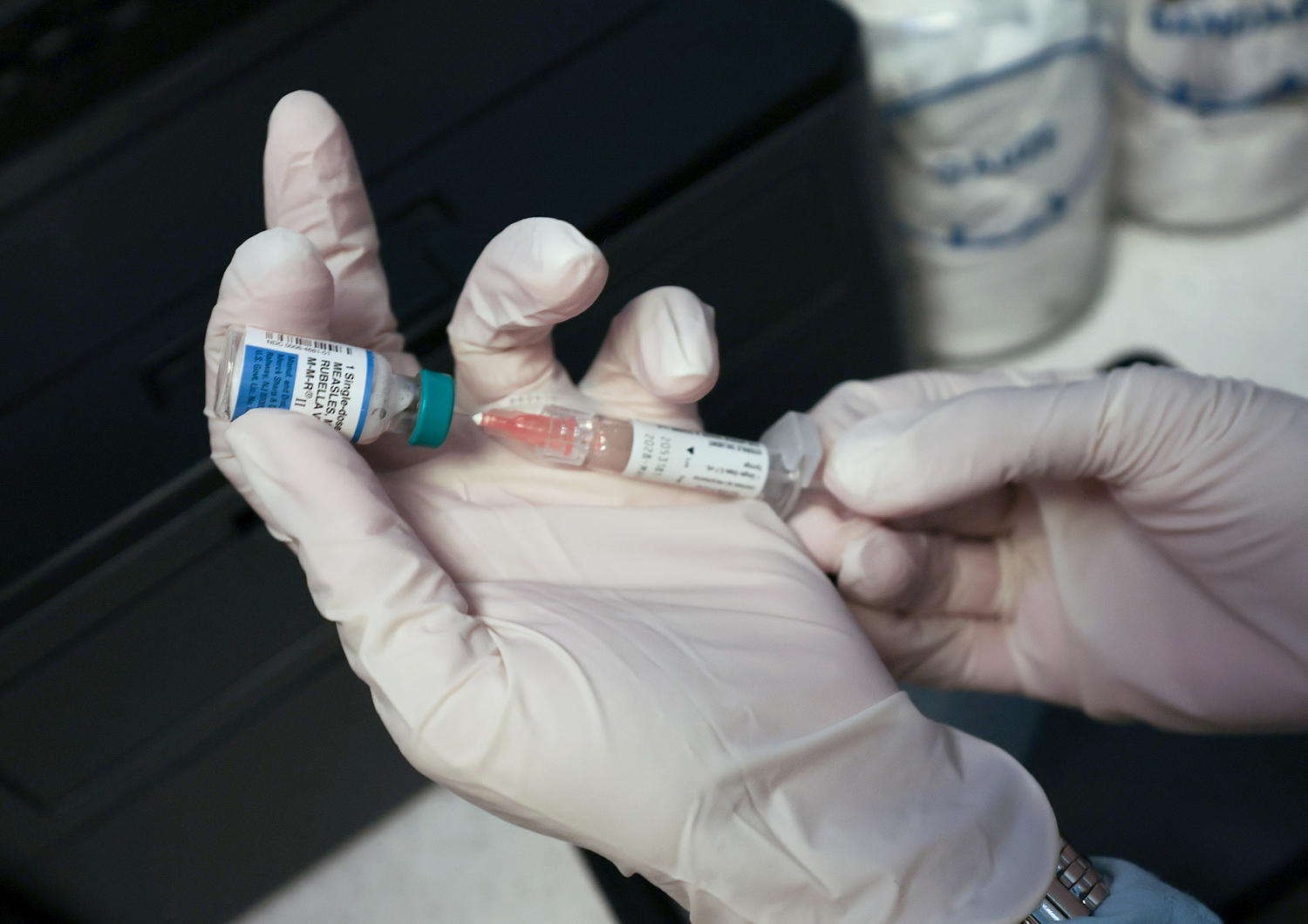
When vaccination rates slip, even slightly, even in pockets of communities tucked away from major metropolitan centers, the collective shield we call herd immunity frays. People often imagine herd immunity as an abstract mathematical threshold—ninety-five percent coverage, ninety-eight percent coverage. But herd immunity is not a spreadsheet. It is a living wall of human bodies protecting the most vulnerable among us: the newborn who is too young to receive her first MMR dose, the child undergoing chemotherapy whose immune system cannot fight off a cold, let alone a pathogen as fierce as measles.
When that wall develops a gap, the virus does not negotiate. It rushes in.
The coroner's report from Pennsylvania was brief, clinical, and devastatingly cold. Cause of death: complications from measles. Pneumonia, acute respiratory distress, the cascading failure of tiny organs overwhelmed by a marauding infection. But the coroner's report cannot describe the exact shade of blue that settles into fingernails when oxygen fails to reach them. It cannot translate the scream of a parent realizing that modern medicine, with all its gleaming machinery and desperate interventions, has run out of miracles.
We have become dangerously comfortable with our own safety. In the decades since the measles vaccine was first introduced in the 1960s, we watched a disease that once hospitalized hundreds of thousands of children vanish from our daily consciousness. It became a ghost story told in old medical textbooks. Because we no longer saw children blinded by it, or deafened by it, or dying from its neurological complications, we began to treat the preventative measure not as a lifesaving shield, but as an optional lifestyle choice.
We forgot what the enemy looked like. The virus did not forget.
Outbreaks like the one cutting through Pennsylvania are not random acts of nature, like a lightning strike or a sudden flash flood. They are human consequences. They are the cumulative result of hesitation, misinformation, and the quiet erosion of trust in the institutions built to protect us. Every missed dose is a dropped stitch in the social fabric. Every avoided conversation about vaccine safety leaves room for fear to fill the vacuum.
Sitting in a sterile hospital waiting room, watching the second hand sweep across a circular clock face while doctors work frantically behind closed doors, fear wears a very specific face. It is the face of absolute helplessness. It is the realization that no amount of wishing, no amount of regret, can undo the exposure that happened days ago at a birthday party or a library corner.
The little girl in Pennsylvania did not choose the environment into which she was born, nor did she choose the epidemiological landscape surrounding her community. She was simply a child living her life—drawing with crayons, listening to stories, clinging to her mother's hand—until a microscopic airborne thief slipped past her defenses and stole her tomorrow.
We owe it to her memory, and to the countless other children whose names never make the evening news, to stop treating public health as a debate club topic. The facts are stubborn things, resistant to ideology and immune to social media algorithms. Measles is real. It is lethal. And the tool we have to stop it is one of the most thoroughly tested, brilliantly engineered triumphs in the history of human innovation.
The fever breaks, sometimes leaving behind a chilling, profound emptiness. The monitors are unplugged. The quiet returns to the room, heavier than before, permanent and absolute. And somewhere out there in the world, the air moves, carrying the invisible weight of a choice yet to be made by someone who still thinks they have all the time in the world.