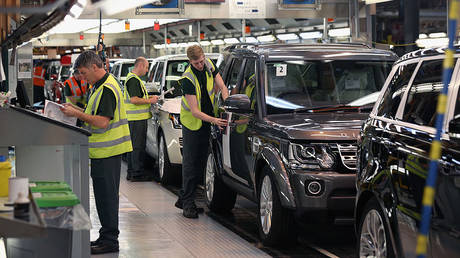
The coffee in the paper cup goes cold long before the shift changes. Outside the gates, the gray West Midlands morning hangs heavy, smelling of damp tarmac and old diesel. Inside, the rhythmic pulse of the presses usually shakes the concrete floor beneath your boots, a steady heartbeat that has kept rhythm with British manufacturing for generations.
Today, that pulse feels different. Strained. Uncertain.
When rumors turn into memos, they do not arrive with a dramatic crash. They come as whispered percentages in the canteen, sudden meetings behind frosted glass, and the slow, heavy realization that the machinery of your livelihood might soon outlive your usefulness to it. Reports now point to a staggering reality: the UK’s largest carmaker, Jaguar Land Rover, faces the prospect of shedding thousands of jobs as it navigates a brutal, sweeping transformation.
Let us be clear about what numbers mean when they are stripped of corporate antiseptic. Thousands of jobs does not mean a line on an Excel spreadsheet. It means mortgage payments hanging in the balance on a Friday afternoon. It means apprentices who started with grease under their fingernails wondering if they will ever see a journeyman's pension. It means the fish and chip shop down the road from the factory gate watching its lunch rush dry up, one laid-off welder at a time.
To understand how we arrived at this quiet crisis, we have to look past the boardroom presentations and examine the violent collision between past glory and electric necessity.
For decades, the formula was simple. You built heavy, combustion-engine luxury. You engineered iron and steel, combustion chambers and exhaust pipes, trusting that the world would always want the roar of a supercharged V8 or the steady hum of a diesel block. Generations of families built these cars. My grandfather worked the line. My uncle still knows the exact torque specifications for a chassis bolt by heart. There is an intimate, visceral pride in watching raw metal enter a cavernous shed and leave it as a machine of polished chrome and aggressive curves.
That world is ending.
The transition to battery-electric vehicles is not merely a change under the hood. It is an existential gutting of the traditional manufacturing process. An internal combustion engine requires roughly ten times more assembly labor than an electric motor. Think about that math for a moment. It is not just about swapping a fuel tank for a lithium-ion pack. It is about a structural reduction in human hands required to build a car.
When you strip away fuel injectors, exhaust systems, multi-speed transmissions, and complex cooling plumbing, you strip away the people who made them, fitted them, and tested them.
Automakers are caught in a violent fiscal crossfire. Billions must be poured into software development, battery gigafactories, and retooling sprawling heritage plants. At the same time, consumer demand for electric vehicles has hit a stubborn plateau—slowed by high price tags, jittery charging infrastructure, and economic anxiety. The money to fund tomorrow has to come from somewhere. Often, that somewhere is the payroll.
Consider the human cost of this pivot. Meet David, a hypothetical assembly technician with twenty-two years on the floor. David doesn't care much about global carbon reduction targets when he is staring at a restructuring notice. He cares about his daughter’s university tuition and whether his knees, worn thin by decades on concrete floors, will retrain for software diagnostics or logistics management. David is not anti-progress. He simply feels discarded by it.
This is the central tragedy of industrial revolutions. They promise a cleaner, shinier horizon while quietly burning the bridges that brought us here.
The irony is sharp. Jaguar Land Rover has spent years crafting a high-end, ultra-profitable rebrand under its "Reimagine" strategy, aiming to pivot entirely toward high-margin luxury electric vehicles. The vehicles rolling off the boards are sleeker, more expensive, and technologically advanced than anything the company has produced before. But as the metal gets smarter, the workforce gets leaner. The corporate strategy demands fewer workers to build fewer, higher-priced units, prioritizing margin over volume.
And so the math catches up to the floor.
When media reports surface about thousands of impending cuts, the public shrugs and scrolls to the next headline. We have been desensitized to corporate downsizing. We treat it like the weather—an unfortunate meteorological event that happens to someone else in some distant zip code.
That detachment is a luxury we cannot afford.
Because when a manufacturing giant sneezes, an entire ecosystem catches pneumonia. The toolmakers in small industrial units, the logistics fleets hauling parts through the night, the independent cafes, the local pubs—they all live downstream from the factory floor. If you choke the source, the valley dries up.
We are standing at a historic crossroads. The shift to electric mobility is non-negotiable if the industry wants to survive global competition, particularly from aggressive new entrants in Asia and the relentless scaling of American competitors. The planet demands lower emissions. The market demands smarter software.
Yet, speed without a social safety net is just destruction wrapped in a sleek marketing campaign.
If the transition is handled poorly, we risk hollowing out the very communities that built the nation's industrial backbone, trading living-wage skilled labor for precarious service jobs or, worse, long-term regional decay. Retraining programs are often touted in press releases as silver bullets, but ask any displaced worker about the reality of transitioning from a sixty-thousand-pound assembly role to a regional retail wage. The gap between corporate ambition and human reality is vast, cold, and largely unbridled.
The shift requires more than just capital injection. It demands honesty. Corporations must admit that the human cost of the electric transition is far higher than they initially advertised. Governments must step beyond passive tax incentives and actively co-create regional economic shields, ensuring that battery plants and green technology hubs are built where the old factories bleed out, keeping families rooted in their homes.
Back on the shop floor, the afternoon shift is winding down. The robots hiss, releasing pneumatic pressure with sharp, rhythmic sighs. The workers pull off their heavy gloves, wiping grease from their brows, watching the digital boards flash production targets that seem increasingly disconnected from their daily reality.
They are still building cars for now. But as the quiet settles over the line, everyone knows the rules of the game are changing. The metal is shifting. The software is taking over. And in the shadows of the massive robotic arms, the human element—the beating heart of British manufacturing—waits to see if there is still a place for them in the future they are currently bolting together.