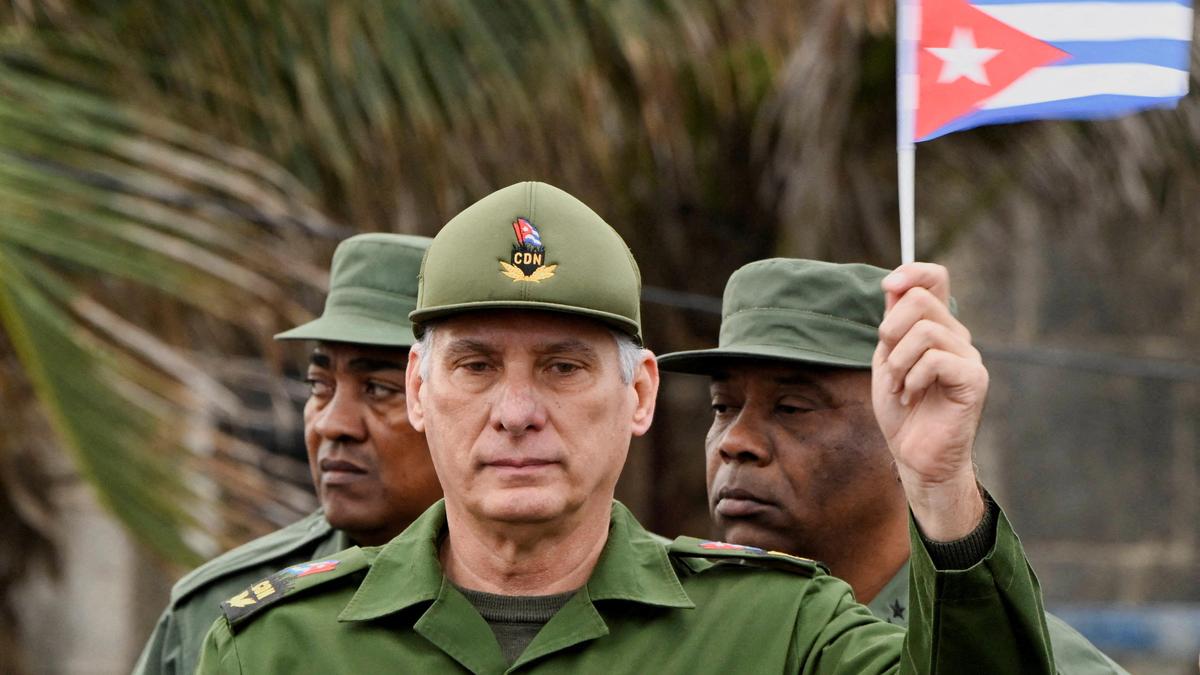
Miguel Díaz-Canel is playing a decades-old card because, frankly, it is the only one left in the deck. When the Cuban leader recently proclaimed that any United States aggression would be met with "impregnable resistance," he wasn't just speaking to Washington. He was speaking to a domestic population increasingly exhausted by blackouts, food shortages, and a crumbling infrastructure that the revolution can no longer patch with rhetoric. This defiance is a calculated survival mechanism. By framing every internal failure as a direct consequence of external "aggression," the Cuban Communist Party (PCC) attempts to transmute economic desperation into nationalist pride. It is a strategy of manufactured siege.
The reality on the ground in Havana tells a different story than the defiant speeches delivered from podiums. The "resistance" Díaz-Canel mentions is less about military readiness and more about the endurance of a population that has spent sixty years waiting for a prosperity that remains perpetually over the horizon. While the U.S. embargo—the bloqueo—is a genuine and heavy weight on the island’s economy, the government uses it as a universal alibi for systemic mismanagement and a refusal to modernize the country's centralized command structure.
The Architecture of Defiance
The Cuban leadership’s recent rhetoric coincides with a period of profound vulnerability. The island is currently facing its worst economic crisis since the "Special Period" of the 1990s following the collapse of the Soviet Union. Inflation is rampant. The informal exchange rate for the dollar has soared, making the state-controlled salaries of doctors and teachers essentially worthless. When a leader speaks of "impregnable resistance" in this environment, they are attempting to militarize the concept of poverty.
This isn't merely about troop movements or coastal defenses. The "aggression" cited by Havana covers a wide spectrum, from actual sanctions to the digital influence of the Cuban diaspora in Miami. By labeling dissent as a product of foreign intervention, the state justifies its crackdown on internal opposition. The July 2021 protests showed a crack in the monolith. The government’s response was not to address the underlying hunger, but to label the protesters as "mercenaries" of the North.
The Energy Crisis and the Scapegoat
Power is the lifeblood of any regime's stability. In Cuba, the grid is failing. Frequent, rolling blackouts have become the norm, sparking small-scale "cacerolazo" protests where citizens bang pots in the dark. The government’s narrative is consistent. They claim they cannot buy spare parts for their aging, Soviet-era thermoelectric plants because of banking restrictions imposed by the U.S.
There is truth there. The U.S. designation of Cuba as a State Sponsor of Terrorism (SSOT) creates massive hurdles for international finance. However, critics and some brave local economists point out that the state has diverted billions into the construction of luxury hotels for a tourism industry that hasn't fully recovered from the pandemic, rather than investing in the energy grid. The "resistance" is therefore a selective choice. The government chooses where to resist and where to spend, and the citizens are the ones left in the dark.
The Washington Deadlock
Across the Florida Straits, the policy toward Cuba has remained remarkably stagnant. Despite the brief "thaw" during the Obama administration, the Trump era saw a return to "maximum pressure" tactics that have largely been maintained by subsequent leadership. The logic in Washington is that if the screws are turned tight enough, the regime will collapse or be forced into democratic concessions.
This hasn't happened. Instead, the pressure has fueled the very "siege mentality" that allows the PCC to maintain its grip. Hardliners in both Havana and Washington feed off each other. Every new sanction is a fresh paragraph in a speech for Díaz-Canel about the "cruel empire." Every defiant speech from Havana provides political ammunition for Florida legislators to demand even tighter restrictions. It is a perfect, self-sustaining loop of hostility that ignores the 11 million people caught in the middle.
Migration as a Safety Valve
Historically, whenever internal pressure reaches a boiling point, the Cuban government opens the gates. We saw it in the Camarioca boatlift, the Mariel boatlift, and the 1994 rafter crisis. Today, the migration is more of a steady, massive bleed. Over the last two years, record numbers of Cubans have reached the U.S. border.
This serves two purposes for the Cuban state. First, it removes the most frustrated, young, and politically active demographic from the island, effectively "bleeding off" the potential for revolution. Second, these migrants eventually send back remittances. The very people who fled the "impregnable resistance" become a vital source of hard currency for the state they left behind. It is a cynical but effective cycle of human export.
The Myth of the Impregnable
The term "impregnable" suggests a unified front, but the Cuban social fabric is fraying. The older generation, those who remember the early days of the revolution and the charismatic influence of Fidel Castro, may still buy into the rhetoric of nationalist sacrifice. The youth, however, are connected to the world via smartphones and VPNs. They see the prosperity of their cousins in Madrid or New Jersey. They see the hypocrisy of a leadership that preaches "resistance" while living in comfort.
The government is aware of this disconnect. This is why the rhetoric has become more shrill. When you can no longer provide bread, you provide more "Patria o Muerte." But you cannot eat a slogan. The resistance Díaz-Canel speaks of is not a wall; it is a tired population that is simply running out of ways to cope with a broken system.
Russia and China in the Caribbean
To bolster this image of resistance, Havana has looked to old and new allies. Recent visits from Russian warships and high-level Chinese delegations are designed to show that Cuba is not alone. For Moscow, Cuba is a useful piece on the geopolitical chessboard—a way to poke at Washington in its own "backyard." For Beijing, it is an entry point for long-term influence in the Caribbean.
However, neither Moscow nor Beijing is providing the level of subsidies that once flowed from the Soviet Union. Russia is bogged down in its own conflicts, and China is a pragmatic lender that expects a return on investment. The "resistance" is being funded on credit that Cuba cannot afford to pay back. This creates a new kind of dependence, one that contradicts the very notion of sovereignty the regime claims to protect.
The Private Sector Paradox
In a desperate bid to keep the economy moving, the Cuban government has allowed the emergence of small and medium-sized private enterprises (SMEs). This is a massive ideological shift for a state that spent decades criminalizing private property. However, even this "opening" is tightly controlled.
The state is trying to have it both ways. They want the efficiency of the market to provide basic goods, but they refuse to give up the political control that prevents a market from truly functioning. Many of these new businesses are owned by people with close ties to the regime or the military-run conglomerate GAESA. This isn't a transition to capitalism; it's an attempt to create a loyal, state-dependent middle class that has too much to lose to join any real "resistance" against the leadership.
The Failure of the Status Quo
The current trajectory is unsustainable. The "impregnable resistance" is a facade for a slow-motion collapse. Washington’s policy of isolation has failed to trigger a transition to democracy, instead providing the regime with a permanent excuse for its own failures. Havana’s policy of defiance has failed to provide a dignified life for its citizens, instead turning the island into a pressure cooker of migration and misery.
The "brutal truth" is that both sides are comfortable in their roles. The Cuban leadership knows how to rule a besieged fortress. The American political establishment knows how to manage a localized Cold War for domestic electoral gains. Change would require a level of political risk that neither side seems willing to take.
As the sun sets over the Malecón, the lights will inevitably flicker and die out in many neighborhoods. The people will sit in the heat, fanning themselves, waiting for the power to return so they can watch the news and hear their leader tell them how strong they are. They are told they are part of a glorious, impregnable resistance. In reality, they are just survivors in a game where the rules were written before most of them were born. The resistance isn't against an invading army; it's against the crushing weight of a stagnant history that refuses to let go of the present.
The real threat to the Cuban government isn't a U.S. invasion. It is the day the Cuban people decide that the "resistance" is no longer worth the cost of the life they are missing. When that day comes, no amount of rhetoric about "impregnable" walls will be enough to hold back the tide of a population that has simply had enough. The wall isn't made of concrete; it's made of a narrative that is losing its power with every passing blackout. Stop looking for a military conflict and start looking at the empty shelves in the neighborhood bodega. That is where the real battle for Cuba’s future is being lost.