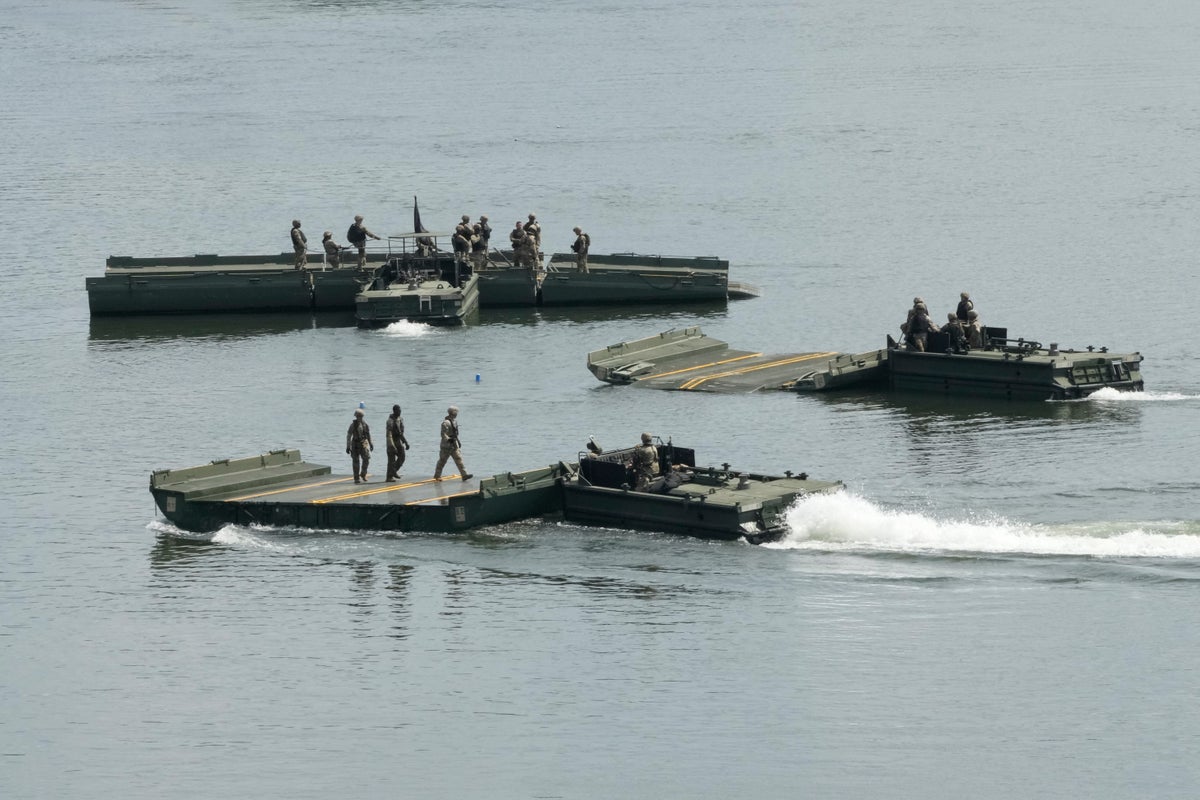
The mainstream media loves a simple narrative. They feed you a clean, lazy script about how scaling back joint military exercises means buckling under pressure, surrendering leverage, or handing a strategic win to an adversary. It is the kind of neat, digestible fiction that plays well on a morning news broadcast, and it is entirely wrong.
When reports surface about allied forces cutting short combined training operations following high-level diplomatic nudges, the consensus screams about weakness. I have watched analysts hyperventilate over canceled field maneuvers for decades, treating every suspended tank column or grounded jet squadron as a sign of terminal decline. That perspective is fundamentally flawed. It misunderstands how modern deterrence actually functions, ignores the economic reality of perpetual mobilization, and treats diplomatic momentum as a nuisance rather than the primary objective.
The Myth of Maximum Force
The conventional wisdom dictates that more noise equals more security. If you fly more sorties, burn more diesel, and drop more dummy ordnance across a disputed peninsula, peace magically follows through sheer intimidation.
This is dead wrong. Military readiness is not a linear equation where adding drills endlessly scales up your deterrent value. Diminishing returns hit hard and fast. After a certain threshold, massive, high-profile field exercises stop frightening the other side and start triggering dangerous escalation cycles. They force adversaries into permanent, costly counter-mobilizations, trapping both sides in an expensive security dilemma that increases the baseline risk of an accidental skirmish.
Real strategy requires dynamic scaling. Halting or shrinking a drill is not an apology or a retreat; it is a tactical signal. It is an intentional calibration of pressure designed to create space for actual dialogue. If your entire doctrine relies solely on swinging a sledgehammer twenty-four hours a day, you never leave room for diplomacy to work.
Operational Agility Beats Theater
Let us look past the geopolitical theater and examine the logistics. Massive multi-week theater exercises are often bloated, bureaucratic relics of a bygone era. They exist as much for political signaling to domestic audiences as they do for actual warfighting preparation.
Commanders on the ground know the dirty secret of these mega-drills. They drain resources, exhaust personnel, and lock critical assets into predictable patterns that any competent adversary can map in their sleep.
Shifting away from bloated mass mobilization toward targeted, agile, and often covert readiness training is a massive upgrade. Modern combat capability relies on command-and-control resilience, cyber defense, and rapid deployment concepts that do not require tens of thousands of troops marching through muddy fields to prove a point. When leadership dials back a high-profile field drill, they are frequently trading rigid political theater for genuine, adaptable tactical readiness.
The Cost of Rigid Posturing
Clinging to maximalist military posturing comes with a steep price tag, and I am not just talking about the financial ledger. Every time politicians and generals insist that any reduction in drill scope equals capitulation, they box themselves into a corner. They create a zero-sum trap where stepping back to enable peace talks is treated as an existential failure.
This rigidity destroys strategic flexibility. If the primary goal of an alliance is stability, then the tools used to achieve that stability must change as conditions evolve. Sticking rigidly to a schedule of aggressive maneuvers while diplomatic windows are open is diplomatic malpractice.
Moving Past the Noise
The next time you read headlines lamenting scaled-back maneuvers or interrupted training schedules, ignore the panic merchants. Look at what those adjustments actually achieve. They clear the diplomatic runway. They lower the temperature in a volatile region. They prove that an alliance is strong enough to adjust its posture based on strategic opportunity rather than blind adherence to routine.
True strength does not need to scream from the rooftops or detonate ordnance every single day. It has the confidence to pause, reassess, and let diplomacy do the heavy lifting.