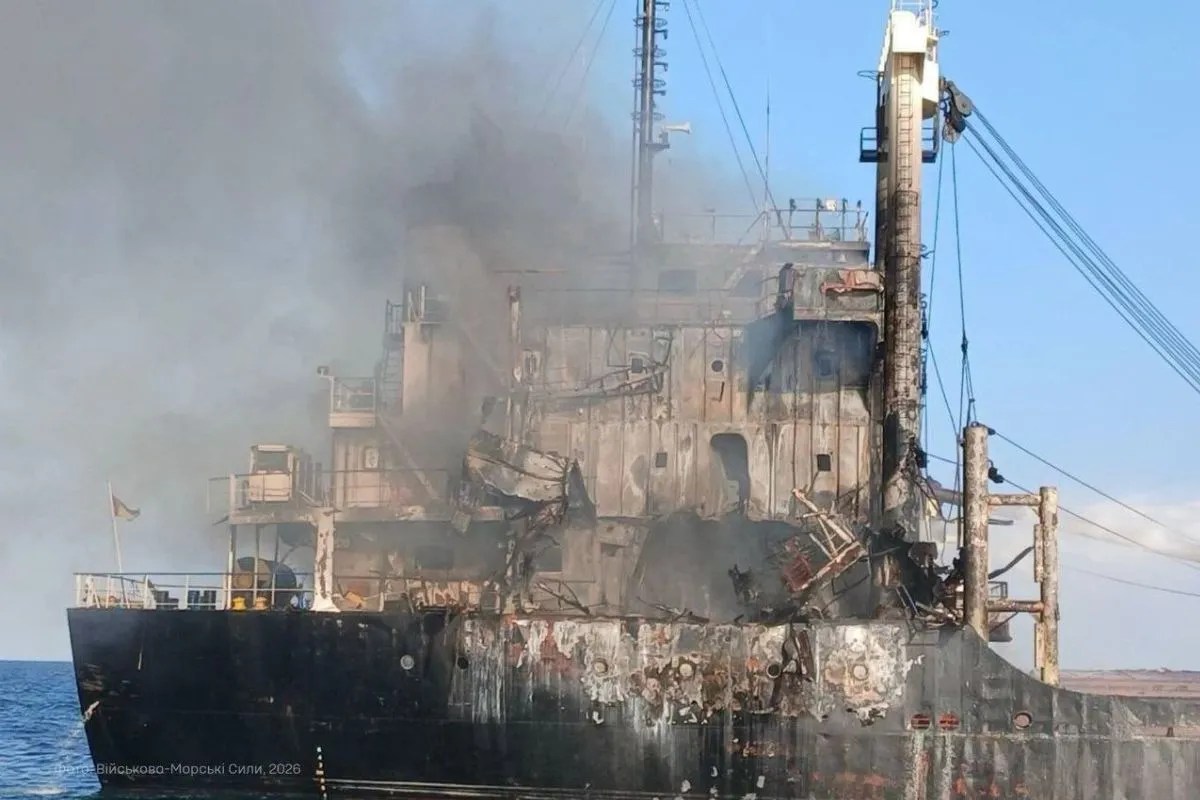
Media outlets scramble to frame every struck freighter in the Black Sea as a sudden, unprecedented atrocity. They run the same tragic headlines about crew casualties and burning hulls, treating each incident like an unpredictable meteor strike on innocent global commerce.
That narrative is complete garbage. Read more on a similar subject: this related article.
When a cargo ship gets struck in a heavily monitored, active combat zone, it is not an anomaly. It is the calculated, predictable outcome of a high-stakes game played by shipowners, war-risk underwriters, and state actors who know exactly what risks they are taking. Treating these strikes as surprising disasters ignores the harsh economic and military mechanics that dictate modern maritime warfare.
The Myth of the Neutral Commercial Vessel
The media loves a simple story. A merchant ship flies a flag of convenience, loads grain or steel, and sets sail. When a missile or drone hits it, commentators weep over the violation of international maritime norms. More journalism by NPR delves into comparable perspectives on the subject.
Here is what they ignore: in a total economic blockade strategy, the line between commercial supply chains and military logistics does not exist.
If you sail a vessel into a naval war zone to haul high-value commodities out of a combatant's ports, you are participating in war economics. War economics carries war hazards. Russian commanders do not view those hulls as neutral trading vessels; they view them as economic arterial lines keeping an enemy state financially afloat. Ukrainian forces view Russian-bound traffic through the exact same lens.
Every captain, charterer, and cargo owner operating in the Black Sea knows this. They are not victims of bad luck. They are participants in a high-yield, high-risk trade where human lives and steel hulls are factored directly into the operational balance sheet.
War Risk Insurance Predicts Every Missile
Look at the underwriting market if you want the unvarnished truth without the diplomatic posturing. Insurance syndicates in London do not operate on outrage or moral philosophy. They operate on actuarial math.
When war-risk insurance premiums for Black Sea transit spike, the market is explicitly telling ship operators that a percentage of vessels will be hit. The shipowners who continue to send crews into those waters do so because the freight rates are astronomical. The payout for successfully running a cargo through a combat area far exceeds the standard Mediterranean charter rates.
- High risk yields inflated freight rates.
- Inflated freight rates attract willing tonnage.
- Willing tonnage accepts a statistical certainty of kinetic strikes.
Calling a missile strike on a freighter an unexpected disaster is like betting on red in roulette and acting shocked when the ball lands on black. The payout exists precisely because the threat is real, active, and relentless.
Why Western Sanctions Fail to Protect Shipping Lanes
Navies used to guarantee free trade across global waters. Today, Western powers issue stern press releases and impose paper sanctions while military commanders on the ground adjust their targeting algorithms.
The consensus claim that international law deters strikes on civilian shipping has proven utterly worthless in high-intensity conflict. Anti-ship cruise missiles and low-cost uncrewed surface vessels do not check registry documents or international maritime treaties before detonation.
Imagine a scenario where a foreign-flagged bulker enters a declared danger area without military escort. Expecting naval chivalry from a warring state attempting to starve its enemy of revenue is weaponized naivety. Warring nations target revenue streams. If grain exports or raw metal shipments fund military budgets, those ships become valid targets in the calculus of the attacker, regardless of what UN resolutions say on paper.
Stop Treating War Zones Like Normal Trade Routes
The solution is not more moralizing from talking heads or empty promises of maritime corridors. The market needs brutal honesty:
- Acknowledge the combat designation. If a sea lane sits inside a missile envelope, it is a battlefield, not a trade corridor.
- Stop masking financial risk as diplomatic outrage. Owners taking high-paying charter contracts in war zones are making a financial calculation. Own the risk.
- Mandate military escorts or stay out. Either deploy armed naval force to physically defend merchant hulls, or accept that commercial shipping in active war zones will burn.
Every time a cargo vessel burns in the Black Sea, the outrage cycle repeats while the fundamental mechanics remain untouched. The strikes will continue as long as the economic reward of running the blockade outweighs the cost of lost hulls. Stop acting surprised when the math plays out exactly as calculated.