The air in the deep forest does not merely sit; it presses against your skin, heavy with the weight of moisture, ancient growth, and unseen eyes. If you have ever walked beneath a canopy so dense it swallows the sun before it reaches the soil, you know the silence. It is not an empty silence. It is a breathing thing. Every rotting log, every fern uncurling toward a stray shaft of light, every drop of moisture sliding down a waxy leaf speaks of a complex, fragile machine.
And out there, miles from the nearest paved road, someone is standing guard.
For generations, the global conversation about environmental preservation has suffered from a fundamental blindness. We look at satellite imagery. We count hectares lost to logging trucks and cattle ranches. We debate carbon offsets in air-conditioned boardrooms thousands of miles away from the mud. But we routinely forget the human element. We overlook the individuals who wake up before dawn to walk the perimeter of their ancestral lands, listening for the whine of a chainsaw that signals the arrival of loggers, miners, or poachers.
These are the Indigenous defenders. They are not paid security contractors wearing tactical gear. They are mothers, fathers, elders, and youth. They are people whose skin is weathered by the sun and whose languages are bound to the rivers they protect. They are also targets.
To understand the stakes, you have to look past the dry statistics of deforestation. You have to look at what happens when a shield breaks.
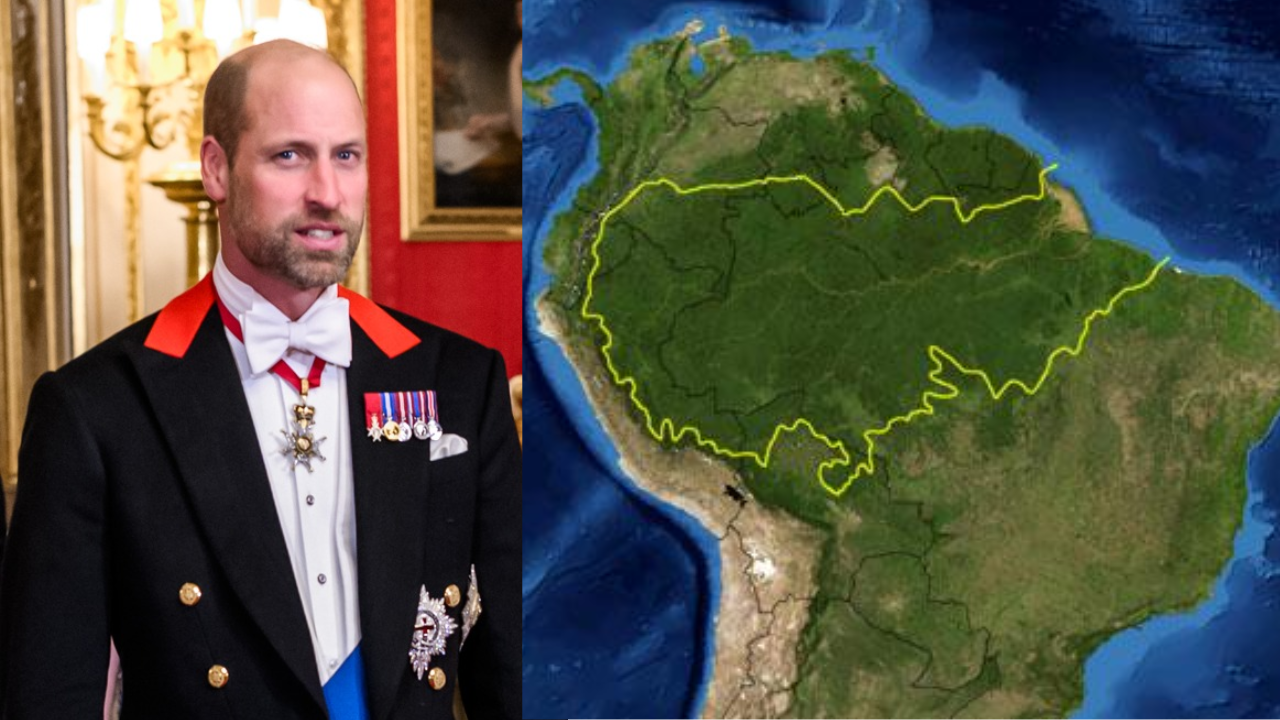
When Prince William recently stepped forward to back a major partnership aimed at protecting these frontline guardians on a global scale, it marked a significant shift in tone. For too long, high-profile environmentalism has treated Indigenous communities as picturesque accessories to a larger conservation agenda—people to be photographed, thanked, and then left to fend for themselves against well-funded, often violent commercial syndicates.
The new initiative, working alongside major philanthropic networks and the Earthshot Prize ecosystem, targets a grim reality: the people defending the world's most critical carbon sinks are under siege. Across the Amazon basin, Central Africa, and Southeast Asia, land defenders face intimidation, criminalization, and physical violence at an alarming rate.
Consider the mathematics of survival. A lone community leader in the Brazilian Amazon or the heart of the Congo basin does not just fight for trees. They fight for air. They fight for water. Yet, their primary defense mechanism has historically been little more than their own courage and an old radio. Meanwhile, illegal extraction operations roll in with heavy machinery, backed by immense capital and, in many cases, corrupt local protection.
It is an absurd mismatch. David versus an industrial-sized Goliath, except Goliath has a satellite phone and a fleet of bulldozers.
When powerful figures lend institutional weight and financial backing to global protection networks, the dynamic begins to fracture. Money matters, certainly. Legal defense funds matter. Secure communication equipment, satellite tracking units, and emergency relocation funds for threatened families matter profoundly. But visibility matters just as much.
When international attention shines directly on the front lines, the impunity of bad actors begins to shrink. It becomes much harder for local strongmen or illegal syndicates to silence a defender in the dark when the eyes of the world—and the backing of major global platforms—are tuned to the frequency of that struggle.
Yet, money and royal backing alone cannot clear the path. The real work happens in the mud.
Imagine living in a wooden home where every night brings the distinct, low-frequency thrum of diesel engines approaching your village boundary. You know what they want. They want the mahogany. They want the gold beneath the roots. They want the land cleared so cattle can graze for three seasons before the soil exhausts itself and turns to dust. You know that if you go out to meet them, you may not come back. But you also know that if you stay inside, your children will inherit a wasteland.
That is the choice faced by thousands of people every single day.
When we talk about global climate targets, we are ultimately talking about these choices. We talk about keeping global temperature rises below catastrophic thresholds as if it were a purely scientific exercise involving spreadsheet models and atmospheric chemistry. It is not. It is a human story written in blood, sweat, and quiet defiance.
The partnership backed by the British royal family aims to bridge the chasm between grand global ambitions and the gritty, dangerous reality of grassroots protection. By funneling resources directly into the hands of Indigenous networks, the initiative bypasses layers of bureaucratic friction that usually choke aid before it reaches the field.
We have lived through decades of well-meaning international programs that failed because they were designed in London, New York, or Geneva by people who had never stepped foot in a tropical storm or smelled the ozone before a jungle downpour. They sent consultants instead of resources. They drafted white papers instead of securing legal titles for native lands.
Granting legal land rights to Indigenous populations has consistently proven to be the single most effective conservation strategy on Earth. Data from environmental research institutes repeatedly shows that forests managed by Indigenous communities suffer significantly lower rates of deforestation than even government-designated national parks. Why? Because a park ranger goes home at the end of the shift. An Indigenous defender is home. Their past is buried in the soil; their future is drinking from the river.
So why has it taken so long for global philanthropy to pivot toward direct, unvarnished support for these guardians?
Partly because the systems of global finance are risk-averse. They prefer neat projects with measurable metrics, clean corporate logos, and predictable timelines. Grassroots Indigenous resistance is messy. It involves complex internal politics, historical grievances, and hostile governments that view native sovereignty as an obstacle to national economic growth. Supporting these defenders requires a willingness to ruffle feathers, challenge corrupt state actors, and accept that true empowerment means giving local people the autonomy to decide how their lands are protected.
When Prince William chose to throw his weight behind this coalition, he stepped into that political minefield. It is a calculated risk. It shifts the conversation away from passive tree-planting campaigns—where saplings are photographed for corporate annual reports only to wither in unmanaged soil—and toward active defense.
You cannot plant your way out of a climate crisis if you do not stop the chainsaw currently chewing through a centuries-old ecosystem.
The scale of the challenge remains staggering. The forces driving environmental destruction are vast, deeply entrenched, and fueled by global consumer demand for beef, timber, minerals, and fossil fuels. Every time we buy a consumer product without questioning its supply chain, we are casting a silent vote in favor of the bulldozers.
That realization can induce a paralyzing vertigo. How can an individual sitting in a city apartment impact the fate of a defender standing in the path of a logging truck in South America?
The answer lies in breaking the isolation.
For years, Indigenous defenders fought their battles in complete obscurity. If a leader was assassinated or a village was displaced, the news rarely crossed the borders of the province, let alone the ocean. The globalization of communications has changed that, but connectivity without resources is just a delayed tragedy.
By building robust global alliances, funding emergency response mechanisms, and elevating the voices of native leaders onto international stages, the new partnership constructs a perimeter of safety around those who have none.
Listen closely to the sound of the forest. If you strip away the romanticism, the poetry, and the political rhetoric, what remains is a simple truth. The people holding the line against ecological collapse are human beings with names, families, and fears. They are tired. They are outgunned.
And they are winning, inch by stubborn inch, because they refuse to surrender their home.
As the sun dips below the horizon, turning the dense canopy from emerald to ink, the night sounds of the jungle rise to fill the vacuum. Somewhere out there, a lantern flickers in a wooden window. A guard takes a deep breath of the heavy, living air, checks their radio, and steps back out into the dark.