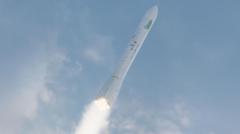
The idea of rockets screaming into the sky from a remote Scottish island used to sound like a fever dream. For years, the SaxaVord Spaceport project on Unst has felt more like a series of "coming soon" posters than an actual gateway to the stars. But the wait’s finally over. Germany’s HyImpulse just inked a deal that makes them the second company locked in for a 2026 launch, proving that the Shetland Islands aren't just a scenic backdrop—they're becoming the center of gravity for European space flight.
SaxaVord isn't just another construction site. It’s the UK’s first fully licensed vertical launch facility. While mainland projects like Sutherland have stalled or seen companies jump ship, Shetland is actually moving the needle. It's a massive shift in how we handle satellite logistics, and it's happening in a place better known for knitwear and ponies than liquid oxygen and telemetry.
The German Invasion on Unst
If you’ve been following the "new space" sector, you know it’s crowded with promises. However, HyImpulse is bringing something different to the table. Their SR75 rocket doesn't use the standard, volatile fuels that make most launches a logistical nightmare. They’re using a hybrid propulsion system—basically paraffin (candle wax) and liquid oxygen.
It’s a smart play. Paraffin is stable. It doesn't explode if you look at it wrong, and it’s significantly cheaper than traditional refined kerosene. HyImpulse claims their tech cuts costs by about 40%. They’ve already proven the hardware works after a successful test flight in Australia back in 2024. Now, they're bringing that momentum to the UK for a suborbital mission scheduled for the second half of 2026.
But they aren't the only ones on the island. Rocket Factory Augsburg (RFA) is currently the frontrunner for the first-ever orbital launch from UK soil. They’ve already started shipping rocket stages to the site. The first and second stages of their RFA ONE vehicle arrived in February 2026, and if the final engine tests in Sweden go according to plan, we’re looking at a maiden flight this summer.
Why Shetland actually works for rockets
You might wonder why anyone would lug heavy machinery to the northernmost tip of the British Isles. It isn't just about getting away from people. It's about the geometry of the Earth.
Shetland’s high latitude is perfect for polar and sun-synchronous orbits. If you want a satellite to pass over the same spot on Earth at the same time every day—vital for weather tracking and intelligence—you need to launch toward the poles. Launching from Unst means the rocket flies straight out over the North Sea without passing over populated areas. It’s a clear shot.
- No flight path conflicts: Unlike Florida or California, there aren't thousands of commercial flights to dodge.
- Infrastructure: SaxaVord has three dedicated launch pads. Pad Fredo is already being prepped for RFA.
- Logistics: The team at SaxaVord has spent seven years turning an old RAF base into a high-tech hub.
More than just a hobby for billionaires
People often dismiss these spaceports as vanity projects, but that misses the point entirely. We're currently in a satellite bottleneck. More than 9,500 satellites are already in orbit, and that number is growing fast. We use them for everything from your GPS to your morning weather app. Right now, Europe is embarrassingly dependent on American or Indian rockets to get its tech into space.
By establishing a "sovereign" launch capability in the UK, we're cutting that cord. It’s about national security and economic independence. When companies like HyImpulse or RFA choose Shetland, they aren't just buying a concrete pad; they're building a supply chain. There’s already a "Countdown Gin" made by a local distillery to celebrate the spaceport. It’s a small thing, but it shows how the local economy is leaning into this.
The players on the leaderboard
It’s worth keeping track of who is actually signed up to fly from SaxaVord. The list is becoming a "who's who" of the European rocket scene:
- Rocket Factory Augsburg (Germany): Scheduled for a summer 2026 orbital flight.
- HyImpulse (Germany): Planning a suborbital mission for late 2026.
- Lockheed Martin / ABL Space Systems (USA): Part of the UK Pathfinder program.
- Skyrora (UK): Licensed for suborbital flights and aiming for orbit soon after.
The reality check
Don't expect every launch to go perfectly. Space is hard, and the weather in Shetland is harder. High winds and North Sea mist have already caused delays in construction and testing. In August 2024, RFA had a setback during a hot-fire test. That’s the nature of the beast. The difference now is that the hardware is actually on the ground in Unst. The engines are being tested. The licenses are signed.
If you’re interested in seeing history, keep an eye on the local ticketing. SaxaVord is limiting spectators to about 600 people per launch to protect the environment and keep things manageable. They're giving the first crack at those tickets to the local Shetland residents, which is a class act.
If you want to track the progress of the summer 2026 launch, your best bet is to follow the official SaxaVord and RFA social feeds for "Notice to Mariners" and "Notice to Airmen" (NOTAMs). Those are the real indicators that a countdown is actually happening.
Next Step: You should check the Civil Aviation Authority (CAA) public register for upcoming launch window applications to see exactly when the first RFA ONE flight is cleared for takeoff.