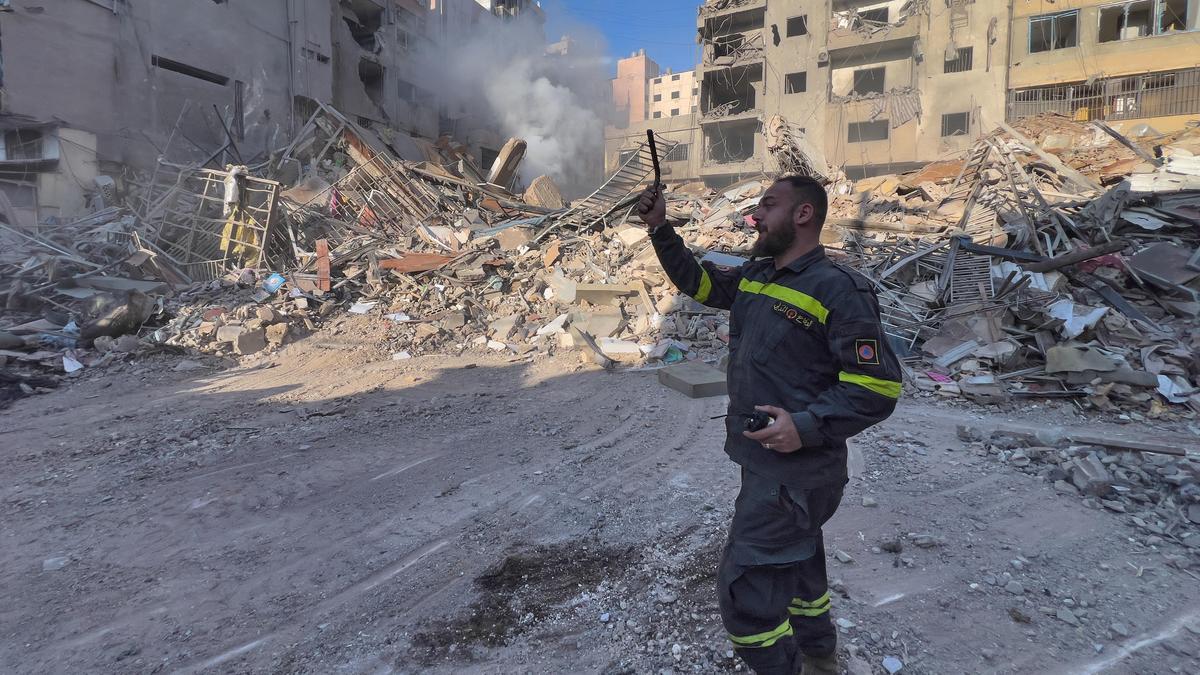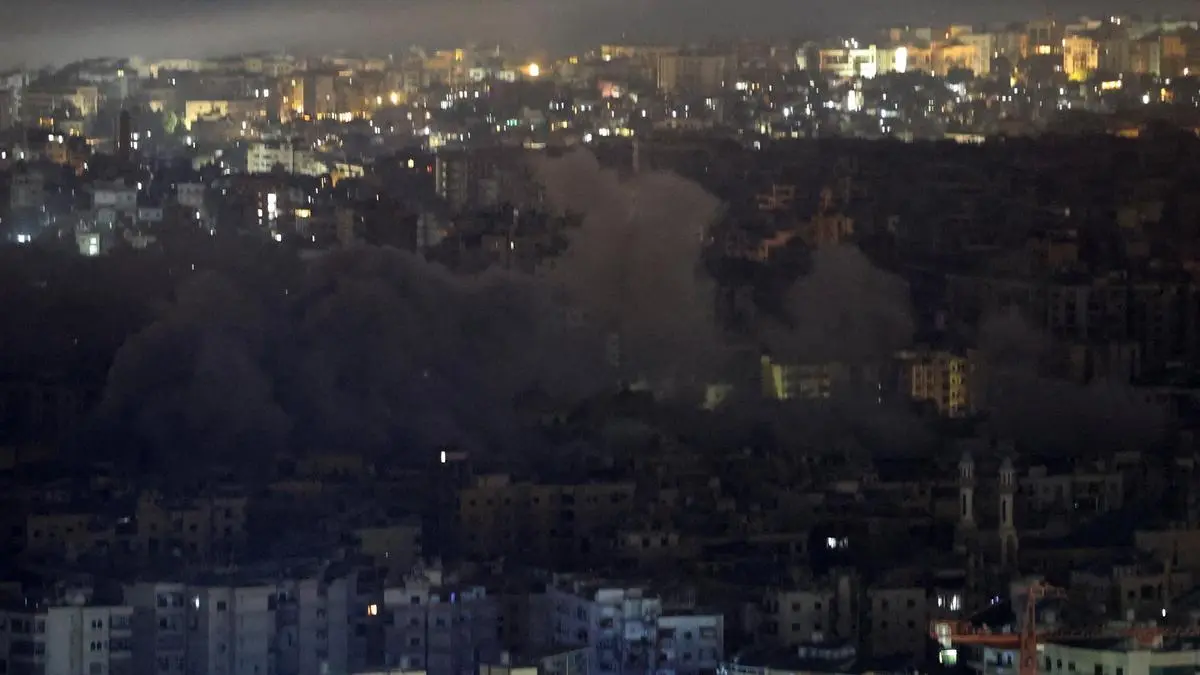
The air in the Gulf doesn't just sit; it presses. It is a humid, heavy weight that smells of salt and ancient trade routes. For a fisherman in the Strait of Hormuz, the world is measured in the tension of a nylon line and the distant, grey silhouettes of tankers that carry the world’s pulse in their bellies. But lately, those silhouettes have felt less like commerce and more like targets.
When news broke that Donald Trump’s administration was actively negotiating an end to the grinding regional conflicts, a collective breath was held from Riyadh to Abu Dhabi. Peace is a beautiful word. It is also a terrifying one when you realize that every ceasefire creates a vacuum, and every vacuum invites a predator. While the headlines focus on the high-altitude diplomacy of Mar-a-Lago or the diplomatic corridors of Washington, the reality on the ground is carved by a different set of coordinates. Iran is watching. And Iran is moving.
The Architect of the Long Game
Tehran does not think in four-year election cycles. They think in centuries. To understand the current escalation against Israel and the Gulf Arab states, you have to stop looking at the map as a series of borders and start seeing it as a nervous system. Every drone strike in the Galilee, every cyber-breach in a Saudi desalination plant, and every whispered threat in a Bahraini suq is a signal sent from a central brain.
Consider a hypothetical merchant in Dubai named Omar. For years, Omar has operated under the assumption that the "Umbrella"—that invisible shield of American military might—was absolute. He watched the Abraham Accords with a mixture of hope and pragmatism. If Israel and the Emirates could trade, perhaps the old ghosts of the 20th century could finally be laid to rest. But as the U.S. signals a desire to pack up and head home, Omar looks north.
He sees the ballistic missiles. He sees the "Axis of Resistance" tightening its grip. He realizes that when the big brother leaves the playground, the neighborhood bully doesn't suddenly become a saint. He becomes the new landlord.
The Price of an Exit
The American desire to end the "forever wars" is understandable. It is a sentiment born of exhaustion and a trillion dollars spent on sand and sorrow. But geography is a cruel mistress. You can withdraw your troops, but you cannot withdraw the consequences of your absence.
Iran’s strategy is a masterclass in asymmetric pressure. They aren't looking for a conventional war; they know they would lose that. Instead, they utilize a thousand small cuts. By targeting Israel with its proxies—Hezbollah to the north, Hamas to the south, and the Houthis to the west—they create a ring of fire. This isn't just about destroying the "Zionist entity." It is a demonstration of capability intended for the eyes of the Arab world.
The message is blunt: The Americans are leaving. The Israelis are surrounded. Who do you want to be standing next to when the lights go out?
This psychological warfare is working. Even as the U.S. touts peace talks, the Gulf states are hedging. They are forced into a delicate dance of "de-escalation" with Tehran, not because they trust the Ayatollahs, but because they fear the abandonment of the West. It is the diplomacy of the hostage.
A Sky Full of Cheap Plastic
The technological gap that once defined Middle Eastern warfare has evaporated. We used to think of war as billion-dollar jets and sophisticated satellite arrays. Today, the most significant threat to a billion-dollar oil refinery is a drone made of fiberglass and lawnmower engines, costing less than a used Toyota.
These "suicide drones" are the great equalizers. They allow Iran to strike at the heart of the global economy without ever putting a pilot at risk. When these devices swarm, they don't just overwhelm radar systems; they overwhelm the human psyche. Imagine being a technician at Aramco, knowing that at any second, a silent, buzzing shape could drop from the clouds and turn your workplace into an inferno.
There is no "peace" in that environment. There is only a temporary absence of noise.
The U.S. talks about ending the war, but for the people living under the flight paths of these drones, the war has simply changed its shape. It has become invisible, digital, and constant. The talks in Washington are about the "Big War"—the one with tanks and treaties. But the "Small War"—the one of assassinations, maritime sabotage, and regional bullying—is only just beginning.
The Ghost of 1979
To the leadership in Tehran, the current moment feels like a reversal of history. They remember the humiliation of the sanctions, the "Maximum Pressure" campaign, and the isolation. Now, they see a world distracted by Ukraine, a West weary of intervention, and a Middle East that is fundamentally unsure of its future.
They are pushing because they can.
Israel, meanwhile, finds itself in a paradoxical position. It is more technologically advanced than ever, yet more vulnerable. The Iron Dome is a miracle of engineering, but even miracles have a capacity limit. By flooding the zone with low-cost projectiles, Iran is betting that they can bankrupt the Israeli defense budget and exhaust the Israeli spirit.
Every time a siren wails in Tel Aviv, the Iranian leadership smiles. They don't need the rocket to hit a building. They just need the mother in the bomb shelter to wonder if her children will ever grow up in a country that isn't a target.
The Mirage of Finality
The great fallacy of modern diplomacy is the belief in the "final settlement." We crave the photograph of leaders shaking hands on a sun-drenched lawn. We want to believe that a few signatures can erase decades of ideological fervor and territorial hunger.
But the Middle East isn't a puzzle to be solved; it’s a rhythm to be managed.
If the U.S. exits the theater without a credible, long-term security architecture for its allies, it isn't "ending" a war. It is merely handing the conductor’s baton to Iran. The Gulf states know this. They see the frantic activity in the diplomatic channels as a sign of weakness, not strength. In this part of the world, if you aren't at the table, you are on the menu.
The stakes are not just about the price of a gallon of gas in Ohio or the sovereignty of a small strip of land on the Mediterranean. The stakes are the very definition of the 21st-century order. If a rogue state can use proxies to paralyze global trade and intimidate its neighbors into submission while the world’s superpower watches from the sidelines, then the rules of the game have changed forever.
The Silent Sea
Back on the water, the fisherman watches the horizon. He doesn't read the white papers from think tanks. He doesn't follow the Twitter feeds of diplomats. But he knows the sea. He knows when the wind shifts.
He sees the Iranian patrol boats getting closer to the shipping lanes. He sees the American carriers moving further away. He feels the shift in the pressure.
The talk of peace is loud in the West. It is a roar of hope and political maneuvering. But in the Gulf, peace is starting to sound a lot like a door being locked from the outside. The war isn't ending. It is just coming home to the people who have nowhere else to go.
The tankers keep moving, for now. Their steel hulls reflect a sun that has seen empires rise and fall in these waters for five thousand years. The water remains deep, dark, and indifferent to the treaties of men. Below the surface, the currents are shifting, pulling the region toward a confrontation that no amount of optimistic rhetoric can prevent.
The shadow is lengthening. The only question left is who will be left standing in the light.