The ink on a ballot smells like cold paper and possibility. At least, that is what it smelled like the first time I stood inside a gymnasium in rural Maine, watching my neighbor hand his folded paper to an election worker he had known since third grade. Trust was the currency of the room. It was quiet. It was ordinary. It was safe.
Nobody expects a shadow to fall across that table.
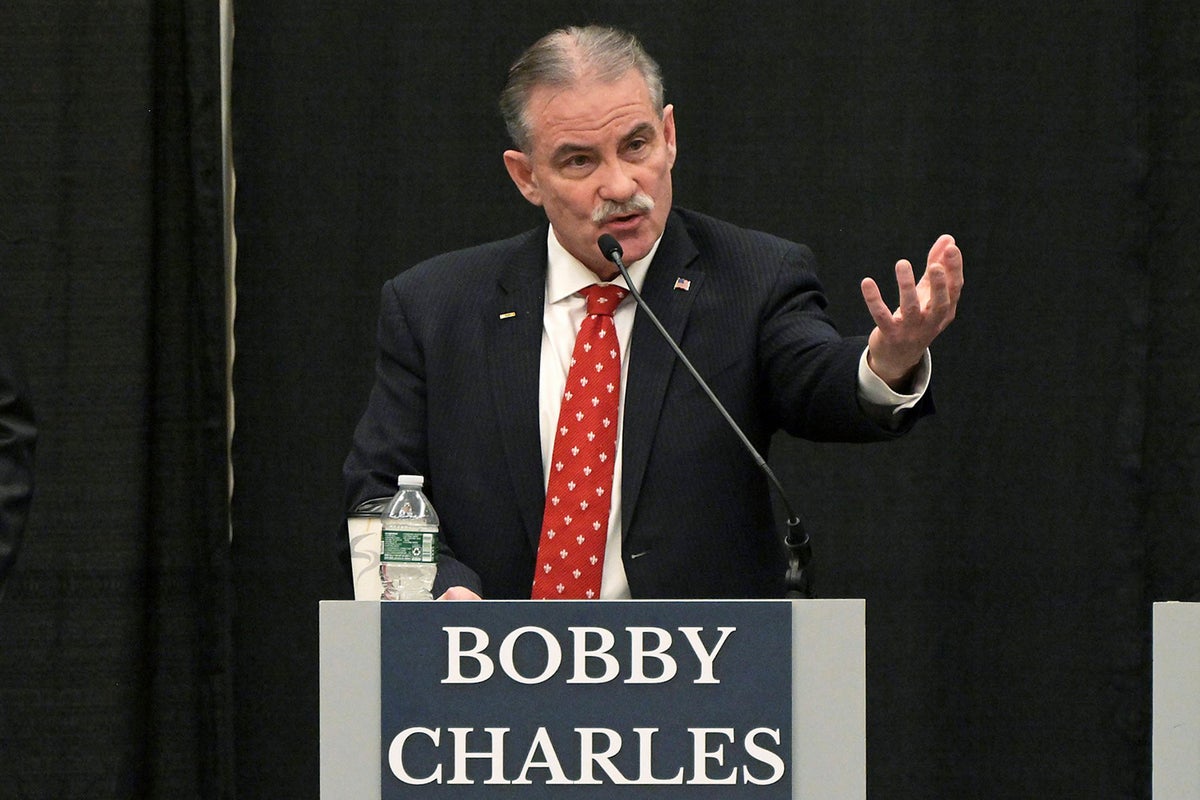
Yet, ideas have weight, and rhetoric has teeth. When a gubernatorial candidate steps up to a microphone and suggests inviting federal immigration enforcement officers into our polling places, the air changes. The quiet hum of civic duty suddenly feels monitored. This is not about administrative paperwork or abstract legal compliance. This is about the heavy, suffocating sensation of being watched when you are simply trying to exercise a fundamental right.
Consider what happens next in a hypothetical town square, though the mechanics are entirely real. Maria runs a small diner three miles past the interstate. Her coffee is hot, her pie crust is made from scratch, and her legal status has been a matter of green cards and tax filings for over a decade. On election day, she usually walks down to the town hall during her mid-afternoon break. But this year, the news anchor on the counter television is talking about armed federal agents standing near the check-in tables to look for undocumented voters.
Maria stays home.
She is not a criminal. She is not committing voter fraud. But she knows the terrifying optics of a uniform, the unpredictable nature of authority, and the risk of being caught in a bureaucratic crossfire. She calculates the cost of participation and decides it is simply too high.
That is the quiet mechanism of suppression. It does not require locking the doors. It only requires making the hallway feel dangerous.
To understand why this proposal strikes such a raw nerve, we have to look at the machinery of our elections. Voting in America has always operated on a fragile, sacred separation of powers and duties. Local town clerks, municipal volunteers, and bipartisan boards run our elections. They are your librarians, your retired teachers, your cousins. They know the community's rhythm. They know if someone moved away, if someone passed on, or if a signature looks shaky.
When political figures start calling for Immigration and Customs Enforcement officers to patrol voting booths, they are attempting to conflate two entirely different spheres of government: civil immigration enforcement and the constitutional franchise of voting.
It is a sleight of hand. The argument usually sounds pragmatic on the surface. Proponents frame it as a matter of securing the integrity of the ballot, ensuring that only citizens cast a vote. But look closer at the architecture of that claim. Noncitizen voting in federal and state elections is already vanishingly rare. Comprehensive studies, audits, and bipartisan investigations across decades have repeatedly shown that foreign nationals do not risk felony charges, deportation, and prison time just to cast a single municipal ballot. The threat is a ghost story invented to frighten voters into compliance.
Yet, ghosts can kill a democracy just as effectively as bullets.
When a candidate explicitly asks for the state's political infrastructure to align with high-profile federal enforcement agencies like the one led by the incoming administration's border czar, the message is broadcast far beyond the noncitizen population. It lands squarely on naturalized citizens with accents. It lands on mixed-status families where a grandmother with permanent residency worries about her grandchildren. It lands on anyone whose skin color or surname marks them as perpetually foreign in the eyes of a suspicious minority.
Fear radiates outward in concentric circles.
I remember talking to an elderly veteran in Portland who immigrated from Italy in the 1960s. He still speaks with a thick, rolling accent and keeps his naturalization papers framed in his hallway like a family heirloom. When he heard politicians discussing federal agents at the polls, his face tightened into something bitter. He told me he felt like he was back in a country he had fled, where showing up to civic spaces meant proving your worthiness to an invisible inspector.
That is the fracture point. Democracy relies on the premise that you belong here simply because you are here, legally and constitutionally bound by the same laws as everyone else. The moment you introduce armed federal immigration authorities into that space, you turn a constitutional right into a conditional privilege.
Logistically, the proposal is an administrative nightmare wrapped in a constitutional violation. Federal immigration officers do not have jurisdiction over local election administration. State laws carefully guard who is allowed inside a polling place to prevent intimidation. Inviting ICE agents to monitor lines creates an immediate chilling effect that violates federal Voting Rights Act protections against voter intimidation. You do not need to physically bar someone from the door if the presence of a tactical vest does the work for you.
History shows us what happens when we let fear dictate ballot access. We have spent centuries clawing our way toward a more inclusive electorate, dragging voting booths out of the shadows, banning poll taxes, and passing protections to ensure that every eligible voice rings out clearly. Every time we introduce a new barrier, whether it is a literacy test from a century ago or the implied threat of deportation today, we shrink the circle of democracy.
We are standing at a crossroads. One path leads toward a paranoid fortress mentality, where every neighbor is a potential suspect and every civic space is fortified against imagined invasions. The other path requires the harder, braver work of trusting our neighbors, respecting our local election workers, and keeping the machinery of democracy free from political theatre.
The ballot box is small. It sits quietly on a folding table in a municipal gym, waiting for you to walk up and drop your future inside. It does not ask for your ancestry or your accent. It only asks for your voice.
If we let the shadows in, the light goes out. And once the light is gone, getting it back takes generations.