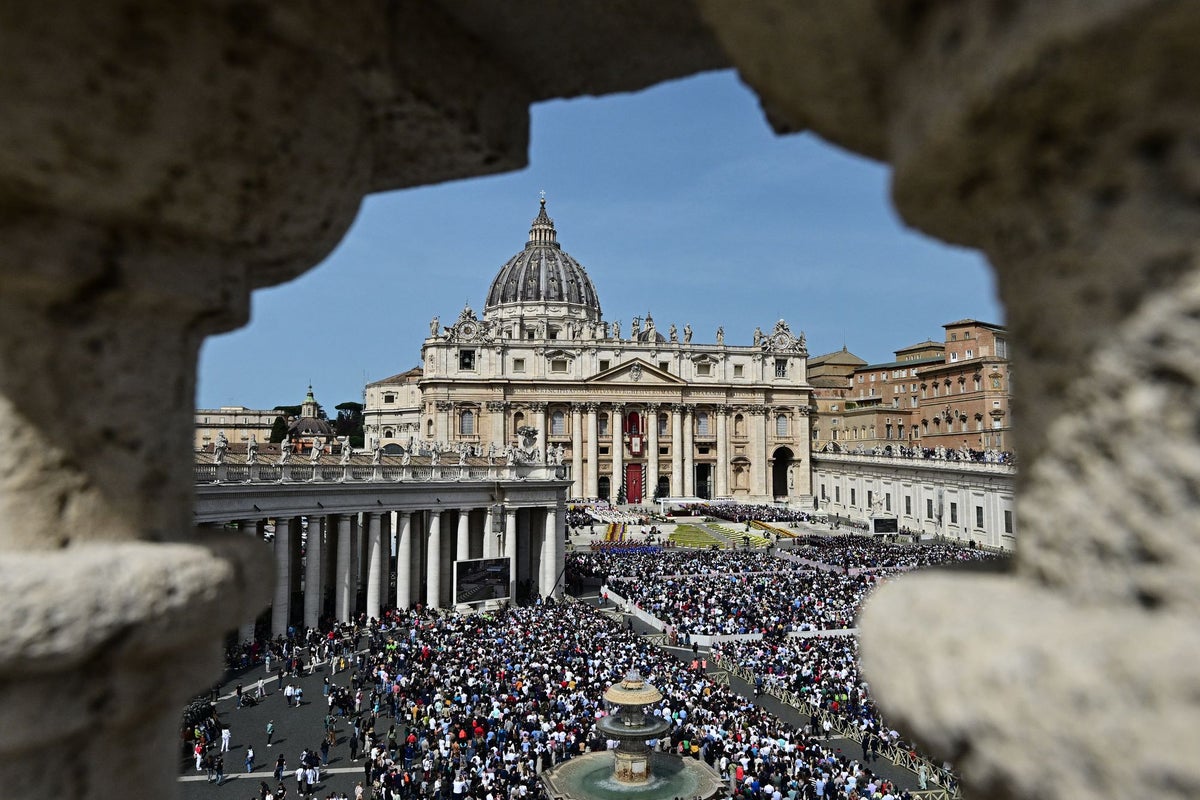
The Vatican is quietly launching a massive, multi-million-euro restoration of the Passetto di Borgo, the elevated fortifications that provided a desperate escape route for medieval popes under siege. This marks the first comprehensive structural intervention on the historic corridor in more than 500 years. Decades of urban pollution, vehicle vibrations from modern Roman traffic, and deep-seated water infiltration have compromised the ancient masonry. Experts warn that without immediate preservation, segments of the half-mile-long stone corridor risk irreversible structural decay.
Blood and Brickwork on the Roman Skyline
To understand the urgency of the current project, one must understand exactly what the Passetto is. It is not a decorative gallery or a ceremonial walkway. It was built as a cold, functional piece of military infrastructure. Constructed in the late 13th century and heavily modified by subsequent pontiffs, the corridor connects the Apostolic Palace inside Vatican City directly to the fortified sanctuary of Castel Sant’Angelo.
History remembers exactly how vital this passage was. During the horrific Sack of Rome in 1527, mutinous troops of Charles V, the Holy Roman Emperor, rampaged through the city streets executing citizens and looting churches. Pope Clement VII scrambled through this exact corridor as Swiss Guards held off thousands of invaders just yards away. Of the 189 guards on duty that day, only 42 survived. Their sacrifice bought the pope the minutes he needed to sprint down the narrow, dark passage to the safety of the castle.
The Modern Forces Destroying the Stone
Five hundred years of relative peace have proved far more insidious than the artillery of invading armies. The primary enemy today is atmospheric.
Rome’s relentless urban traffic rolls past the foundations of the Passetto every single day. The resulting ground vibrations act as a constant, microscopic jackhammer, gradually weakening the mortar bonds between the volcanic tuff and ancient brickwork. At the same time, carbon emissions from buses and cars coat the porous stone in a toxic black crust. This chemical layer doesn't just look bad. It actively eats away at the historic materials underneath, trapping moisture inside the walls and causing the surface to flake away in large, irreplaceable chunks.
Water is the final component of this destructive trio. Centuries of poor drainage along the top walkway have allowed rainwater to pool and seep into the core of the structure. When winter temperatures drop, this trapped water expands, worsening structural fissures from the inside out.
Inside the Restoration Strategy
Preserving a 2,600-foot-long elevated fortification wall requires an immense balance of traditional craftsmanship and analytical science. Master stonemasons cannot simply patch the holes with modern hardware-store concrete.
Using standard Portland cement on a medieval wall is a recipe for disaster. Modern cements contain high levels of soluble salts and are far too rigid for historic masonry. When the structure naturally shifts with temperature changes, the hard modern cement crushes the softer, ancient bricks around it.
Instead, conservation teams are utilizing specialized lime-based mortars formulated to match the chemical composition of the 500-year-old originals. This ensures the wall remains breathable, allowing trapped moisture to escape naturally rather than forcing it deeper into the brickwork.
Before a single trowel touches the stone, engineers use non-destructive laser scanning to create a comprehensive digital map of every crack and structural shift. Specialized chemical poultices are then applied to the exterior to gently dissolve the black carbon crust without stripping away the historic patina of the stone underneath.
The Bureaucratic Battle for the Border
While the physical work is challenging, the political logistics are arguably more complicated. The Passetto di Borgo occupies a unique geopolitical gray area. Part of the structure rests firmly on sovereign Vatican soil, while the vast majority of the wall snakes directly through the city of Rome, which is Italian territory.
This layout means the restoration requires intense coordination between the Vatican’s technical services department, the Italian Ministry of Culture, and the municipal government of Rome. Historically, dividing financial and operational responsibility between these entities has led to years of bureaucratic gridlock, leaving the corridor closed to the public and neglected by preservationists. The arrival of the Catholic Church's Jubilee year provided the political urgency and funding required to finally break the administrative deadlock.
Beyond the Scaffolding
When the extensive scaffolding eventually comes down, the goals stretch far beyond mere structural stabilization. The ultimate objective is to open the entire length of the corridor to the general public on a permanent basis.
For centuries, the passage has remained strictly sealed, accessible only through highly exclusive, specialized tours or to high-ranking officials. Opening this space will completely change how visitors experience the physical boundary between Italy and the Holy See. It transforms a wall that once symbolized isolation, fear, and papal retreat into an open museum of Roman military history.
The current project represents a fundamental shift in how the city treats its architectural heritage. Preservation is no longer just about fixing what is visibly broken. It requires addressing the invisible environmental pressures of a modern, bustling metropolis that threatens to erode the physical remnants of our past.