The Mediterranean does not look like a graveyard. In the pamphlets pinned to seaside kiosks, it is a brilliant, lapis-lazuli ribbon meant to be admired from the railing of a white-hulled cruiser with a gin and tonic in hand. It sparkles. It invites. It promises escape. But anyone who has spent enough decades staring at salt-crusted docks knows the water keeps a double ledger. One page for the dreamers, another for the reckoning.
Eight lives. For an alternative view, consider: this related article.
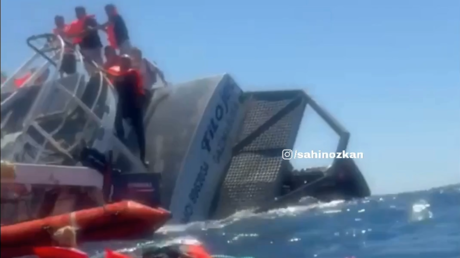
That is the dry tally wired across international newswires after a passenger ship went down off the coast of Cyprus. Eight human beings whose morning routines vanished beneath a sudden influx of green water, heavy iron, and panic. Statistics are frictionless. They slide off the mind because they weigh nothing. But a life does not weigh nothing. A life is built from a heavy accumulation of coffee mugs left in sinks, keys tossed onto entryway tables, unfinished text messages, and the particular way a favorite sweater smells after a autumn rain.
When a hull breaches, the abstract geometry of maritime trade and safety regulations collapses into a very primitive, violent geometry. Water comes in. Air goes out. Similar coverage regarding this has been published by Reuters.
Consider what happens in the precise interval between a routine voyage and a catastrophe. On board, the ambient noise is mundane. The hum of a diesel engine vibrating through the floorboards. The low murmur of passengers comparing shore excursion notes. The smell of frying oil from the galley mingling with the sharp, clean ozone of the open sea. Nothing feels final. You do not board a vessel expecting to test the tensile strength of your own mortality. You buy a ticket because you trust invisible architectures: the classification societies that stamp hulls, the inspectors who sign off on bilge pumps, the quiet competency of strangers in uniforms.
Then the pitch of the deck changes.
That shift is what haunts the survivors. Not just the physical tilt—though gravity suddenly becomes a hostile force, turning stairwells into slides and heavy furniture into battering rams—but the psychological fracture. For a terrifying minute, the brain refuses to accept the data. This cannot be happening. We are on a ship. Ships float. It is an article of faith. We are conditioned to believe that human engineering has conquered the fluid wrath of the deep.
It hasn't.
Off the Cypriot coast, where the shipping lanes of three continents converge, the sea proved once again that it is indifferent to our schedules. Waters that look placid from thirty thousand feet hide erratic currents and sudden swells. When things go wrong at sea, they do not unfold like a well-drilled training manual. They unfold in the dark, or in blinding spray, amid the shriek of tearing metal and the chaotic shouting of orders that cannot be heard over the roar of engines and wind.
In every maritime disaster, there is a ghost economy of choices made hours, days, and months before the first drop of seawater breached the bulkhead. A maintenance schedule pushed back to save a charter fee. An inspection checklist initialed with a tired wrist. A safety briefing ignored by passengers scrolling through their phones because emergency procedures are boring until they are desperately, blindingly urgent. We live in a culture that treats risk management as an administrative annoyance, something to be optimized away by algorithms and disclaimers.
The ocean remains stubbornly unimpressed by our software.
Rescue operations in the open water are exercises in humbling arithmetic. Time is the ultimate creditor. Hypothermia does not negotiate. In the choppy, unpredictable waters of the eastern Mediterranean, body heat bleeds away with terrifying speed once a person is submerged. Coast guard crews and local fishermen who rushed into the swell off Cyprus did not find a neat, orderly evacuation. They found a chaotic puzzle of oil slicks, floating debris, and human silhouettes bobbing against the vast, gray indifference of the horizon.
Every rescue worker carries the weight of the ones they could not reach long after the flashbulbs have stopped popping and the press releases have been filed into digital archives. They know the geography of grief. They understand that behind every lost soul reported in a three-paragraph news brief is a kitchen that will remain permanently quiet, a bed that will remain unmade, a family whose timeline has been violently bifurcated into before and after.
We consume these stories from the comfort of upholstered chairs, scrolling through updates on glowing screens before tapping our way to the next headline. We categorize them as distant tragedies, anomalies of geography and circumstance. It happened there. Not here. To them. Not us.
That is the great, protective delusion of modern life. We believe we are insulated by our technology, our insurance policies, our well-paved routines. Yet every so often, the water rises over the gunwale. The illusion thins.
Out there, past the breakers, the salt spray continues to dry on abandoned life rafts. The horizon remains wide, blue, and utterly silent, keeping its own counsel about what happened in the dark, and waiting to see who will pay attention next.