The glow of a television at midnight is a particular kind of light. It does not warm; it illuminates. It catches the dust motes spinning in a quiet room while the rest of the neighborhood sleeps, throwing sharp, flickering shadows against the wall. We sit there, thumb hovering over a remote, looking for something to anchor us to the hours before dawn. We are tired, usually. We are seeking a small, reliable mercy: the suspension of our own lives for the duration of a runtime.
Right now, that search points toward a very specific constellation of noise.
Think of the person who walks into their living room tonight after a shift that felt four hours too long. They drop their keys on the counter. The metal clatters against the wood, a solitary sound in an apartment that feels too large. They sink into the couch, the cushions giving way with a soft, familiar sigh. They pull up the streaming queue because the silence is heavier than the exhaustion. And there, waiting for them, is a strange assembly of modern mythology and hyper-exposed reality.
There is the steel-and-shadow promise of a galaxy far, far away. There is the unfiltered, chaotic daily dispatch of a young woman living her life out loud for millions. There is the bruised, soaring pop confession of an artist sorting through the wreckage of what she knows too much about.
It is a bizarre menu. Yet it is the menu we are handed.
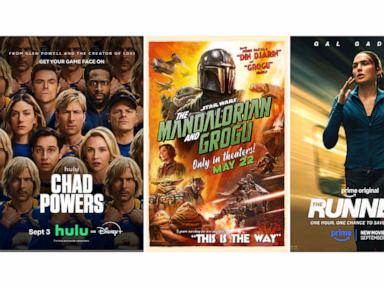
Let us start out on the rim of the outer galaxy, where the dust never settles. For years, the story of the Mandalorian and his small, green companion has been less about the sprawling politics of empires and more about the simple, stubborn geometry of care. Imagine a bounty hunter, encased in beskar armor that muffles his heartbeat, forced to carry a creature no bigger than a toddler through a hostile universe. It is a fairy tale told in the key of heavy machinery and laser fire. When The Mandalorian and Grogu transition from television screens to the massive expanse of cinema, or loom large in our home queues, the scale changes, but the core remains stubbornly intimate.
Why do we care about a man in a metal bucket and a puppet that drinks soup? Because we recognize the posture. We know what it is to walk through a harsh environment carrying something precious and fragile, praying nothing breaks the quiet. It is the universal narrative of parenthood, guardianship, and accidental love disguised as space opera. When the thrusters roar and the credits roll, the special effects fade, but the image of that small hand reaching up to touch a cold helmet stays behind. That is why the queue is clicked. Not for the lore, but for the anchor.
Then, the algorithm pivots. The lights come up, and we are staring directly into the ring light of Alix Earle’s reality series.
There is a distinct cultural whiplash in moving from armored space crusades to the raw, unpolished documentation of a twenty-something influencer’s morning routine. To watch a modern reality series of this scale is to peer through a keyhole into a fishbowl where the water is constantly being churned. Critics call it superficial. Cynics call it the death of art. But sit with it for ten minutes without judgment, and you notice something else: pure, unfiltered endurance.
Imagine living your mistakes at a resolution of four thousand pixels while millions of strangers debate your choices in the comment sections. It is a high-wire act performed without a safety net, broadcast in real-time. When Alix Earle turns on a camera to document the mess of a Sunday morning, the unpackings of suitcases, the shaky attempts at humor after a long week, she is tapping into an ancient human impulse. We are voyeurs, yes. But more than that, we are looking for permission to be messy. We watch because her world is loud, chaotic, and entirely unmasked, offering a strange comfort to anyone sitting in a quiet, dark room feeling like their own life is slightly out of focus.
And then, the tone shifts again. The bass drops. Ellie Goulding steps into the audio track.
Music has a way of bypassing the intellect entirely and going straight for the ribs. When an artist releases a track like I Know Too Much, the title itself is a confession. It is the anthem of the person who stayed too long, looked too closely, and saw the seams coming apart in a relationship or a career or a worldview.
Consider the anatomy of knowing too much. It is a lonely state. Once you see the strings, you can never look at the puppet show the same way again. Goulding’s voice has always carried a slight tremble, a breathiness that suggests she is singing just an inch away from crying or breaking into a run. When that track hits the streaming services, it becomes the soundtrack for every late-night drive where the windshield wipers keep time with a racing pulse. It doesn't offer solutions. It offers company. It says: You are not the only one who figured out the ending before the book was finished.
We look at these three distinct cultural artifacts—a space western, an influencer docuseries, a pop lament—and we try to find the thread that ties them together. Analysts call it content strategy. Algorithms call it engagement metrics.
They are wrong.
The thread is us.
We do not open streaming apps because we want to consume data streams. We open them because we are lonely, or curious, or bored, or desperate to feel something larger than the four walls of our immediate existence. We want the armor of the Mandalorian when we feel defenseless against the world. We want the mirror of the reality star when we feel isolated in our mundane chaos. We want the voice of the pop singer when our hearts are too full of things we cannot name.
The screen flickers. The opening chords of a song swell, or the harsh desert wind of a fictional planet begins to howl through the speakers. Outside, the world keeps spinning in its heavy, unscripted silence. Inside, for the next forty-five minutes, we are not just watching content. We are surviving the night.


